

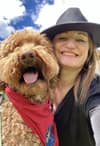
Join us in this heartwarming episode as we explore the transformative impact of therapy dogs in educational settings. Discover how these furry friends contribute to student wellness and create a nurturing environment for learning and emotional growth.
**Featured Guest:** Dr. Barbara Vokatis, Associate Professor at SUNY Oneonta and seasoned educator with a focus on animal-assisted interventions.
**Highlights of the Episode:**
- **Therapeutic Benefits:** Dive into the science and stories behind how therapy dogs enhance emotional and social well-being in schools.
- **Educational Enhancement:** Learn about the practical applications of therapy dogs in classrooms, from special education to general learning environments.
- **Barbara's Journey:** Hear Dr. Vokatis' personal journey from acquiring a family pet to becoming a passionate advocate for therapy dogs in schools, featuring her golden doodle, Carmel.
- **Accessible Interventions:** Gain insights on how schools can integrate therapy dogs and the resources available for those interested in starting their programs.
**Memorable Quote:** "Therapy dogs are not just pets; they are partners in education who bring a unique comfort and joy that can transform an entire learning environment." — Dr. Barbara Vokatis
**Call to Action:** Interested in how therapy dogs can benefit your local school? Check out resources and organizations that support animal-assisted interventions.
**Resources & Links for This Episode:**
- Association of Animal-Assisted Intervention Professionals (AAAIP)
- Therapy Dogs International
- Pet Partners
- Visit Barbara's Website
- Follow Barbara on Twitter
- Follow Barbara on Instagram
- Connect with Barbara on Facebook
- Network with Barbara on LinkedIn
**Discover the "Stuff That Goes On In Our Heads" Community:** 🧠💬
**Discover, Engage & Enjoy:**
**Official Website:** Learn more at Goes On In Our Heads
**Social Media:** Stay updated and engage with us on Facebook and [Instagram]
**Participate & Support:**
**Subscribe:** Join us for exciting content, exclusive giveaways, and regular updates here
**Merchandise:** Support us and flaunt our unique merchandise from Customized Girl
**Donate:** If you love our content, consider supporting us here
**Engagement & Advertising Opportunities:**
**Advertise:** Reach our engaged community by promoting your products here]
**Newsletter:** Keep up to date by joining our newsletter
**Acknowledgments:** Audio editing by NJz Audio for top-notch sound quality.
#MentalHealthMatters #TherapyDogs #AnimalAssistedTherapy #Wellbeing #EmotionalSupportAnimals #MentalHealthAwareness #SchoolWellness #EducationalTherapy #Mindfulness #MentalHealthSupport #PositivePsychology #MentalHealthEducation #TherapeuticAnimals #MentalHealthAdvocate #MentalHealthPodcast #AnimalTherapy #MentalHealthResources #MentalWellness #MentalHealthJourney #ChildMentalHealth #StressRelief #SelfCare #MentalHealthTips #MentalHealthCommunity #EmotionalWellness #GRex #DirtySkittles #STGOIOH
S06E01 - Therapy Dogs in Schools: Enhancing Student Mental Wellness Through Canine Companionship
00:00:00
Music.
00:00:20
I'm so... Do you want to do an intro? No, I'll do it. I'm all good.
00:00:24
I love doing my intro. Are you ready? Ready?
00:00:29
Three, two, one. Welcome back to another episode of Shit That Goes On In Our
00:00:34
Heads. Today we have an amazing guest.
00:00:37
I'm so excited to talk to Barb. Welcome.
00:00:41
Welcome. Welcome. So glad that I'm here. Thank you.
00:00:45
Yeah. How are you today? I am very well.
00:00:48
There is not so much sunshine but i am sunshine for myself so that's it.
00:00:55
I know it's fake spring right now
00:00:58
like we had two days in the 50s and then
00:01:01
it's gonna snow on monday so you know it's okay
00:01:04
you know mother nature needs to mother nature needs
00:01:07
to stop taking the gummies man i swear to god she has
00:01:10
no idea what season we're in let's tell
00:01:13
her some words that's right yeah it's
00:01:17
not too bad here i mean it's like gloomy but
00:01:20
temperature wise it's pretty nice same here and i took
00:01:23
my dog for a walk so that was cool yeah me too me too i enjoyed being outside
00:01:29
crunching on the leaves with the little dog so yeah it was really therapeutic
00:01:33
i told you nature is a healer but i guess i know you know what though i'm gonna
00:01:40
in your defense i I know that it has been kind of crappy down there lately.
00:01:43
So I didn't need you to get any sicker than you were.
00:01:47
I know. I'm just recovering from COVID. From one day negative.
00:01:52
That's good. That's good. Yeah. Yeah.
00:01:56
And I was in quarantine, so I was slowly losing my mind.
00:01:59
So it was good to be outside with the dog and like fresh air.
00:02:02
And just it was it was wonderful.
00:02:04
Yep. Just wonderful. That's good to hear that you're doing better.
00:02:08
Thank you. So Barb, tell us a little bit about your passion. What is it that you do?
00:02:13
So I could say that I do a lot of things, but my passion is dog therapy in educational
00:02:21
settings, especially for children and especially for younger children.
00:02:26
But not only, and spreading awareness about what including therapy dogs in educational
00:02:36
settings can potentially do for our children's well-being and academics.
00:02:43
So there are a lot of things that therapy dogs, therapy dog teams can do for
00:02:48
children and for teachers and for parents too, too, because we are all in this together.
00:02:55
And that is really my passion and also writing about it and talking about it,
00:03:00
just like I'm talking about this with you right now.
00:03:03
I love this. This is by far the coolest thing ever.
00:03:06
What are the age ranges for those that, you know, have benefited from this?
00:03:12
So I think that the age ranges for to be able to benefit from therapy dog interaction
00:03:19
with therapy dogs there is no age range because therapy dogs go to.
00:03:26
Preschools they go to middle school high
00:03:29
school they go to nursing homes so all together when you look at it there is
00:03:34
no age limitation for that there are other kinds of limitations maybe someone
00:03:39
is severely allergic to dogs but there is not much there are not many cases
00:03:45
of such very very severe situations,
00:03:48
but we have to take it into consideration.
00:03:50
But there is no limitation as far as the age, definitely.
00:03:56
You hear that, G-Rex? I hear that. You could benefit. Yeah.
00:04:00
Here's the problem is, I'm way more allergic to dogs than I am to cats.
00:04:06
Okay. Really? Yeah. We have eight cats in the house, and I have to take a Zyrtec every day.
00:04:11
And there's two rooms in the house that they can't come in. They can't come in my office.
00:04:16
Can't come into my room but in the rest of
00:04:19
the house like I if I don't take a Zyrtec I
00:04:22
can't breathe but I love dogs and so I grew up with dogs my entire life right
00:04:26
ever since I was like a little kid until I left the house when I was like 18
00:04:32
I love dogs like we had we had a golden doodle and we had a couple of black
00:04:38
labs and like I would take a dog in a heartbeat and.
00:04:43
I'm old and I'm tired of dealing with my allergies. Yeah. They can take it all, right?
00:04:49
I mean, I don't have allergies to animals, so I don't know much about it.
00:04:52
But any kind of situation like that, it can have a negative impact on your life, right?
00:05:00
But therapy dogs are not the only kinds of therapy animals.
00:05:07
There are therapy, there are actually therapy dogs. There's a better way of
00:05:12
saying it up to date with the terminology that's new out there.
00:05:18
So animal-assisted intervention, that is what I'm doing.
00:05:23
It used to be like therapy dogs or dog therapy, but now you're supposed to call
00:05:27
it therapy-assisted interventions.
00:05:30
And there are organizations that certify other animals as well.
00:05:35
So you can have cats, you can have bunny rabbits, llamas, miniature horses,
00:05:43
guinea pigs, I think, too. Yeah.
00:05:45
Can you please tell me that spiders and snakes don't fall into that category?
00:05:51
I have no idea, actually. For some people, and I don't like any kind of exclusion,
00:05:57
however, there are some features of a therapy animal that have to be met.
00:06:02
But i could guarantee that for people
00:06:05
who have these types of animals in their houses they
00:06:08
are probably very therapeutic right there is a reason why they
00:06:11
have them to have a snake for me it wouldn't be maybe
00:06:14
therapeutic well when i observed nature i
00:06:17
went to the zoo and saw the snake in like its almost natural surroundings it
00:06:22
was probably really cool to watch nature in action maybe it would be therapeutic
00:06:26
but for the therapy animals they have to have therapy animal have to be We have
00:06:32
to be able to respond to a handler's,
00:06:35
professional's commands.
00:06:37
So you can imagine that certain animals, spiders, probably would not be able to do this.
00:06:42
Therefore, they wouldn't qualify to be animals. Sorry, spiders.
00:06:49
That's awesome. Well, because I was just thinking, you know,
00:06:53
like there's so many different animals.
00:06:55
We have a friend of ours who is very attached to his cat, right? Right.
00:06:59
He has he's on the spectrum, has ADHD, and he wanted to take his cat with him
00:07:05
to college as his as his therapy cat.
00:07:08
But after we talked about all the logistics and everything and,
00:07:11
you know, the fact that he would be in school all day and, you know,
00:07:15
wouldn't have the interaction.
00:07:16
I mean, we kind of talked about it. I think in the back of his head,
00:07:19
though, it's still a plan, which I'm fine with.
00:07:23
You know, we both all joked about it, but it does, the cat does calm him down.
00:07:28
So, yeah, the only problem is that to be able to take a cat like that to college or a dog,
00:07:35
I mean, potentially this animal can live with this person and be a so-called,
00:07:41
I forgot the name for this. It's not a service animal.
00:07:44
It's like an emotional support. So that animal that would have to be,
00:07:48
of course, documented from like a psychologist or another
00:07:51
other professional in order to qualify to have
00:07:55
a therapy emotional support animal living with you but
00:07:58
still would not be able to take it to take this animal to
00:08:01
college in order to take it to college the animal
00:08:05
would have to have the status of a service animal and that's a different animal
00:08:12
than therapy animal or emotional support animal wow yeah yeah because the service
00:08:19
animal is an An animal that can go to persons with the person pretty much everywhere,
00:08:25
but they need to perform a certain task for that person, right?
00:08:32
So it cannot be, it's just, I just feel good in the presence of my animal.
00:08:36
That is not a task that the animal does for you to be able to be called a service dog.
00:08:45
How did you get into this? Like, how did this start for you?
00:08:48
It started really, we never had a plan to become therapy dog team or anything like that.
00:08:56
It really started, I think the start happened when my daughter was around 10
00:09:01
years old and we never had a dog as a family and she wanted to have an animal.
00:09:07
And we knew that it would be a dog because I had a dog in the past,
00:09:12
my husband had a dog in the past.
00:09:14
So it would be a dog but and we
00:09:17
decided it's time she's already old enough
00:09:20
to be able to have a dog just i
00:09:22
had some more time on my hands a little bit too i
00:09:26
think and we decided i think that we have some time and
00:09:29
a child grew up i think now i
00:09:32
tried to find a dog and we didn't
00:09:35
know what type of dog we like okay
00:09:38
like me and my daughter we want a white
00:09:41
poodle we just like white poodles that's it my husband
00:09:44
then i want to put all those it's like how do you
00:09:46
compromise maybe let's get a
00:09:49
dog that looks a little bit like a poodle but it's not exactly poodle and it's
00:09:53
not white okay let's do it so we started investigate and we found out about
00:09:58
those barber doodles and then wait a minute there's also golden doodles what's
00:10:03
that so we started reading about these mixtures of breeds.
00:10:08
And eventually we found a breeder
00:10:10
online and she had some available golden doodles. One of them was Carmel.
00:10:15
We just saw her in the picture and right away, oh my gosh, we must have this
00:10:19
dog. Is this dog still available?
00:10:22
And that was in Rochester, New York. And we went and got Carmel.
00:10:28
She became a part of our family and she was growing.
00:10:32
She was about six months old and she
00:10:35
became very strong i never had an experience with her
00:10:38
i mean she is 68 pounds i
00:10:41
never had a dog of this size they can
00:10:44
get so strong when they are like six
00:10:47
months old seven months old because they're growing already big
00:10:50
and they have to take
00:10:53
your dog for a walk obviously right but it
00:10:56
was like it became impossible to do it she was
00:10:59
so strong just to use was a collar
00:11:02
she was just so cool she would be just pulling so
00:11:05
hard i was afraid i would just like damage her
00:11:09
neck or something it was just horrible because i mean she's essentially a hunting
00:11:13
dog right it's uh she's a poodle and it's golden retriever maybe not all of
00:11:18
them are like that but she really was and she still is right now and then you
00:11:24
do you can't take your own dog for a to walk.
00:11:29
I started looking around for trainers in the area to turn to a trainer and just
00:11:35
ask, what do I do? I had no idea what to do.
00:11:38
And it was very hard to find anybody. But I finally got a hold of someone in
00:11:43
the area and I found out she has some experience.
00:11:46
And I called her and she says, you know what?
00:11:50
I see you really have a really hard time with this dog. I would be willing to
00:11:54
come and show you a couple of things, maybe like once or twice,
00:11:59
and some of them will really help you.
00:12:02
So that's what happened. She came over and she started us on a type of harness,
00:12:08
I guess that's called, it's called Gentle Leader, like Carmel's mouth around.
00:12:14
And you would also go behind the head.
00:12:19
I mean, she knew how to do this. she had experience with
00:12:22
this type of harness and what happened was just amazing
00:12:25
once we started using it the
00:12:28
first time carmel started walking
00:12:31
by my leg on the side instantly
00:12:35
there was no more pulling i was like i can't believe this is happening then
00:12:41
she came the second time and then she says you know what it would be good for
00:12:45
you to do more obedience training so she was Giving those types of trainings,
00:12:51
we sign up for the classes.
00:12:53
Then during the class, I remember when she says, you know what,
00:12:56
this dog is amazing. I mean, she needs some more training, but she would be an amazing therapy dog.
00:13:02
And then we went to, for Canine Good Citizen, which is like the next step of
00:13:07
training before you become therapy dog.
00:13:09
And then just before we knew, another type of training happened,
00:13:13
therapy dog training and with the certification. And that's really how it happened.
00:13:18
In 2007, 2018, we became certified.
00:13:22
So that's how it happened. It literally happened just like I described in one
00:13:26
of my books that I published, From Unruly to Therapy Dog.
00:13:30
That's what really happened. but she was totally unruly didn't listen
00:13:33
i bought i bought some books about training
00:13:37
the dog but it's totally different game i mean
00:13:40
with the experienced trainer it's just
00:13:43
different yeah as opposed
00:13:46
to reading a book about dog training you might
00:13:50
get a couple tricks couple commands that might
00:13:52
work but it's just not the same and
00:13:56
so that training good training is so incredibly
00:13:59
really important for any dog owner I think any kind of breed I don't think there
00:14:05
are too many dogs there are just like perfect right right cool so it sounded
00:14:11
like with training you started to maybe see Carmel in a different light how
00:14:15
did you incorporate her with kids and learning.
00:14:20
So at the beginning we just started incorporating her
00:14:23
without any kind of experimentation so much but
00:14:26
it was really through the conversation with the teacher and so I got connected
00:14:32
to the teacher I would have a conversation well how do you think we could do
00:14:35
this right what do you need in the classroom is it with a group of children
00:14:40
you would like to do it no I would like Carmel to come and,
00:14:44
interact with my whole classroom but I don't want the teaching to be stopped
00:14:49
maybe for a little bit at the beginning right when the dog is introduced to
00:14:52
the group of kids but then can we make a part part of classroom period when
00:14:57
we still do the teaching and learning but she somehow is a part,
00:15:01
so it's like how do you do it well okay i can
00:15:04
come in and that's what i would i would come in with her and
00:15:07
i would just go around the classroom with her and we would stop at the desks
00:15:12
and then when we stop the child gets changed to pet carmel talk to her whatever
00:15:16
but everybody's still learning raising their hands and that's really how it
00:15:21
started and we're doing it to this day in some some of the classes.
00:15:26
But then in more like a special education group of kids, there was a little
00:15:31
bit different situation there.
00:15:33
We would like interact without teaching. The teacher was able to take like a
00:15:37
10 or 15 minutes out of teaching and they will interact with Carmel.
00:15:41
And then we would split the kids. And let's say two of them would get a chance
00:15:45
to take Carmel with me for a walk in the school, just around the school in the
00:15:50
hallways. They really loved it.
00:15:52
So I would take like, I would bring another extra leash. I would hold one leash,
00:15:57
they would hold another, and this would be called, I am walking Carmel, right?
00:16:01
I am walking Carmel in the school.
00:16:04
And they loved it because they would talk to other people in the hallways.
00:16:08
They would like introduce me and I got a chance to walk Carmel.
00:16:12
It was just really awesome for them. It gave them a chance of like taking some
00:16:16
responsibility, right?
00:16:17
Helping with walking the dog.
00:16:21
So that was awesome. But then like around three years ago, I started collaborating
00:16:28
with this one incredible teacher, Lucinda.
00:16:32
And then we even had remote therapy during COVID, which was very difficult technologically
00:16:40
because kids were at homes.
00:16:42
Lucinda was in school and I was in my home.
00:16:46
So we try, I don't even know to this day how exactly she did it.
00:16:52
This connection happened it was totally different it
00:16:56
was a different game I mean there's no doubt about
00:16:59
it but those kids loved it
00:17:02
it was the highlight of the week for them Carmel comes they're going to see
00:17:06
Carmel on the video awesome I would talk a little bit about different things
00:17:11
it was just a little bit different type of interaction parents would see Carmel
00:17:16
too on the screens of course as well they loved it.
00:17:20
And then I remember after the pandemic was over, kids went back to school.
00:17:26
And I started seeing just like really low levels of writing of anything really
00:17:31
in children, right? We all know what happened.
00:17:34
And we started thinking, maybe we can do something more with Carmel.
00:17:39
Like we can experiment with some activities.
00:17:43
And we just started in a very simple way.
00:17:46
We asked children like how is
00:17:49
carmel kind how does she show kindness what does she do
00:17:52
and the kids are just everybody wanted to
00:17:55
talk about how carmel shows kindness they all wanted to
00:17:57
describe and then we asked them awesome well
00:18:01
can you use what you've
00:18:03
learned from carmel about being kind and do
00:18:07
something for your family or for your friends at
00:18:10
school knowing that dogs do do different certain
00:18:13
things in a different way because there are dogs right and people are
00:18:16
right so we had conversations about these differences too
00:18:19
but it was amazing what they said about
00:18:22
what they think they've learned and how they can apply it
00:18:25
to their family lives school lives and also
00:18:29
my collaborator teacher lucinda noticed that usually children
00:18:33
some children would raise their hands and tell
00:18:35
the answers and others would just like not say
00:18:38
anything or just well i've got the same answer right but in
00:18:42
this situation because they were so already attached to the
00:18:45
dog they love carmel they all wanted to
00:18:48
participate because it was about their dog had.
00:18:53
Something to say every child so
00:18:56
that was amazing too big policy and then and then we started doing something
00:19:00
different more like literacy activities i kids were learning about visualization
00:19:05
visualization in language arts and I started reading my book about how we became Therapy Dog Team.
00:19:15
So again, they were listening to me reading, this is about Carmel,
00:19:20
the dog we know, the dog who comes to our classroom.
00:19:24
And then like, wow, Cinda, our teacher is already in this book,
00:19:28
is also in this book. They're like, wow, this is really cool.
00:19:31
And they were asking me, well, you published this book? Yeah, I published this book.
00:19:36
I'm like, yeah, anybody can publish the book. And they're like,
00:19:39
wow. Now, I am an educator, right? This is my profession.
00:19:43
But in this classroom, I was just a therapy dog handler, Carmel's friend who brought Carmel.
00:19:49
I was not a teacher for them. So they were learning from me as learning from Carmel's friend.
00:19:56
Learning from Carmel and Carmel's mom who brings Carmel to the classroom.
00:20:00
That's how it was. It was a totally different connection.
00:20:04
Connection with me not as the teacher at all. so
00:20:07
that's another interesting thing that kids like to learn
00:20:10
from others who are not teachers no already is in
00:20:13
teaching it's so true right that's really
00:20:16
what happens and we have to take advantage of this really and
00:20:20
i remember when i told them well okay now i'm
00:20:23
going to read a scene from the book and you're
00:20:26
going to close your eyes and you're going to imagine this
00:20:29
whole scene that i'm reading about and they
00:20:33
close their eyes i remember how they all closed their eyes was so serious
00:20:35
about it when i look around the classroom all the eyes
00:20:39
were closed there's no question about it and then
00:20:41
i'm reading and then when i was done with the reading i
00:20:44
asked him what did you see what did you imagine again everybody
00:20:48
wants to say what they imagine and it
00:20:52
was very interesting they imagine everything that i
00:20:55
had in that scene written the description and
00:20:59
they added more details like they almost like
00:21:02
developed the scene into something more and telling
00:21:06
them what you are incredible you could be incredible writers because
00:21:10
you could help any writer if you
00:21:13
can help me in making my the scene
00:21:16
in my book better i wish i had you.
00:21:19
But i wasn't reading the book because you wouldn't help
00:21:22
me write this book and i seriously
00:21:25
it was just i was just so amazed and then
00:21:28
i kept reading the book and that's how
00:21:31
the idea of them trying to write books
00:21:34
as well happened they just started to ask me
00:21:37
do you think we could write books too of course you can write books too we can
00:21:42
help you with that and that's how this project started but i have to say one
00:21:47
thing when i came back to the classroom i remember this visualization activity
00:21:52
and you were something was is going on in the classroom.
00:21:56
And Lucinda says, well, can we just do regular therapy,
00:22:01
Everybody pets Carmel and that's it, new literacy. And that's what we did.
00:22:06
But after a while, kids were like, wait a minute, we want to do visualization with Carmel.
00:22:13
Like they really wanted to do literacy activities with the dog, with Carmel.
00:22:18
And we had no idea that they would really love it that much.
00:22:22
Yeah. Yeah. It reminds me of when I first took my son, very first time to go to the dentist.
00:22:29
Yeah. I am one of those people that like, I'm definitely afraid to go to the
00:22:32
dentist. Like it's going to take everything in me to convince myself to go.
00:22:37
But I'm very, like, I don't want my fears to impact him.
00:22:42
So I had done some research and was looking around in the area that we lived
00:22:46
in at the time to find a dentist.
00:22:47
And I stumbled upon one that had a therapy dog and it was specific for kids.
00:22:52
So you could book certain days that she would be there.
00:22:55
And it was a golden doodle as well. And that was literally what we did.
00:22:59
And the dog just was, she would stay by his side and he could pet her throughout his whole thing.
00:23:05
And I don't know, it was just cool to see him engaged in something other than,
00:23:09
you know, the boring stuff that was happening.
00:23:12
So I think that's, I love pet therapy. Yeah, that's amazing.
00:23:14
So you can see the dogs, other therapy animals they can pet in places.
00:23:19
Places it's just there's something and that's why this has such an incredible
00:23:23
impact on kids who have just trouble with focusing to begin with and any other
00:23:30
all kinds of disabilities and then when the dog comes in.
00:23:34
They just want to behave so well because they don't want the dog to see them as behaving that well.
00:23:43
They want to be inviting for the dog to come back.
00:23:46
And to the point where some kids who have behavioral plans, they really have a lot of issues.
00:23:55
And without implementing those behavioral plans, you cannot teach them,
00:23:59
you cannot teach the group.
00:24:00
But when I come with my dog,
00:24:04
these kids don't need those behavioral plans they
00:24:07
immediately focus on the dog and especially if
00:24:10
you don't incorporate the dog in a very like creative
00:24:13
way these children all of
00:24:16
a sudden become creative they don't
00:24:19
cause any behavioral issues and everything is
00:24:22
changing like magic and it's unbelievable because when
00:24:26
i came to the smoke reveal math group with
00:24:29
kids who just have really big issues with math they hate
00:24:32
math they don't like going to this remedial math group right obviously but they
00:24:38
just it just totally changed their attitude to math just the presence of the
00:24:43
dog and doing something cool that involves play some movement and math and then this math becomes.
00:24:52
Something not that actually difficult to do yeah how i believe it's like hey
00:24:58
it's like the puppy happy days we used to have at work. Do you remember those,
00:25:02
Jira? Yeah, I remember those.
00:25:03
I mean, it just, it helps with the anxiety, right?
00:25:06
I know that like being around animals, just, it helps with the anxiety and I
00:25:11
can see how that would help the kids, right?
00:25:13
Because, you know, little kids, they are full of energy.
00:25:18
Like I would like to bottle up their energy and sell it to anybody over the age of 50.
00:25:23
But I can see like when, like when we're
00:25:26
at the zoo or when we're like someplace out
00:25:29
in the park and you just see all these little kids
00:25:32
just like congregate around the dogs and it
00:25:36
just has such a calming effect on them I can see how that would be so awesome
00:25:40
to have in a school environment because have a really hard time articulating
00:25:45
what they're feeling and by
00:25:47
having you know having a dog or a cat or a lizard or a frog or whatever,
00:25:53
something that they can touch and feel.
00:25:56
And that is not the same as them.
00:25:59
It has a very calming effect about them. And I think what you're doing is so amazing.
00:26:05
Yeah, it's like thinking about it.
00:26:08
If I go back to school and like the most boring subjects ever,
00:26:12
if I had something positive to associate it to, I would have retained all that information.
00:26:17
You know what I mean? You can imagine how many children are struggling with
00:26:22
math, but then there's also the aspect of anxiety.
00:26:25
And I'm trying to figure it out. And I have these questions too.
00:26:29
Like why do you think this is working like that why
00:26:32
does it have such an effect and i think that here
00:26:35
is carmel so the schools are
00:26:38
kind of not always inviting spaces for children i mean you have teachers you
00:26:43
have psychologists but these are strangers to be honest right these are not
00:26:50
like friends for children i mean there are a lot of teachers for amazing teachers
00:26:54
And they are true friends.
00:26:56
They want nothing but the best for children.
00:26:59
But they still struggle. They struggle with children's anxiety.
00:27:03
They don't know what to do. I mean, what are you going to do when the kid's
00:27:07
anxiety prevents them from learning? What are you going to do?
00:27:11
Send them to a psychologist?
00:27:13
Well, that's another adult they will have to deal with. And it's not going to
00:27:17
provide any calming effect in any way, unfortunately.
00:27:20
I mean, they are specialists and they help. but it's not
00:27:23
going to change the situation for
00:27:26
the child to the point where they can actually learn the
00:27:29
only thing they can make
00:27:32
a big difference is to introduce someone an animal that doesn't judge and it's
00:27:39
amazing how you just can't fool kids right you just can't fool kids if you don't
00:27:44
if they don't have the front next to them real friends they're going to still
00:27:49
feel anxiety There is nothing friendly,
00:27:51
nothing that can feel like, you know, I have to tell you, I remember one point
00:27:56
when I brought Carmel to, I think it was third grade.
00:28:00
That was the grade in which we did the book and the visualization.
00:28:03
And the book is based on this teachers and therapy dog teams.
00:28:07
And I remember this girl, my dog was sitting and this girl just like almost
00:28:12
like laid down on the floor because she wanted to touch Carmel's white paw with
00:28:21
her cheek and like feel it.
00:28:22
I was like, what does that mean for a child who...
00:28:28
Put his cheek on Carmel's fur just
00:28:31
to like feel it like this is something different
00:28:34
and it's craving for something that's warm
00:28:37
yeah fuzzy has no judgment and
00:28:41
how about this at one point I remember that
00:28:44
I had no idea about this at that time because
00:28:47
you know as a therapy dog handler I come into the classroom and
00:28:51
I cannot know a lot about these children because there's confidentiality right
00:28:55
right i can know that maybe some have issues but that's really all but this
00:29:00
one child did not speak oh wow non-verbal yeah totally non-verbal not speaking.
00:29:10
And carmel and one time carmel
00:29:13
came in and my teacher told me
00:29:15
about it i wasn't aware of this and carmel like
00:29:18
touched him with her nose or something that he thought it
00:29:21
was really funny and that's the carmel you came
00:29:24
to see me this is oh i love you so much carmel
00:29:27
and that was the time when the teacher heard this child speak for the first
00:29:34
time wow yeah wow so you can imagine how many schools in every school there's
00:29:39
probably at least a couple or kids like that do speak right wow,
00:29:46
That's wonderful. I love Carmel. I mean, I love pet therapy.
00:29:50
I love the whole thing behind it. I can see benefit from it for sure.
00:29:54
And I mean, that's amazing. I think what you do is amazing.
00:29:59
Thank you. And there is a lot of other teams who do the same thing.
00:30:02
And I mean, this is all voluntary work, right? We don't get compensated for this.
00:30:07
Many of us work full time. But the the
00:30:10
question is like why do these therapy teams
00:30:13
do this well because they see these yeah
00:30:16
there's a benefit and and it when you
00:30:19
see something good instantly it makes you
00:30:22
feel good too so there is like a call of goodness yeah
00:30:26
that's wonderful i could
00:30:29
see where it would be even beneficial to like big
00:30:32
corporations to you know have like a
00:30:36
therapy dog day you know we all get so
00:30:38
wrapped up up in like what we do on our day-to-day stuff that
00:30:42
you know it's hard to
00:30:44
pull away but seeing it from my kids eyes
00:30:47
like how freaking cool is that right like
00:30:50
you go to school and you get to see a dog and then you get to like tell a story
00:30:54
about the dog and I just think it's the coolest thing and are there more schools
00:31:00
doing this now or is this relatively new so I have to say that this This is
00:31:06
not something that's only what we're doing here in the United States.
00:31:10
But obviously, the United States is kind of a leader in this area, I would think. I think.
00:31:15
I don't know if I can say it. Because just there's more therapy dogs here and
00:31:19
more therapy dog organizations and all that.
00:31:22
But there are many schools that never saw a therapy dog in the United States.
00:31:27
So this is not something that happens in every school in this country.
00:31:31
It just doesn't. And for...
00:31:35
Whatever reason, people in the school, just administration, teachers,
00:31:38
maybe they don't know the benefits.
00:31:40
They don't have the access to therapy dogs. They didn't know how to get started.
00:31:45
The whole field of therapy dogs, as far as professional development,
00:31:51
organizations that would help in getting answers, is only starting.
00:31:58
There is an organization that provides courses, mini-conferences.
00:32:02
There is a mini conference in which I'm going to participate February 29th,
00:32:08
and that's going to be specifically for people, administrators,
00:32:12
schools who would like to start this practice, but they don't know how,
00:32:16
they don't know what to do.
00:32:18
So that is, and I belong to some therapy dog groups on Facebook,
00:32:24
and I see occasionally a post principal, let's say, saying, I just don't know what to do anymore.
00:32:30
More kids there's so much anxiety there's so much
00:32:33
trouble so i'm here in this group and you
00:32:36
guys can you help me tell me how we can
00:32:39
start this what can we do to bring therapy animals
00:32:42
to the school because it's just like
00:32:45
i can't deal with this anymore we have to do something different right
00:32:49
literally yeah so i think this field
00:32:52
is developing more and there's more and more awareness awareness
00:32:55
and and also in the world i
00:32:58
just i know there's even there's therapy dogs in
00:33:01
in india there's there are therapy dogs and i know
00:33:04
someone who does she has her own therapy dog in
00:33:07
a very small country of malta which is right under
00:33:10
sicily in europe it happens everywhere
00:33:14
almost i'm sure there are countries that don't even didn't probably even hear
00:33:21
about this at all but it's you know it definitely is taking the lead in this
00:33:25
area but we don't want this to be this way we want this to really be more and more common in the world.
00:33:33
Yeah, for sure. Like I can see this really like benefiting kids like in inner
00:33:38
city schools or, you know, or in the like underprivileged schools.
00:33:43
You know, I see a lot of anxiety from that. And I think what you're doing is so incredible.
00:33:49
It really is. I wish I'd had therapy dogs when I was going to school. Yeah, I wish too. Same.
00:33:57
It's well, we can't turn the clock, right?
00:34:01
We cannot change the past, but we can definitely, that's why I'm doing what
00:34:05
I'm doing because just seeing, and I mean, there are some incredible stories
00:34:10
such as the child starting to talk, right?
00:34:12
But even every time I come in, when you see the smiles on children's faces.
00:34:18
When I enter with carmel all of a sudden everybody
00:34:21
looks different not saying that school or
00:34:25
that's the lesson that was occurring brought them
00:34:28
down but it's a totally different face expression
00:34:31
and even on the teacher's faces too it's so
00:34:35
different feelings when you enter with the dog it
00:34:37
just changes everything there is a lot of positive
00:34:41
chemicals and hormones that everybody yeah the
00:34:43
the energy yeah and energy changes and the
00:34:47
kids maybe some think that
00:34:50
the dog like that would bring maybe destruction to
00:34:53
what you're teaching if the teacher is
00:34:56
not willing to try something new that
00:35:00
will prevent them from trying this obviously they'll just
00:35:03
do whatever they're doing right they'll think oh i'm
00:35:06
not gonna do anything like that i'm just i'm going to i'm
00:35:09
not going to be able to cover what i have to cover with
00:35:12
teaching i don't want the dog in the
00:35:15
classroom it's going to be a destruction but it's not the other they have to
00:35:20
be willing to try yeah they you have to be willing to try there's no doubt about
00:35:24
it and the teacher with whom i work she is like that it's like i will try let's
00:35:30
try something new yeah you have to do this yeah.
00:35:35
I love that. I love that. Well, thank you for sharing your story. Of course.
00:35:39
I'm excited to actually dig in online and see what I can do for my son's school
00:35:44
because I feel like he would benefit crazy good from this.
00:35:47
So yeah, I'm going to look into it and I just appreciate your story and what you do.
00:35:51
I'm glad you're sharing that because I would imagine, I think if I had any kind
00:35:57
of advice of like how to start with the school, definitely equip yourself with
00:36:01
some knowledge in this area, right?
00:36:04
What kind of benefits are available?
00:36:07
And also that there are ways of making this work because there are some parents,
00:36:13
teachers, or children who cannot literally interact with the dog for a variety
00:36:17
of reasons and most people have allergies.
00:36:19
Allergies, there is ways of minimizing those issues to make sure that everybody is included.
00:36:25
And therapy dog is not something that you force people into.
00:36:31
It's to be all kinds of considerations to be in place.
00:36:35
But there is organization that I can always share with you that has materials
00:36:42
and resources for people like that.
00:36:44
Administrators like to start this, but just don't know how.
00:36:49
Yeah. And one last time, can you tell us the name of your book?
00:36:53
So my latest book in which I describe more like innovative characteristics of
00:36:59
this practice, that's Teachers and Therapy Dogs, Innovative Collaborations to
00:37:04
Make a Difference for Children. Okay.
00:37:06
It is available on Amazon. That's the one who has a description of how we started
00:37:12
this innovation, the whole history of this.
00:37:15
And then I also include lesson plans for writing lessons that include therapy
00:37:21
dogs and also math lessons, too.
00:37:25
That is so cool. I'm thinking even if I couldn't get to school to do it,
00:37:30
we have two dogs upstairs.
00:37:32
And there's going to be a time where I got to do homework with him.
00:37:35
I know he's six now, but I'm like, I can do this. Yeah. At least try something new.
00:37:40
Yeah. Because like, I mean, even at home, you can like use your dog's cable,
00:37:46
depending on what you feed your dog.
00:37:48
And use it for like bath manipulators or things like that.
00:37:51
Right. So anything that you can like connect to what your child likes.
00:37:57
And if they connect it to something really well and deeply, boy,
00:38:02
it changes the way they learn.
00:38:04
My god that's what we see with math I remember one time after the math activity
00:38:10
I'm telling Lucinda wait a minute these kids are so good are they really weak
00:38:15
in math I'm like yeah so good because you are here with Carmel.
00:38:19
Take Carmel away and they're like math sucks bring Carmel back math is great
00:38:25
they know that next week Carmel will be here so they have participation and
00:38:30
the teacher can make here's another thing I mean I'm,
00:38:34
I don't go there every day. I go like once a week.
00:38:37
But the teacher was able to make those connections.
00:38:40
And during her teaching without us there, she would make connections to Carmel.
00:38:45
It's like, that's good. When she said, the kids are telling me we have to be
00:38:50
really patient because Carmel is very patient and we need to learn from her.
00:38:54
So she would make references and connection to Carmel even when we were not
00:39:00
there and they would still learn.
00:39:03
That is so cool. So, Dr. Barb, I have a couple of questions for you, for our listeners.
00:39:10
And to just put in our show notes, are there organizations that,
00:39:14
you know, listeners can look into maybe for their own good or something that
00:39:19
they could present to their local school district? Yes.
00:39:23
So there is an organization that I just mentioned.
00:39:26
This organization provides professional development, can point school districts
00:39:31
to ways of starting this practice.
00:39:34
It's called Association of Animal Assisted Intervention Professionals.
00:39:41
That's the name of it. A triple A-I-P.
00:39:46
So they offer courses. They offer many online conferences.
00:39:52
So this is a really cool organization to start with.
00:39:55
There are also, and there are many of them, therapy dogs, organizations that certify therapy dogs.
00:40:03
I belong to Therapy Dogs International, but there are also other ones.
00:40:09
Pet Partners is another big therapy dogs organization, and they certify other
00:40:15
animals, not only therapy dogs.
00:40:18
There is Alliance of Therapy Dogs, too. So I just mentioned three big therapy dog organizations.
00:40:26
But the first one, Association of Animal Assisted Intervention Professionals,
00:40:31
they can certify animals, too, to become therapy dogs.
00:40:35
But they do so much more. Like I said, they offer courses, all kinds of information, many conferences.
00:40:43
That's really a good place to start, I think. Okay. Thank you.
00:40:48
Thank you so much. You're welcome.
00:40:51
Yeah. And this one, Association of Animal Assisted Intervention Professionals,
00:40:56
they have a mini conference on February 29th.
00:41:00
And if someone would like to find out how to start therapy, animal assisted
00:41:07
intervention in their school district, and if they're not a member of this organization,
00:41:12
it's $29, I think, to just register and participate. So I don't think the The fee is very big.
00:41:18
The kind of information that someone can learn really through participation.
00:41:23
And it's online. So that's just so convenient because you don't have to go in. Right. Right. Amazing.
00:41:29
Awesome. Thank you so much again, Barb. I appreciate your time,
00:41:32
sharing your story, giving us something to think about for what's new.
00:41:36
Yes. And other things we can try. Thank you so much because having me here and
00:41:41
being able to chat with you, that also helps me in spreading this awareness. further.
00:41:47
That is my mission. And even I make it a part of my job as a college professor.
00:41:52
They know me for this now more than I present about it at the university too. So.
00:42:04
Yeah, why not? I know. Yeah.
00:42:08
I think that to be honest with you, it probably this mission
00:42:11
kind of helped me in on this job this
00:42:14
job can be complex because it's
00:42:17
teaching it's service and it's research just kind
00:42:21
of infusing my job with this mission this passion
00:42:24
kind of helped me in making my job
00:42:27
something that i can like again yeah
00:42:31
right i love that okay thank you so much thank you bye all thank you so much
00:42:39
for listening to this episode I'm G-Rex and I'm Dirty Skittles don't forget
00:42:44
to subscribe rate and review this podcast we'd love to listen to your feedback,
00:42:49
we can't do this without you guys,
00:42:54
it's okay to be not okay.
00:42:55
Music.