
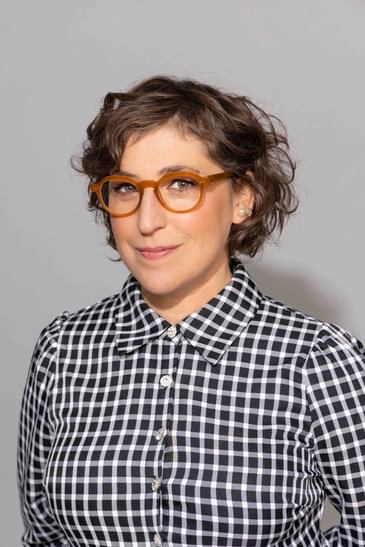
Welcome to Season 14 of Sh!t That Goes On In Our Heads—and we’re opening with a powerhouse: Mayim Bialik. You know her from Blossom, The Big Bang Theory, and Jeopardy!, but in this conversation, she steps off the stage lights and speaks from the heart.
This podcast is proud to be a 2024 People’s Choice Podcast Award winner (Best Health) and the 2024 Women in Podcasting Award winner (Best Mental Health Podcast). With over 2 million downloads, we’re building a global community where mental health conversations are real, raw, and stigma-free.
💬 Got thoughts on this episode? Please leave us a written or voice review: https://castfeedback.com/67521f0bde0b101c7b10442a
Quote of the Episode: "No one is alone. And even when we feel alone, there is always a lifeboat." – Mayim Bialik
Episode Description
In this powerful Season 14 opener, Mayim Bialik gets real about what it was like growing up on Blossom, navigating the pressures of fame, and surviving the harsh criticism that came with life in the spotlight. She opens up about the insecurities behind her confident on-screen characters, the mental health struggles she faced as a teen actor, and the ongoing journey of therapy and self-discovery. We dive into conversations around anxiety, depression, and the stigma of speaking openly about mental illness—especially in families where silence was the norm.
Mayim also shares why she started her own podcast, Bialik’s Breakdown, and how her PhD in neuroscience inspired her mission to make mental health conversations more accessible. We explore topics like codependency, addiction, spirituality, and the small joys that keep her grounded (spoiler: cats, cooking, and stickers make the list). From advice for teenagers who feel out of place to the importance of borrowing someone else’s faith in you when your own runs out, this episode is full of wisdom, humor, and raw humanity.
It’s not just a celebrity interview—it’s a masterclass in being human, messy and all.
Meet Our Guest — Mayim Bialik
Mayim Bialik is best known for her lead role as Blossom Russo in the early-1990s NBC television sitcom Blossom. She played the role of Amy Farrah Fowler on the critically acclaimed CBS comedy, The Big Bang Theory, a role for which she received 2 Critics’ Choice Award wins, 4 Emmy nominations and a SAG Award nomination. She served as host of Jeopardy! for 2 seasons, earning her fifth Emmy nomination for her contributions to the iconic show, which won its first Primetime Emmy the year she hosted.
In 2021, Bialik wrote and directed the feature film As They Made Us, starring Dustin Hoffman, Candice Bergen, Dianna Agron, and Simon Helberg. She hosts the popular mental health podcast Mayim Bialik’s Breakdown, which has garnered over 60 million downloads.
Bialik holds a BS and PhD in Neuroscience from UCLA, and she has authored four books, two of which are New York Times Bestsellers: "Girling Up: How to Be Strong, Smart, and Spectacular" and "Boying Up: How to Be Brave, Bold, and Brilliant."
Socials:
- Instagram: https://instagram.com/missmayim
- Substack: https://bialikbreakdown.substack.com/
- Podcast IG: https://instagram.com/bialikbreakdown
Why Mayim matters: This woman is a force. From Blossom to The Big Bang Theory to Jeopardy! to directing films, Mayim’s résumé is stacked—but what makes her matter here is her willingness to get honest about the hard stuff. She has taken her scientific brain, her Hollywood grit, and her own lived experiences to open up conversations that make people feel less alone. That’s the kind of guest who doesn’t just inspire—you feel her words.
Key Takeaways
- Being “quirky” or different doesn’t go away—it just bothers you less with time.
- Mental health isn’t one-size-fits-all; healing looks different for everyone.
- Secrets keep us sick—honesty and vulnerability are the keys to connection.
- Fame doesn’t shield anyone from insecurity or anxiety.
- Joy often comes from the small, simple things—like cooking, cats, or stickers.
- Borrowing someone else’s faith in you can be the lifeline you need.
Actionable Items
- Start a gratitude practice—list three small things daily that bring you joy.
- If you’re struggling, try “speed-dating therapists” until you find one who’s the right fit.
- Drop the shame: share your truth with someone you trust—you’re only as sick as your secrets.
References Mentioned
- NAMI (National Alliance on Mental Illness): https://nami.org
- Mayim Bialik’s Breakdown Podcast: https://www.bialikbreakdown.com
- Whitney Cummings (on codependency): https://whitneycummings.com
Important Chapters
- [00:02:00] Blossom Days – Mayim opens up about the groundbreaking role and how it shaped conversations on TV.
- [00:06:15] Tackling Heavy Topics – Behind the scenes of handling episodes on consent, drugs, and family dynamics.
- [00:15:00] Starting a Mental Health Podcast – Why Mayim launched Bialik’s Breakdown.
- [00:22:00] Breaking Family Silence – From secrecy to speaking openly about mental health and recovery.
- [00:36:10] Advice for Young Girls – Wisdom for teens who feel different, bullied, or alone.
- [00:50:00] Borrowing Faith – How the belief of others carried Mayim through tough times.
Closing CTA
Subscribe, Rate, and Review! Remember to subscribe for more inspiring stories. Rate and review us on your favorite podcast platform, or visit our Website: https://goesoninourheads.net/add-your-podcast-reviews
#MentalHealthPodcast #MentalHealthAwareness #Grex #DirtySkittles #Podmatch #MayimBialik #BialikBreakdown #MentalHealthMatters #Neuroscience #BigBangTheory #BlossomTV #TherapyTalk #HealingJourney #MentalHealthCommunity #BreakingStigma #SelfCompassion #BeKind #PodcastSeason14
***************************************************************************
If You Need Support, Reach Out
If you or someone you know is facing mental health challenges, please don’t hesitate to reach out to a crisis hotline in your area. Remember, it’s OK not to be OK—talking to someone can make all the difference.
- United States: Call or Text 988 — 988lifeline.org
- Canada: Call or Text 988 — 988.ca
- Worldwide: Find a Helpline
- Mental Health Resources and Tools: The Help Hub
Stay Connected with G-Rex and Dirty Skittles
- Official Website: goesoninourheads.net
- Facebook: @shltthatgoesoninourheads
- Instagram: @grex_and_dirtyskittles
- LinkedIn: G-Rex and Dirty Skittles
- Join Our Newsletter: Sign Up Here
- Merch Store: goesoninourheads.shop
Audio Editing by NJz Audio
Hosted by Simplecast, an AdsWizz company. See pcm.adswizz.com for information about our collection and use of personal data for advertising.
[00:00:06] Hey there, listeners! Welcome to Shit That Goes Under Our Heads, the podcast where we normalize conversations around mental health. That's right. I'm Dirty Skittles and alongside my amazing co-host, you, Rex, we are here to share stories and tips from our incredible guests. Each episode, we deep dive into struggles and triumphs of mental health, offering practical advice and heartfelt support. Because no one should feel alone in their journey. Join us as we break the stigma and build a community of understanding and compassion.
[00:00:35] Tune in and let's start talking about the shit that goes on in our heads. 3, 2, 1! Welcome back to another episode of Shit That Goes On In Our Heads. I'm here with my amazing co-host, Dirty Skittles, and today we have a very special guest, Mayim. Thank you, thank you, thank you for joining us. Thanks for having me.
[00:00:59] Oh my god. Freaking out still, but I have so many fangirl questions for you for just like a moment. Okay, I'll let you get them out of the way. Like, I wrote notes and you're the only guest that I've written notes on because I'm so nervous. But I have to say, I watched Blossom growing up. Me and my brother would fight over who gets TV time. I would always win. I was always the winner.
[00:01:23] And we would put Blossom on and I have to ask my very first question is, when I watched that show, Blossom to me was a character who was fun, quirky, cool. Like, the style was amazing, smart, and seemed so confident and comfortable in her own skin. So as a young girl, it was all the things I wasn't, right? Like I'm like, whoa.
[00:01:50] And the show talked about topics that weren't discussed at home. So I learned like, oh, there are really important things that I'm not getting from the adults or peers in my world that I was getting from that show. Then I kind of stepped away, right? Blossom ends. I don't see you as much. And then I see you in Big Bang Theory. And then I'm like, oh, she's back. And cool, quirky, smart, confident character.
[00:02:20] I'm like, she's back again. And so I had this relationship with you. You didn't know about it. We were, you know, there. So my first question to you is, those characters being like smart, confident, comfortable in your own skin. Is that how you would describe yourself? No. Okay, good. Good. I'm not alone. No, I mean, I think, yeah, I think like I definitely didn't have the confidence, let's say that Blossom had.
[00:02:49] You know, I was obviously it's a different world. Like I'm a person who's an actor and she's a character, you know, so the challenges and the things that she was up against were obviously different. But I think that was really the fun of that character. Like that's exactly it. And, you know, the show was created by Don Rio, a man who originally wrote the show where this character like was like an ancillary character. The show was going to be about the brother, which was played by Joey Lawrence.
[00:03:15] You know, there were two brothers and it was a female executive who said, crazy idea. This was 1989. Crazy idea. What if the show was about the girl? It was like, what? Show about a girl? People don't watch girls. Right. And Don Rio was like, I can do this. I can create, you know, this character. You know, his joke was he could do all the Wonder Years plots for a girl. Nobody would know. Right. Like there weren't a lot of shows like that.
[00:03:44] I mean, there was like Gidget back in the, you know, was it the 60s? Like it wasn't like a thing. There weren't girls on television like that where the show was about them. People thought we were crazy to try. And I think because of that, she had to be confident that way. She had to be like someone, you know, who was kind of bucking the system, you know? And I think I was that in my own way, but I was much more insecure, you know, in real life,
[00:04:13] like girls like me didn't get a lot of attention, you know, at least not positive attention. And so, you know, we also had this character where we could kind of show, oh, you can be smart and you can have a boyfriend if that's what you want. You can not be lonely and sad, you know, which is what a lot of kind of smart female characters look like. And I grew up watching probably all the same shows that you did. I mean, I grew up watching Growing Pains and The Cosby Show and, you know, Who's the Boss and all these things.
[00:04:39] And, you know, then Married with Children came along and it was like, oh, is that what boys want girls to be like? You know, it was very confusing. And the fact is we're all somewhere in between, no matter what kind of female you are, no matter how you identify. Like everybody's a mix of a lot of different pieces. Yeah. I know that. I'm happy to hear you say that because I was like, man, I also was very curious if at that time, just like you mentioned, there weren't a lot of shows like that.
[00:05:07] Because I remember that being like, whoa, like this is really cool that this is happening. At that time, filming those, did you understand that? Like, did you already know like, oh, this is different? Yeah. I mean, we were a show about, first of all, a divorced family. That was very like, what? You know, that was already strange. The fact that it was a dad raising kids was like, what?
[00:05:29] But the fact that the mother character, who we didn't meet until later, she left the family to pursue her own career. And at the time it was like, can we even talk about a woman who might want to have her own feelings and life leaving her children? What kind of woman does that? And the notion is not like, oh, now we're in a culture where like, you're told to leave.
[00:05:51] But we are in a culture where we're framing the significance of the female experience in particular as pretty important in ways that back then it was like, oh, it's selfish. Right. So we knew those things were unusual. And yeah, we were fighting with censors all the time because Don Rio was like, he had kids. He's like, I know what kids talk about. They talk about condoms. They talk about sex. They talk about drugs. And, you know, we were on NBC and this is a very different time in television history.
[00:06:20] It was like, we can't talk about these things. And it's like, now you can practically show safe sex on television. Back then we couldn't even talk about it, you know, without a fight and a this and a that. And it's like, I'm glad we got to do those like special episodes. We did an episode about assaults, you know, about date rape culture. Like that was, you know, James Marsden was in that. We did a lot of episodes that there was an episode where Joey gets touched, you know, in an unwanted way. Right. Those were things that have always been happening.
[00:06:50] And it did. It took the bravery of Don Rio and we had an amazing group of writers, a really loving group of writers. And it was mostly men back in those days, but we had a couple really strong women, you know, who were in that. We had a couple of years in that writers room. And, you know, Brenda Hampton is one. She went on to do, you know, Seventh Heaven and Secret Life and, you know, things like that. We had Rossell Rosette Schaefer who recently passed away actually, who was a very strong voice.
[00:07:16] So it was also, it was the voices of women that Don Rio was willing to say, how do girls talk? What do women want? You know? Yeah. How do you ask? You're never going to get to ask anything. It's just going to be me. Oh, I'm so sorry. No, I have questions. But let's go fangirl for like the next time. I'm having a great time. I'm having a great time. We're good. I'm so sorry, G-Rex. All right. You'll pay for it later. Last question and then I'll let you. Hopefully not.
[00:07:41] When you're filming like those heavier episodes, how do you balance your own mental health during that? Because like the Joey getting touched one, like for me, that was like an eye opening moment just to know that was something that could happen, that it's not okay and to find a voice about it. But how do you balance yourself? You know, I think at the time, you know, I was 14 to 19 when I was doing that show. So I don't know that I had as much awareness.
[00:08:07] I mean, like, yes, I got into therapy at some point in those years, but I don't know that I had that much awareness of kind of how that would impact me personally. What I do remember and what Jenna Von Oy and I have talked about, she played six. We actually did an episode of my podcast where she came on and we talked about it. You know, the conversation around women was still very old school back then, even with a tremendously sensitive, you know, community of writers and producers.
[00:08:34] We felt very protected and very cared for, but it was not uncommon, you know, for us to have Playboy models on the show and for them to NBC to do that to try and get ratings. Because again, it was like, nobody's going to watch a girl. We need to have like Playboy models. And, you know, at the time, like, I get it. It's the things that people do for ratings. But what Jenna and I have talked about is like, here we were like two young teenagers trying to like have our place and know where we belong and feel important, you know, as women and as performers.
[00:09:04] And what we saw was what happens a lot, you know, was like women being brought on in bikinis and people would come from other sound stages to come take pictures with their favorite playmate. And we're just kind of like watching the whole thing. And like, you know, as a feminist person, as like, you know, as like a feminist teenager, I was like, are these women being oppressed? Like there wasn't a conversation about this being empowering. Like we didn't even talk about it. It sure didn't feel empowering from where I was sitting.
[00:09:32] But again, like I can't insert myself into another woman's, you know, experience. I know that. But I do remember at the time just what an interesting climate it felt like to be a teenage girl and be try to be valued, right? Like you were, I'm sure, right? Like so many young women in particular, to try to be valued for your brains, for your creativity, for all these things. But the truth is a lot of attention, you know, is directed towards these kinds of things.
[00:09:58] And that was something that Jenna and I, you know, kind of in retrospect, we're like, gosh, that was an interesting way to live our lives, you know, as teenage girls, seeing that kind of attention for women, you know, and of course, how could you not want to compete for that attention? A lot of people do. Right. Yeah. So like for me, so like I said, you guys are about 20 years younger than I am. Man, I feel old.
[00:10:24] But even those topics for me, because I was a lot older when that show was going on and like even Big Bang Theory. But for me, I could see the little kids in those shows and I was hoping that they were having their mental health taken care of. Because for me, hindsight is 20-20, right? We all had so many competing things going on in our lives, you know, acting, just being a regular person.
[00:10:53] And I'm wondering if that ever played into your own mental health and if you had good practices when you were a kid so you could kind of stay centered. You know, I'd like the answer to be like, yes.
[00:11:35] Yes.
[00:11:39] I'm wondering if you had a lot of chaos. I do know many people who lost their lives,
[00:12:09] who took their lives, who I worked with and who we socialized in the same circles. And there's usually mental health stuff going on, you know, and we had so much attention, like, you know, thank you, Ronald Reagan, for this like war on drugs or, you know, a war on, you know, brown and black people, honestly. Like, meaning that's what we all grew up in this culture of. That's how we understood, like, the drugs are the threat and we have to, you know, there was all this attention
[00:12:36] paid on that and no attention paid to the actual mental health, you know, disorders, syndromes, features that for many of us, we seek alcohol and drugs to make those better, right? So when we see someone who's using drugs or who's, you know, using alcohol or really using anything, right? Work, sex, video games, shopping, what it is, it's an indication that there's, you know, we call it like a God-shaped hole, right?
[00:13:03] So for me, the staying centered is much more about, yeah, what's happening mental health-wise and what are we looking to do to band-aid that, you know, as young people. I'm grateful I was on a clean set. I never saw alcohol. I never saw drugs. Like, people may have been doing it on their own time, but it was very clean and I'm grateful for that. But it's enormously stressful also to have yourself be the subject of public conversation even before the internet, before social media. You know, I'll never forget.
[00:13:32] It was a TV reporter. I don't know the name, you know, a TV reporter for the TV Guide, which was like a huge, like at that time, it was a big publication. And, you know, the writer, it was a man. And he, you know, he criticized my face. He criticized my features and how they were put together. He criticized the shape of my face, you know? And this wasn't just like, oh, me taking it personally. It was like basically like, I don't know what's with this person. Right. And how she was put together, but like, here's what the show's about.
[00:14:03] And I never forgot. Like, I mean, I don't mean like, oh, I'm carrying it and I talk about it in therapy every week, but like that's messed up. This is really messed up to have, you know, and as we all know, the internet is just an arena for people to say all sorts of things when they don't even know you or they're judging how you look. Like it's a crazy place to, you know, to try and operate. So I think that was just starting, you know, in many ways. And then when I was on Big Bang Theory was when we finally had personal cell phones and when Instagram at that time was a fun thing, you know, like,
[00:14:32] ooh, can we get a thousand followers? Can we get, you know, like, what's it like? We didn't realize, you know, what it was becoming. But when I was younger, there was less of that kind of pressure. I think especially for girls, you know, we didn't wear false eyelashes. We didn't have fake nails. We don't wear Spanx. If you were a kid, you were supposed to look like a kid. And I'm grateful for that as well. Yeah. You're just trying to match colors and patterns. And yeah, and just mix it up. Just color blocking. Like I just basically look like Will Smith, you know, every other week.
[00:15:02] And it was all good. But I think the other thing I wanted to ask you is, you know, you have your own podcast. And, you know, it's mental health and neuroscience focused. And what made you decide to start that? So I actually originally had this idea to try and combine, you know, my science background. I have a PhD in neuroscience and I'm a science communicator. And it was, you know, kind of after,
[00:15:31] yeah, like after Big Bang and kind of like, gosh, could I combine that with my visibility and my platform to actually, honestly, to like do something good, to try and democratize mental health. And I originally pitched it to Warner Brothers as a talk show. Because I don't know, that's what I know about. I know about TV, right? It's like, oh, a talk show. I talk to people. And like other people have the talk shows. And they're like, we think this would be better as a podcast. And I said, I've never listened to a podcast. What is that?
[00:16:00] And my partner, Jonathan, was like, I got this. And so he sort of explained what podcasts were becoming. Like, I literally didn't even know. I'm just not, like I wasn't tapped in. And what we learned was that a podcast is much quicker to produce. You can kind of do it on your own. You can own the property. You can own kind of your intellectual, you know, you can make it what you want, which, you know, both of you know, like it can be what you want and what you, you know, want to provide as a service.
[00:16:29] And then COVID hit. And I was like, well, there goes that idea. And Jonathan, my partner, was like, I figured it out. And we basically created, you know, this podcast studio. This used to be my bedroom. This was a house that I used to live in. And I was going to sell it. And then COVID hit. And he was like, no, we're going to turn it into your podcast studio. And I was like, I don't even know what that means. But here we are. And so we basically wanted to democratize mental health. We saw that during COVID, so many people didn't even know what anxiety was.
[00:16:59] You know, I literally had like, God bless those people who were like, my stomach hurts and I can't sleep. And like, why do I keep thinking about bad things I did 20 years ago? And I'm like, oh, that's adorable. You don't know what anxiety is. And those of us who've been like struggling since we were, I don't know, four years old, it's like, I got this. Like, I know exactly why your stomach hurts and you can't sleep. And you're thinking about mistakes from 20 years ago. You are experiencing anxiety. So we really just started
[00:17:29] with wanting to give people a vocabulary. What's the difference between panic and anxiety? What's the difference between depression and grief, right? Grief is often diagnosed as depression. And here, take this pill and you won't feel grief anymore, right? So we started just sort of talking like that. And we spoke to celebrities and we spoke to experts. And what started happening is more and more people started talking about addiction, spirituality, transcendental experiences. And, you know, now we've sort of entered this world of like esoteric
[00:17:58] healing modalities and an understanding of the universe as a much bigger place, you know, than many of us have been taught. And the notion of what happens when you pull back 30,000 feet and you realize you're not your thoughts and you're not your feelings. You are who's observing that happen. And that's the way, you know, we try and hopefully inspire people to find what works for them to pull themselves out of whatever pit or hole they feel that they're in. And for some people, it's medication. For some people, it's therapy. For some people, it's somatic work.
[00:18:28] You know, for some people, it's moving out of an expensive city and being more in touch with nature and things that they love. There's not one formula. And according to, you know, sort of the way corporate medicine works, there is one formula and it's not true. You know, there's not one way that works for everybody. I feel like that's something
[00:18:57] we definitely talk about through the conversations that we have with whoever joins us is that how different it can look for everybody. Yeah. And it's not a one-size-fits-all and we're huge advocates of if you're going through therapy, speedate your therapist, find that right match, ask the questions, do the work. Yeah. And like for us, like the whole podcast started because of me. You know, I had a suicide attempt on Christmas Day 2022. At the time, you know, prior to everything
[00:19:27] that happened, I had looked for a podcast and I couldn't really find anything that like soothes my soul. You know, the reason we add a little levativity into our conversations is it makes the hard stuff a little easier to digest. And, you know, when we started, it was just the two of us and then we started bringing guests on and for us, it's therapy. It's free therapy. I've learned so much about just like different tips and tricks on how to manage day-to-day stress
[00:19:57] and anxiety because we all go through it. And, you know, now more than ever, like the world is totally on fire. And, you know, we, these conversations are important and for us, it's, you know, every time somebody shares their story and unlocks somebody else's prison and we've been hearing more and more from guests, like people, I have no idea who they are. Like all of a sudden these messages show up in Messenger. I'm like, I'm not quite sure who you are, but you just made me cry and I'm going to forward this to Dirty Skittles.
[00:20:26] But I was, I was wondering if like, did you catch any grief from like friends or family for starting a podcast talking about mental health or? You know, I'm trying to think. I mean, my sons are my biggest critic so they tease me all the time because they're 17 and 20 and it's their job, you know, to tell me why I'm such an incompetent human, you know? I can't open the refrigerator door right. Like I cannot do a thing right. That sounds fun. It's kind of normal
[00:20:55] and they're also very loving and interesting people. You know, I think that talking about mental health, that's the real taboo. And, you know, I'm inspired by like my friend Will Wheaton. He was the first person I heard who was like, here's the medication I take. Here's what my symptoms look like and I'm not afraid to talk about it. And I was like, I mean, this was years ago. This is when I was on Big Bang and I really like, and he and I are both affiliated with NAMI, the National Alliance on Mental Illness and I actually used their services many years ago and he was the one
[00:21:25] who inspired me and I, it was so taboo that like you can't even, I mean, maybe you do remember, but so many people don't remember what it was like. It was literally like what cancer used to be like when you had to whisper it, you know? Like, that's how it was with mental illness or admitting that the fear was like, I won't get hired. People will think I'm crazy, you know? And like, I won't, whatever. I mean, all those things that so many of us fear. So, that feels so liberating and, you know, I come from a family where the key is
[00:21:55] to keep secrets. That's like, literally, it's written into the, it's written into our blood and, you know, three of my four grandparents fled the pogroms leading up to the Holocaust. So like, I literally come from hide as much as you can. Like, don't even show if you're happy because it will attract the evil eye. You know? And so, talking about your problem, airing your dirty laundry, it's like the biggest, it's a huge no-no.
[00:22:24] It's a huge no-no. And the house that I grew up in also, it looked really good on the outside and there was many good and beautiful things about it, but there were things, there were things that we don't talk about that I have chosen to talk about. My father died 10 years ago and, you know, I have had people be like, should you be talking about him? And look, I don't speak about him to denigrate him. My father, I have a tremendous amount of compassion for him, but he, you know, he struggled a lot. He struggled a lot
[00:22:53] and I grew up as the child of parents who struggled a lot. We don't talk about those things. So, you know, I wasn't put on this planet to walk a red carpet, to win Emmys, you know, to look good in a size four dress, which I think I look like a bobblehead when I'm that skinny, like I'd given up. That's not why I was put here. You know, we were all put here to try and model compassion, love, and whatever, you know, I think the creator of the universe, you know, wills for us.
[00:23:22] And that's not fighting. It's not hatred. It's not boycotting. It's none of that stuff. It's finding places we can connect as humans. And for me, like, that's what I sort of decided to sort of, you know, I put those, the eggs in that basket of like, what if we try and help people get information and kind of like exactly what you do? It's our secrets. And if we talk about it, we can't hide behind that. It's very, you know, it's brave.
[00:23:51] And a lot of people hate that word, but what you do is brave. It's brave to say, I came close to not wanting to live and I didn't know there was another way out. No one's alone. You know, no one is alone. And even when we feel alone, that's like, there's always, there is always a lifeboat. You know, there really is. Right. Do you remember when that changed for you? Like coming from that hiding, you don't talk about it to then realizing I'm as sick as my secrets. Yeah. I mean,
[00:24:21] it was about 20 years ago that I found rooms that support that. And that, you know, that's another thing. Like, there's a level of anonymity in many of the rooms that many of us sit in. And also, I think a lot of people don't realize there is free help and support from a lot of organizations that, you know, many of us do get support from 12-step groups who can say, oh, are you addicted to helping people? Are you addicted to feeling, you know, like you're only alive in the midst of a crisis?
[00:24:52] There is a seat for you, you know, and there's a way of life that really is a lifeline. So yeah, for me, it's been a process that I've, you know, actively been working on, but it wasn't until, you know, about 20 years ago, my dad was hospitalized, you know, for eight days when I was in my 20s and it was very, it was horrible, it was horrible for him, it was horrible for the whole family. And that's when I worked with NAMI and that's how I got affiliated with understanding mental illness and understanding the ways to get out of the way
[00:25:20] and step out of a codependent pattern because for those of us who love people who are hurting, we can actually hurt, you know, in our helping. And yeah, that has really taught me a lot about, you know, the process of healing and recovery and giving people the dignity to make their own decisions and not feeling like I'm so powerful that I can fix everything, you know. Whitney Cummings talks about this a lot. She's a real expert in all things codependent and we've done
[00:25:49] a couple episodes with her and it's just so helpful, you know, when people really have that language and that framework down it's very helpful for me and I need that constant reminder. So, yeah. Yeah. Wow. Okay. So, my heart is like feeling very warm and very grateful for that. Do you think that as an influencer and I know you probably don't feel as yourself as an influencer but do you think that influencers out there
[00:26:18] like once they start showing their true emotions or true self like whether they have a mental, you know, mental health issue or it helps their followers feel more human? I mean, I think, look, at its best, yes, right? Like, celebrities, they're just like us, you know? Like, I think at its best, yes. And I don't want to say at its worst but there is also a danger, you know,
[00:26:48] to the social media world of diagnosis and of symptomology and pathologizing, you know, every way the wind blows. I actually read a really good article recently, I think, was it Kat Rosenfeld? It was someone at the Free Press, I think it was Kat Rosenfeld and she wrote about how like when everything is clinical, none of us are actually just able to have a normal experience. Meaning, if like you're a nice person but you're labeled a people pleaser by the internet, like, oh,
[00:27:17] can I not be nice anymore? Right? Or if you're dating a jerk, like, it doesn't necessarily mean that jerk is a malignant narcissist. It could be, right? But we can also get lost in a lot of these words. I'm much more about what does the behavior look like? How is it impacting my life? How is it impacting, you know, their life in regards to me? And, you know, you teach people how to treat you. So what do I want to be around? And I think a lot of times, and I see this because I have a 17 and a 20 year old,
[00:27:47] you know, we want to sort of diagnose everyone and be like, here's why I don't want to talk to them. They are this, that, and the other. And the fact is, like, what if we don't need to take everybody's inventory on their life and we just say, this is not a person I want to spend time with, you know, and we kindly, gently, lovingly detach, right, from that person. So I also think that there is, there's, you know, an overemphasis on labels, on self-diagnosis. I think I read some statistic that like 70% of people who've like seen a commercial for a drug
[00:28:16] that they think they qualify for actually don't qualify for it, you know? But everybody wants to be like running in the ocean with reckless abandon, you know? Like when I see that lady in that commercial, I'm like, if I could be that confident in a bathing suit, I want whatever pill she's got. I don't have psoriasis, but maybe the pill would make me, you know, like happy. So yeah, I think that is, and I do think, you know, it's important. I really only speak to my experience. I'm not a clinician, you know, I'm a doctor of neuroscience, but I am not a practicing neurologist.
[00:28:46] I'm not a therapist. I'm not a psychiatrist. I can't analyze you and anyone who says they can sort of clock you, you know, in 10 seconds, be wary of it, you know? So we try and speak from our particular experience and we bring on people who have different experiences, right? Like I'm not a meth addict, but we've spoken to some pretty incredible people in recovery who can speak to that. And we all have different experience. And as you both know, it takes a lot of different perspectives.
[00:29:15] I wish that everybody in the government would understand this. It takes a lot of different perspectives to actually form an understanding of each other. You know, it can't just be we're cherry picking the people that agree with us or that have our experience. Right. That's, and that's key, right? Like I think you hit it, like being able to understand each other because we'll have guests on and they're telling their story and I haven't, you know, walked that path. I don't know what it feels like, but they'll tap into something that it's like, oh,
[00:29:44] I know exactly what that feels like or they'll put a word or feeling to something that I felt. So it's just being able to have those conversations and open up and have a safe space to do so. And just be human, right? Like none of us are perfect. Right. I mean, none of us. I know I'm not. I mean, I try. Well, and I think that's also, that is for me, that is some of the danger of influencers and mental health and that sort of overlap and the Venn diagram is like so many of these people,
[00:30:14] there's a huge emphasis on appearance and being polished and especially from celebrities. Like I figured it out. Here's the pill to take. Like this mushroom extract. Well, whatever. And like, it's rarely that simple. I mean, I literally, I can't remember. I think it was Halle Berry and I was like, oh, she found something that fixed her blood. And I was like, I shouldn't. I'm like, what am I doing? I don't know Halle Berry's life or experience, but we think we do. And that's part of the, that's part of the skepticism that we all have to have
[00:30:43] as consumers in a capitalist society. If they're trying to sell you something, I don't mean Halle Berry, but I'm saying in general, if you're trying to be, you know, sold something, just be careful. Do your own research. what, what's going to work for other people, especially those who look like they've got it all together and those who don't, you know? I mean, I do. I try and wear a little bit of makeup on our podcast just so I look a little bit presentable,
[00:31:13] but I don't present, you know, as a polished persona. I mean, I once saw an episode and I was like, Jonathan, how did you let me do that entire episode looking like I had stuck my finger in a light socket? Like, he's like, that's you doing you. I was like, well, there should be some limits to that, you know? I have to laugh at that because like we recorded last Saturday and I looked super disheveled and thank God we don't do like release the video,
[00:31:43] but today I actually like comb my hair and I put on a clean shirt. It's adorable. It's adorable. A collared shirt. I'm like, look at you stepping out. Okay. Are you normally just shirtless? She is just free. As a day she was born. Not that free, but you know, I live in upstate New York. I get some, I've got some really nice weather right now. I'm in shorts. The other day I was in sweats again, but like I get to like dress how I want to dress,
[00:32:13] right? Like I do all my meetings on a Zoom. You see me from the chest up. Okay. When I head down below, nobody needs to know. Nobody needs to know. But you know, I just love your openness and the thing I love about podcasts is like we don't have geographic boundaries, right? So like your episode, this episode will be listened to in over a hundred countries. I mean, that's where we've got listeners right now. But I just, we get to share that message of hope and that,
[00:32:43] you know, what may not be working today, you may find something that can help you tomorrow. And just reminding people that there are people out there that will listen to you. Even if you don't have community, if you don't have friends, dude, if you're here in the U.S. or in Canada, pick up the phone and call 988. They will, they saved my life on Christmas Day and it's not just a suicide ideation line. It is a crisis hotline. And I think that more people need to know
[00:33:12] that those resources are available out there. Like I'm alive today. For the time being, they are and we need to protect them. Yeah. Yes. Yes. A hundred percent. Because, you know, that certain people in the government, you know, have taken down websites that we used to promote even two years ago. Oh, it's so painful. They are taking away resources that people need every single day. So, whatever we can do to protect that resource. Yep. I think that
[00:33:41] what we all three do is helping the community heal and find that safe space knowing that they can come on to our shows. and for us, we do it as like anonymity because a lot of times guests have come on and haven't shared their stories with loved ones or, and that's why we don't release video unless we've, we had one guest asked for video and man, what a pain in the ass that was to do. Like I had to find all the sections where one of us was not picking our nose, but
[00:34:12] I just commend you for doing what you're doing and putting out into the world and I've listened to your episodes and I read your newsletter and it makes me feel good. It makes my heart feel good. Yeah, we're so... Like a live cooking show. I'm like, ooh, what are we making? It's funny because I made tomato sauce last night and I was like, this was so easy. I should have done this as an Instagram live because this turned out delicious. I'll have to make it again. Let me know.
[00:34:42] I have a freezer full of tomatoes that I grew this season that I need to make sauce. Okay, so wait, we're going to take a second here. This was a recipe that used whole peeled canned tomatoes. Oh, wow. And I like had them from like when I used to make chili and I haven't made chili and I was like, I feel like I should be able to make, they call it dop. It's like that special Italian, like very like light tomatoes. It was delicious. Four ingredients. I had a great time. It came out really good. Okay. Is it like tomato, basil?
[00:35:10] I didn't even use basil. Literally, I sauteed an onion. I sauteed garlic. I added the pure, I blended the canned tomatoes. I simmered it for like an hour, 15 minutes. Salt, pepper, done. Delicious. Anyway, sorry. That's how I'm going to, I'm going to. A kitchen moment here. I'm coming to your house because that sounds delightful. I'd invite you to be there. you're having pasta tomorrow whether you like it or not. What were you going to ask? No, no, I'm waiting. You go.
[00:35:40] You're waiting for me? Oh my God. Wow. Just enjoying the show right now. But, what advice do you have for maybe like a 10 to 15 year old girl out there who's just trying to figure it out, right? Like, maybe getting bullied at school, maybe like has a horrible home life. Like, what can they do maybe to like help themselves out and feel less alone?
[00:36:10] I appreciate this question. Sometimes people ask me like, what would you tell, you know, little you? And I guess I kind of think of it like that. You know, one of the most important things, like I heard a lot, especially like the people that I listened to when I was young, you know, and the sort of shiny, polished images that many of us grew up with was like, it's going to be okay. Like, you're an ugly duckling and then one day you'll be beautiful and all the boys will like you, right? Like, that was like the dream, you know, of my era and I think probably,
[00:36:40] you know, you both can relate to some extent of like, here's the norm, right? Here's what I discovered, you know, which I wish I could tell young me in which I would say, if you're quirky, if you're different, if you're odd, if you think differently, if you like don't want to shave your legs when everybody else is or, you know, if you're like a funky person, you're probably always going to be some version of quirky, feeling outside, feeling alone. The thing that gets better is it will bother you less
[00:37:10] and that's what it felt like to be a young, quirky person is that it bothered me so much. I didn't understand it. Why was I made this way? Why am I different? You know, when all the kids were like smoking pot and taking acid, I was like, I don't know that I want to. Is there something wrong with me? Or, you know, like I just, I couldn't figure out which group to fit in. Like, was I a hippie? Was I a goth? Was I like, I just, and I'll be honest, it's kind of like that as an adult,
[00:37:38] but it bothers me less. And so that sort of goes with all of the like mental anguish, you know, that I think about that I had. It's very intense. And for some of us, the hormones of puberty, femaleness, perimenopause, like, you know, fill in the blank. For some of us, that hits us harder. And that was a lot of my teenage years. It was very tumultuous emotionally. And what I know is that it's not that goes away, but you're able
[00:38:08] to call on more resources. And it does get better. I can't promise you like the life of, you know, Christina Applegate on Married with Children, right? That's what I thought I was going to one day just magically be here. That's not what it's going to be like, but it does get easier and you gain more skills. And being human is really hard. It's really hard. So if you're waiting for it to get easy, keep waiting. It gets different
[00:38:38] and there are things we can do to make it less painful, but it's hard being human, especially if you're a thinking human and a feeling, like a deeply feeling human. And if you are, you know, if you're a woman, you're going to be held to different standards no matter what. It's true. And if you're any underserved population, if you're part of the LGBTQ community, if you are a person of color, like it is going to be hard in a different way.
[00:39:07] It's a hard world and it's our job to make it less hard, you know, for others too. Yeah. Which takes me to like big movement I have right now is just be kind. Listen, y'all have no idea what's going on in somebody's head. Right. So take three seconds and to be nice.
[00:39:36] And if you can't be nice, maybe don't open your mouth. Yeah. And also like always assuming the best of other people is very hard. When someone cuts you off on the freeway, when someone's rude to you, it's really hard. It's hard to assume the best. But what I have found when I am at my most spiritually sound, things that used to bother me and make me want to throw things no longer bother me and make me want to throw things. And that's where I can be generous. You know, I just,
[00:40:06] I have a gratitude list, a group that we each send gratitude lists every day. And I was like, I don't have to fight every person every day all the time. You know, like my son needed something and I was like, he should get it himself. And then I was like, you know what? I don't need to fight about this. Or like my ex-husband said something and I'm like, I want, I'm like, you know what? I don't have to do this. And some days it's easier than others. And some days I wake up like who's going to come at me because I will come at you first. You know? She's violence on those days. It goes up and down.
[00:40:36] I get those moments, but I've been a lot better. Like if I go into a store and I see somebody who has a name tag on, I call them by their name. Yep. Because you never know. That might be the nicest thing that's happened to them all day. Say hello to people of service. This is something I taught my children. Say hello to people of service. If you see a janitor in a hallway, say hello. Go. Thank people when they're doing their job. Like be a kind person. Yeah. It's really not that hard. And you know,
[00:41:07] same thing goes for like, I don't know, podcast reviews. Like if you don't have anything nice to say, maybe don't freaking say anything at all. Okay? You don't like what we had, what we put out there? That is fine. You know what? Walk away. Take what you like and leave the rest. Yeah. Literally. Like be nice. Be nicer. And like, like I said, you know, the world's on fire. We could all use a little bit more kindness and you know, just going out and finding your joy. So like,
[00:41:36] how do you find your joy? You know, one of the things that, you know, I'm grateful for, I find joy in very simple things. And that's not true of everybody, you know, and that's fine. You know, I'm not saying I'm better than other people, but it is much easier for me to find joy. Like for example, I love cleaning and organizing. It makes my brain feel very good when something is like wrong or messy and I can make it right in 20 minutes, you know?
[00:42:05] Like I, the shower needed to be cleaned yesterday and like I've been putting it off and I was just like, I'm going to set aside this time and I'm going to clean this shower. And you know what? Shower looks great and that feels good for me, right? So everybody's got their own thing, but I do, I take joy in very, very small things. I really like my cats, you know, and I, it's not so much to say like, oh, I like cats, but what is it like to every time you pet a cat to say, this feels nice on my hand.
[00:42:35] This cat is looking at me like it adores me. Like those are those kind of moments, you know, I call it like that elevator drop feeling when you feel like, right? Those are the feelings that literally you can pay thousands of dollars to many gurus to train you how to feel. That feeling is regenerative. It's good for your immune system. It's good for your heart, like literally. So trying to find those moments, you know what? I found a penny on the street today and I keep a box of change and at the end of the year, I donate it to a cause
[00:43:05] that my kids and I decide is worthy. And when I see that penny, it's like, I'm going to pick that up and I'm going to put it in the jar. You know, like those are kind of small moments. I also, you know, I'm kind of a child. I like stickers. I like pom-poms. You know, when you go into a store and they're like, take a free sticker, I'm like, damn straight I will. I'm going to add it to my sticker collection. It's kind of, it's kind of like me and my fidget spinners, man. Yeah, we're big fidget toy people. We are five years old at best on any given day.
[00:43:35] Give me my shiny toys. But like for me, my joy, you know, I live in upstate New York. We live on eight and a half acres. My joy is walking outside and seeing the doe and the fawn. Oh, wow. So we're looking back at the camera at night and we have two fox dens in our property. Oh my gosh, that's so cool. So we had, the other night, we had two mama fox and the baby fox playing in the backyard. They come out at like 4.30 in the morning
[00:44:03] and like 10 o'clock at night. So seeing things like, that brings me joy. I moved up here from South Florida in 2020 and like, I don't miss Florida. Not even in the tiniest, okay? Because being a lesbian, like it was getting to be a little rough. There's too many people, too hot and the politics were not my thing. But I will tell you, if you ever want to move during a pandemic, because there was nobody. I mean, literally nobody on the road.
[00:44:33] I was doing 90, up 95. I'm like, big pimp. I hope we never have to find out again where we would want to move during a pandemic. But that's really interesting. It's been great for my mental health. But you know, when we were, we were talking earlier about shame and like weakness and stigma, part of me not being able to tell everybody what was going on with me is because I felt those things. Of course. I felt weak because I couldn't fix myself. But of course, I didn't understand
[00:45:03] what the hell was going on in my head. And number two, you know, I felt like I couldn't really open up to people because of that shame and that weakness. Yeah. But once I did open up, you know, and I found a therapist and Dirty Skittles and I decided to do the podcast, that's when I felt my best. And I will say over the last three years, with a shit ton of therapy and, you know, 140 episodes in, I'm the best I've been
[00:45:33] in over 20 years. It's wonderful. And I'm thankful for podcasts like yours because, like, I don't fall asleep in your podcast, but I can tell you several others that I was listening to in, like, October, November, and December of that year and I was like, you know, you put your headphones on and, like, remember Ferris Bueller's Day Off? Yeah. Bueller. Bueller. I'm like, within, like, 30 seconds, I'm fucking asleep. I'm like, this is not helping. This is making me feel crappier than I already do, but... That's really funny.
[00:46:04] You know, if you are an extrovert, because I am a complete extrovert, but, and we are very good at, like, shielding up, if you're an extrovert, please take your mask off because the last, the only person you're gonna hurt is yourself and I found out the hard way. So, you know, be kind to yourself. Open up, let people know what's going on because there are people out there that want to help us and whether that's a podcast or a crisis hotline or a support group, you know, we are out here
[00:46:33] doing the work because we love it. I don't do it because I need it. I do it because I love it because I want to learn and I've learned some really cool shit from your podcast. Oh, that's so sweet. I'm just, I'm so grateful that you're here and I do have a couple more questions. So, if your anxiety had a thing song what is it and why? Let me think. I mean,
[00:47:03] the first thing I thought of was I will survive because my anxiety is like, no matter what, I'm here. That's the first thing I thought of. Gosh, I think, I mean, what came to me was a lot of sad, a lot of sad songs, a lot of sad music. Yeah, you know, there's different kinds of anxiety, there's different kinds of depression. Yeah, my anxiety is, yeah, it's just like the beginning of Revolution Number Nine by the Beatles. It's just like backwards sounds,
[00:47:33] like what, trying to pick out things and it's just like a loop. Yeah, that feels probably the most accurate. That's a great question. I love that. And what is your favorite word? Oh my gosh. What's my favorite word? And I'm thinking of what my kids say, I always say. Apparently, this is, my parents are from the South Bronx. It's kind of two words, but it's yeah, no.
[00:48:03] Like, yeah, no. It's like, if you agree with someone about something that's a no, yeah, no. It's pretty good. I'm going to be using that word. Yeah, no. Yeah. And what's your least favorite word? My least favorite word is well, it's like when people tell me to calm down. So the phrase which like, if you're a person who's mentally not well and people tell you to calm down, it makes you be like, I'm about to murder someone and then
[00:48:33] everyone will be calm. I'm going to punch you in the throat. Exactly. I hate, oh my gosh, it's like, I hate, and when I was younger, I remember, look, my parents, they were doing the best that they could, you know, but it doesn't go over well. So I think that would be my least favorite. I can, I can completely understand. Immediate switch. Oh, it's the worst, especially when it comes from a man. Yes, exactly. I don't know why. I'm like, you said what? You told me to do what? The hockey gloves come off. I'm like,
[00:49:04] I'm ready. I'm going to take you down. So where can our listeners find you? It would be hard not to find me, although I will say there are a lot of, there are a lot of, you know, fraudulent accounts and things. So I'm Miss Mayim, M-I-S-S, M-A-Y-I-M. We exist, you know, as a podcast and then we have actually a Substack page under Mayim Bialik's Breakdown and on Substack people can join us for personal conversations, they can ask personal questions
[00:49:34] and we have a really nice community over on Substack so that's a place where we exist. Yeah, and we're Bialik Breakdown on Instagram and we exist all of those places but my page, you know, Miss Mayim on all the places is probably the safest. So yeah. Very cool. So awesome. Thank you so much. Thank you. Do you have any more questions? Because you've been full of them today. I have one last is, but now I feel like it's gonna hurt take a nosedive down into the sad town. Yeah.
[00:50:03] If you could say during your hardest times what kept you going as like an inspirational end note. You know, it's kind of a, it's not a sad answer but the faith of others. You know, I've always said that I, you know, I've lived a life where people believed in me more than I believed in myself and I think that's true of every success I've had and also of my deepest, darkest, challenging times.
[00:50:33] It's been the hope or faith of someone else. Sometimes it's been, you know, the woman who does traditional Chinese medicine with me and, you know, holds my feet while I shake and cry, right? Sometimes it's a therapist. Sometimes it's a functional medicine doctor who says, I believe you when other doctors have said I don't, you know. Yeah, it's been the faith of others and in particular my partner. You know, we have a mental health podcast together where we both get to grow and fight things out and, you know,
[00:51:03] understand how best to be of service and he believes in me, you know, more than I believe in myself and I don't think that, you know, you need a partner to do that or you need a man. That's not what I'm saying even as a friend, you know, he's a person who believes in me and believes that I have the capacity to keep growing and healing and a lot of times I don't believe that and so we say, you know, we, you know, I'm sure you can relate, you borrow someone else's faith in you and I have a lot of people who let me borrow their faith and as I pay it forward,
[00:51:32] I hold that space for other people when other people are hurting, I get to say to them, you could borrow my faith in you. Aww. I love that. Like, that was dirty skittles for me. You know, we, we, well, we worked together. We had worked together for seven years. Wow. At the time, she was my manager and after everything went down, like, she was my true confident and she's the one who helped me to get, she helped me to get into therapy
[00:52:01] and we got to build this beautiful podcast together and, you know, we're changing, helping to change lives every day. Absolutely. With just our vulnerability and our honesty and, you know, some irreverence. I am probably the most irreverent person you'll ever meet because, you know, once I turned 60, I stopped giving an F about a whole lot of things and then I hit 62 and now I just really don't give a crap but, you know, don't, this is my lesson to both of you,
[00:52:30] don't wait until then. Like, start, like, setting your boundaries and doing the things that are good for you that make your heart smile because at the end of the day, when your heart is smiling, that's when you feel your best and I appreciate you for everything you do. I followed you for, you know, forever. So sweet. Thank you. I'm so, so honored to have you on the show. So thank you. Well, this was really awesome. I also was picturing the two of you in two rooms in the same house and that you're also married
[00:53:00] but that's probably not the story. No, no. She is straight as an arrow. Me, I am. I tried not to be but it didn't land for me. It didn't take. Straight as an arrow. I am on the other side like gay as a $3 bill. So, you know what? Not changing ever. Her. My wife is probably, thank God because you know what? We've been together for 30 years. Wow. Yeah. Well, thank you so much. This was really delightful and again, I appreciate you being flexible
[00:53:29] with how crazy it's been in my scheduling over here. So thank you. Hi, all. Thank you so much for listening to this episode. I'm G-Rex. And I'm Dirty Skittles. Don't forget to subscribe, rate, and review this podcast. We'd love to listen to your feedback. We can't do this without you guys. It's okay to be not okay. Just make sure you're talking to someone.