
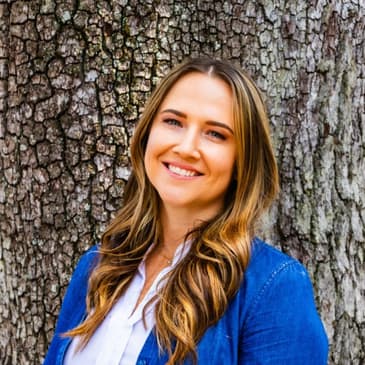
Kicking off Season 15 with a conversation that hits straight at the heart of what so many people silently struggle with, Dr. Melissa Dufrene joins us to unpack the mental noise, overwhelm, and emotional exhaustion that OCD and anxiety can create — and what becomes possible when someone finally gets the right support. From the battles people fight behind closed doors to the quiet courage it takes to challenge fear rather than accommodate it, this opening episode sets the tone for a season rooted in honesty, healing, and hope. In this deeply human conversation, G-Rex and Dirty Skittles sit down with Melissa — board-certified clinical psychologist and co-owner of Rise Center for OCD & Anxiety — to explore recovery, resilience, and the real work of reclaiming your life.
Sh!t That Goes On In Our Heads — a 2024 People’s Choice Podcast Award Winner (Best Health) and 2024 Women in Podcasting Award Winner (Best Mental Health Podcast) with over 2 million downloads and counting — continues its mission to spark unfiltered conversations about the human mind.
We’d love to hear your thoughts. Leave us written or voice feedback here:
https://castfeedback.com/67521f0bde0b101c7b10442a
We are thrilled to share that Sh!t That Goes On In Our Heads has been nominated in the Podcast Tonight Awards. This is a listener-driven award, which means your vote has real impact.
Vote here: https://www.podcasttonightawards.com/voteheads
Important Dates:
• Voting ends December 25, 2025
• Judging begins in January
• Shortlist announced January 26
• Winners revealed February 28
Your love and support have carried us this far, and we are grateful beyond words.
Mental Health Quote
“You don’t rise by avoiding fear — you rise by walking with it.” — inspired by Dr. Melissa Dufrene
Episode Description
When the world shut down in 2020, anxiety didn’t shrink — it intensified. Clinicians were overwhelmed, families were struggling, and people with OCD suddenly found themselves trapped in a nightmare of uncertainty and isolation. In this powerful Season 15 opener, Dr. Melissa Dufrene joins G-Rex and Dirty Skittles to pull back the curtain on what OCD and anxiety actually feel like from the inside — and why healing is absolutely possible with the right tools.
Melissa shares how she and her business partner launched Rise Center for OCD & Anxiety during the pandemic, driven by the urgent need for specialized care. She explains why accommodating anxiety might feel comforting in the moment but can create long-term hardship — especially for kids who slowly retreat into smaller, safer worlds without realizing what they’re losing.
Together, they explore the emotional exhaustion that comes with living in a noisy, fear-driven mind, the power of being truly heard, and why sometimes the most healing phrase in the world is, “Yeah… that sucks.” G-Rex shares her experience helping a stranger through a grounding exercise in a crowded conference hall. At the same time, Melissa offers practical, research-backed strategies rooted in exposure therapy, values-based action, and learning to let fear exist without feeding it.
This episode is heartfelt, hopeful, and packed with real-talk reminders that anxiety isn’t weakness — it’s a signal. And when people get the right support, they rise higher than they ever imagined.
Keywords: OCD recovery, anxiety tools, exposure therapy, intrusive thoughts help, cognitive behavioral therapy, ERP therapy, mental health support, emotional resilience, anxiety recovery tips, social anxiety, mental wellness, OCD specialist, pandemic mental health, fear response, coping skills, Rise Center for OCD & Anxiety
Meet Our Guest — Dr. Melissa Dufrene
Dr. Melissa Dufrene, PsyD, ABPP, is a board-certified clinical psychologist and the co-owner of Rise Center for OCD & Anxiety, where she specializes in evidence-based treatment for OCD, anxiety disorders, and related conditions. Trained at Rogers Memorial Hospital, one of the nation’s top OCD programs, Melissa blends clinical expertise with compassion, clarity, cultural humility, and humor.
She is devoted to increasing access to high-quality OCD and anxiety treatment, training clinicians, and empowering clients to stop avoiding life and step toward the things they value most.
When she’s not working with clients, Melissa can be found chasing after her two boys, enjoying New Orleans food and festivals, diving into music with her husband, or daydreaming about her next scuba trip.
Connect with Melissa:
Website: https://riseocdandanxiety.com/
Instagram: https://www.instagram.com/riseocdandanxiety
Facebook: https://www.facebook.com/riseocdandanxiety
LinkedIn: https://www.linkedin.com/company/riseocdandanxiety/
Key Takeaways
- Anxiety doesn’t mean you’re broken — it means you’ve been carrying too much alone.
- Accommodating anxiety feels good short-term, but becomes restrictive long-term.
- OCD recovery requires willingness, courage, and letting discomfort exist without feeding it.
- Safe, honest relationships create the foundation for healing.
- The right therapist doesn’t “fix” you; they help you rise.
- Kids and adults alike need exposure to life, not retreat from it.
Actionable Items
- Choose one value and take a single small action aligned with it today — even if your anxiety pushes back.
- Use a one-time-per-day news summary to reduce doom-scrolling and fear spirals, a strategy inspired by Melissa’s client.
- When supporting someone, ask: “How can I show up for you — listening, or problem-solving?”
References Mentioned
- International OCD Foundation — https://iocdf.org
- 988 Suicide & Crisis Lifeline — https://988lifeline.org
- Rise Center for OCD & Anxiety — https://riseocdandanxiety.com/
Important Chapters
- 00:00 – Season 15 kickoff and New Orleans conversation
- 00:09:00 – COVID, anxiety overload, and why kids struggled most
- 00:13:00 – Navigating conferences and events with anxiety and OCD
- 00:19:00 – Safe spaces, honesty, and community support
- 00:26:00 – How to actually find the right therapist
- 00:35:00 – Anxiety theme songs and G-Rex’s subway moment
- 00:47:00 – Why “Rise” is Melissa’s favorite word
Closing CTA
Subscribe, Rate, and Review.
Remember to subscribe for more inspiring stories. Rate and review us on your favorite podcast platform, or visit our website:
https://goesoninourheads.net/add-your-podcast-reviews
#MentalHealthPodcast #MentalHealthAwareness #Grex #DirtySkittles #Podmatch
#OCDRecovery #AnxietyTools #ExposureTherapy #CBTSkills #EmotionalHealing
#AnxietySupport #RiseCenterForOCDAandAnxiety #HealingJourney #YouAreNotAlone
#Resilience #TherapyWorks #MentalHealthCommunity #PodcastCommunity #Bleav
***************************************************************************
If You Need Support, Reach Out
If you or someone you know is facing mental health challenges, please don’t hesitate to reach out to a crisis hotline in your area. Remember, it’s OK not to be OK—talking to someone can make all the difference.
- United States: Call or Text 988 — 988lifeline.org
- Canada: Call or Text 988 — 988.ca
- Worldwide: Find a Helpline
- Mental Health Resources and Tools: The Help Hub
Stay Connected with G-Rex and Dirty Skittles
- Official Website: goesoninourheads.net
- Facebook: @shltthatgoesoninourheads
- Instagram: @grex_and_dirtyskittles
- LinkedIn: G-Rex and Dirty Skittles
- Join Our Newsletter: Sign Up Here
- Merch Store: goesoninourheads.shop
Audio Editing by NJz Audio
Hosted by Simplecast, an AdsWizz company. See pcm.adswizz.com for information about our collection and use of personal data for advertising.
[00:00:06] Hey there, listeners. Welcome to Shit That Goes On In Our Heads, the podcast where we normalize conversations around mental health. That's right. I'm Dirty Skittles and alongside my amazing co-host, U-Rex, we are here to share stories and tips from our incredible guests. Each episode, we deep dive into struggles and triumphs of mental health, offering practical advice and heartfelt support. Because no one should feel alone in their journey. Join us as we break the stigma and build a community of understanding and compassion.
[00:00:35] Tune in and let's start talking about the shit that goes on in our heads. Three, two, one. Welcome back to another episode of Shit That Goes On In Our Heads. I'm here with my awesome co-host, Dirty Skittles, and today we have the amazing Melissa. Welcome to our show. Hi. Thank you so much, guys. Hi. I'm so happy to be here.
[00:01:00] It's so cool to meet you and I love your background. And I've been staring at the artwork, trying to figure out what it is, who made it. Very cool. Yeah. We have Jazz Fest posters all over our house. It's a really big thing in New Orleans. You can collect them. It's a collectible. So you get your new one every year. That's cool. And yeah, there's some really amazing artists, local artists that they bring in to do it. It's so cool. Very cool. Is that where you're located? New Orleans?
[00:01:28] Yeah. Yeah. So I'm in New Orleans, not originally from here, but I've been here for about 12 or so years. My husband was born and raised in the greater New Orleans area. And it's for all of its flaws and insanity. It's also a really beautiful, incredible place to be.
[00:01:47] Yeah. That was one of my favorite trips. We had one of my friends did her bachelorette and we went to New Orleans and the culture and the music, the architecture, like the house. Like we did the full touristy New Orleans trip, but I loved it. I did not want to leave.
[00:02:03] Yeah. Yeah. It was like the first time I visited it, it just sort of felt like home, which is a hard thing to explain, but it just felt so comfortable. And I was calling it home long before I ever lived here.
[00:02:18] And now I get to, again, enjoy the pros and cons of living here. Today's actually also election day locally. So, you know, that's also a feeling of hopefulness, you know, bringing in hopefully some positive change and positive influence. Like what you guys do with your podcast, trying to hoping for some good voices to speak up into the world.
[00:02:43] Yeah. It's crazy. Cause I think when we both started this, we would not guess we'd be here. I mean, obviously, yeah, mental health was important to us, but we were just two friends kind of figuring it out, talking about it out loud. And it's been crazy to see the reception that we've gotten so far, just cause so many people can relate. Yeah. Yeah. Honestly, when we started this, we thought, oh, we'll do three episodes. Okay. The joke's on us because now we're like 150 episodes.
[00:03:12] And now you're recording all day, every Saturday. But, you know, it's so refreshing for me because like, it gives me different points of view and for my own mental health. Like I was able to, like even this past week, go back and listen to an episode. I got a little stuck in my head and I went back and listened to it. I was like, oh yeah, I could do this.
[00:03:34] And, you know, every time we share our journeys and our stories, we unlock somebody else's prison. And I think that's really important, especially in today's day and age. Yeah. There's so much information disappearing and just really like making a change. Yeah. Absolutely. We have amazing guests like you. So I am so excited. Yeah. And selfishly, we're going to learn from you in this episode. So we want to know all about you.
[00:03:59] It's pretty brilliant. You guys have crowdsourced your own mental health community. It's pretty brilliant, actually. And it's funny too, because our clinic kind of started the same way as what you were describing myself and my business partner, who's also a psychologist, Kristen Fitch.
[00:04:16] We had known each other for a while. We were kind of more colleagues than friends, but we had worked together on establishing the nonprofit here, OCD Louisiana, which is a affiliate of the International OCD Foundation. And when COVID hit, things went crazy, of course. And every mental health provider I knew was just literally like phones ringing off the hook. No one could take anybody. Everybody was full.
[00:04:46] And then when you have a niche specialty as well, you know, you get a lot of those calls. And there's kind of a few of us in the New Orleans area that kind of considered ourselves specialists in OCD and anxiety. And Kristen and I were talking and we're like, wait, somebody has got to do something. Like this is not working. This is heartbreaking.
[00:05:08] And yeah, so we had a conversation. We met up at, there was a restaurant we could be outside and, you know, well spaced. And we always laugh about how that started. And yeah, we decided that maybe we should just be the ones and had a vision to create a place that it would be really easy to find for people who are looking for, to be obvious that, okay, yeah, this is the place that is going to be able to help.
[00:05:31] And through that, then we've had the opportunity to train up other clinicians, build a team similarly, never thought we would be where we are at this point in time. It's been really exciting and overwhelming and scary and awesome and all of the things. Yeah, I didn't even think about that during COVID, how that would impact somebody with OCD and anxiety.
[00:05:58] I suffer from social anxiety. So COVID for me, although horrible and horrific on what was happening in any day, I thought it was going to be like the zombie apocalypse. I love that I could stay home and hide and kind of just be away from that, you know, trigger to just be around people. But I never thought of the opposite side of somebody with OCD having to stay at home when there's like this outbreak of something happening out there. Or for an extrovert, because for me, I felt like I was being punished.
[00:06:27] I felt like I was in hell. It was horrible. My wife was like, this is awesome. Right, there's that dynamic. I'm curious, Dirty Skittles, from that experience, did you find then that when things kind of opened up, that it was extra challenging then to go back out? Totally. Like, in hindsight, right, like I can think on it now. While in that moment, I felt comforted almost like I was I felt safe.
[00:06:57] Right. Because I'm just home alone with my husband and my son who was fairly young. So I'm living the dream. Right. Like no anxiety. I could just be in my bubble. But then when stuff started to open up and I had it sent him back to school, it was like a mountain. It was climbing up this mountain to just readjust to what life was beforehand.
[00:07:19] Yeah. And I hope that people can take experience because so many people had that experience, even if they weren't diagnosed with social anxiety or anything. So many people had that experience that then when things opened back up, it was that much scarier.
[00:07:36] And this is that's kind of the core of the message that we would love to get out to people, to parents, especially that sometimes this experience of, well, it feels better to do it this way in the long run is going to make things really hard. When we've got kiddos with anxiety that the school or school district is saying, yeah, I think you should just pull them out in homeschool. That would be better.
[00:08:00] Or, oh, my goodness, these kids that we then see as young adults or what have you that have not really left the house in years. It's so much harder, so much harder to get them back to the life that they want at that point. Yeah. Yeah. He had my son. I remember at some point, you know, we had moved from Georgia to Florida and we were staying with my parents during COVID.
[00:08:26] So now you have, I think, a four year old at that time with retired grandparents. And then, of course, the world is shut down. So we're all home. And I remember, again, kind of just like, oh, I'm living my dream right now. And then watching him interact with his grandparents. And he's like, oh, my back hurts. And like all of these like mannerisms of a retired, you know, grandparent.
[00:08:51] And I remember thinking to myself, wow, yeah, this because I had the thoughts of like, let's homeschool. We've got grandma. It's going to be perfect. But again, I think part of that was the anxiety of, you know, knowing that at some point that decision would have to be made. Do we put him back into society like, you know, or keep him in this little bubble? And it was him saying his back hurted or, you know, he choked on his spit was one. Another thing is like, choked on my spit.
[00:09:17] And I'm like, okay, yeah, he needs to be around kids, you know, like children. So I was... Yeah, and don't get me wrong. Like, I certainly don't mean it as blanket wise. Homeschool is a bad choice. For sure, there are, there can be great advantages to homeschool. Absolutely. And support of that being an option. However, when the decision is based entirely on accommodating the anxiety, that's where we've got, that's where we've got a problem.
[00:09:47] And from my point of view. And I think we have another problem too is like, so people, so many people now are like hyper fixated on the news. Like, I need people to get out of the house, right? Like, get out of the house, turn your news feed off. I don't know, in most parts of the country, even up north here where I live, the weather's still nice. Get out inside and get into nature. Please. Touch some grass. Yes. Turn your TV off. Turn your phone off.
[00:10:16] And go ground yourself somewhere. Absolutely. We talk about that so much in our practice, whether it's social media, whether it's news. OCD is really kind of wild because it can latch on to just about anything. And certainly, the socio-political climate can be one of them.
[00:10:39] I have a client, actually, I've been working with who's doing awesome, kind of, and that's sort of the theme of OCD that he experiences most predominantly. And he, we were doing the work and he was doing really great. And then he also realized, okay, wait a minute, I could use AI to help me limit the content that I get. So he set up his AI to give him a summary of kind of the news for the day. He looks at that and then he's done for the day.
[00:11:07] And that's his way of, I'm still getting the thing I need. I get exposed to the scary headlines or things like that. I can only read so much of it and then I've got to sort of sit with that for a minute and say, okay, and what's next? I thought that was just genius. So we can use tech and the screen. Yeah, that's cool. I need to do that because I'm the one that like, I just don't want to see it. And I'll get like little blurbs on social media of like, this is what's going on. And I'm like, oh man, this is crazy, scary. Yeah, I can't even do that.
[00:11:37] Listen, I didn't watch the news all week. Like New York City could have blown up and I wouldn't have known. I was in my own little bubble, which was actually really good for me because, you know, weeks prior to that, I'd been on social media every single day and like, I didn't miss it. But, you know, like this week, I also met some folks that, you know, have really have OCD.
[00:12:01] And it's like, it was really impacting them this week and, you know, trying to get them to like, you know, step out of that spotlight. You know, it was like 5,000 people, you know, and then New York City on top of it. And then we also experienced three seasons in one week. So Monday and Tuesday were like summer. Wednesday was like, you could go at spring. And then by Thursday and Friday, it turned into like late fall.
[00:12:31] I'm glad I took like three seasons worth of clothes because I was dying on Monday and Tuesday. And by Wednesday and Thursday, I was like, oh, I'm glad I brought a jacket. Good thinking. Well done. But, you know, I was thinking of like ways that, you know, for people that have to go to like conferences or things like that, like step out of their entire comfort zone.
[00:12:52] Like, do you have tips for people that, you know, could help them so that they, so the OCD doesn't take over like that experience from a really cool conference or something like that? Yeah, for sure. I've got some sort of quick ones and some long-term ones.
[00:13:11] My first absolute top suggestion would be if you think you have OCD or know you have OCD, get support, first of all, for the long term, because a good therapist will help you be thinking about and planning ahead for this conference and practicing your skills and then how you're going to unhook from this cycle. Medication can be really beneficial. So that would be like my top line recommendation. Get yourself some care, some support. I know it can be hard to find.
[00:13:39] The International OCD Foundation website is a great resource. They have got clinicians all on there. You can kind of look for people through their website. After doing that, a really sort of general but very meaningful place to start is with your own values. So starting with why am I doing this, right? Why am I going to this conference? Why is this even important enough that I'm willing to experience this?
[00:14:09] And then through that conversation, you could have with yourself. And I actually would really encourage people to put pen to paper to do this, not just sit and contemplate, but actually write some stuff out. There's a way that our brain connects and grounds a little bit more when we actually write things out. And after you write that out, then look at, okay, so whatever that thing is that you've decided is meaningful. So whether it's, let's take your example, G-Rex, like, you know, make connections and grow my business and things like that. Okay.
[00:14:38] So what are you going to have to do that? And then identify some specific things. I'm going to say hello to whoever, you know, I happen to be sitting next to, or I'm going to make sure that I go to each exhibitor's booth and say hello or whatever it is. Give yourself some identifiable things that you want to target. Because if we just make it really big, that's really overwhelming.
[00:15:00] So pick maybe two or three core things that feel are, that are very connected to what that value is that you've identified and then plan for it. So, okay, if I'm going to plan to go through the exhibitor tables, what do I think is going to come up for me internally? What's OCD going to have to say about that, I think. And then how am I going to challenge myself to go through that experience?
[00:15:27] And we, through my practice, we use integration of exposure and response prevention, acceptance and commitment therapy. And so we talk a lot about willingness in doing that, being saying like, I'm going to be willing to feel this stuff that comes up. I'm going to be willing to let these thoughts come up and not fight them, not devote a bunch of energy to constraining them and pushing them away. Just sort of being prepared for that. Okay. Those are things I'm going to feel. I can do the hard things.
[00:15:57] And again, ideally, especially if you've had some support, maybe you've had a chance to practice some of these things before you get there. But it's hard. It's really hard. Even for those of us, maybe without anxiety or OCD, going to a conference, for example, is challenging. We've got to put on that extrovert hat. Even if we're maybe introverted, it's hard for everybody.
[00:16:20] But when you can connect it to a value, your why, man, it drives us a lot more than just white knuckling through that experience. It was kind of cool for me because while I was at the conference, I had done a whole bunch of swag bags.
[00:16:47] If y'all are listening to this episode and if I ever say I'm going to do that again, just remind me how labor intensive it was. I did 100 bags of swag bags. And I was handing them out. I had our podcast logo on there and they asked about the podcast logo. And this woman was having a tiny bit of an anxiety attack. And so we walked through the 54321.
[00:17:10] And she was so thankful that she was able to just be better grounded. And then we became conference buddies. And it was awesome. And I was able to point her back to other episodes we've had on where we had talked about that because it was even something that Dirty Skittles didn't know about. And I was like, well, these are things that we could put out onto our web. Even for me as an extrovert, I got extra extroverted this week.
[00:17:39] And it really, like, I know it's hard to believe that I went to the next level. But I did. But it was exhausting for me. And I think that for people that have, like, ADHD or OCD or, you know, are super extroverted to the nth degree, like, it's exhausting. It's exhausting, like, being in that, number one, being in those large crowds. Number two, in most cases, being in a really big city.
[00:18:06] You know, not being in your, in the comfort of your own home. And then having to, like, put yourself out there. And I can only imagine for somebody that really, like, suffers with, like, ADHD or OCD or anything else. Like, how hard that is. Yeah. Kind of getting out of your own comfort zone. For me, it was good. Like, it was something I needed to do for myself. But I would get to the hotel room every night and I'd be like, dude, I want to talk to another person. I'm like. Yeah, you described it so well.
[00:18:36] And that's so empathetic for you to be able to relate to it in that way. And I'm so glad that you guys have conversations like this on the regular because people don't understand the noise, the shit that goes on in our heads. It is, it really is so exhausting. And if you don't understand it, you know, it just looks invisible or, you know, it's like, just take a deep breath and go. But it can get so noisy. It can get so negative.
[00:19:06] There's so much guilt and shame that gets piled on top of it that just feels suffocating. And people often need a cheerleader, a support that even to just say, I get it. I'm here for you. What can you do right now? I got you can be an anchor for them. Yeah.
[00:19:30] I was thinking, I was thinking like how lucky we are to be able to know each other or just friends that are willing to talk about this stuff. Because I was putting myself in that person's position like that you just talking about. And I'm like, man, thankfully, she turned to somebody who had like a tool she could use and she could talk about it. And I think half of half of that is is being fortunate enough to know the right people. But also, at least for me, knowing that what I'm feeling isn't just a me problem.
[00:20:00] Like there's something just wrong with me, but somebody else can relate to it and have a tool for it. Like super lucky to find you there. Yeah. Yeah. And, you know, the cool thing was is that this was a tech conference, right? So like, yeah, 5,000 women, you know, coming together, talking about tech, you know, it gets you get anxious, right? But we were able to like make light of some things. And like we had like a we had a little grounding ceremony to get everybody grounded, right?
[00:20:28] Because like here we're going to go meet some people we've never met face to face. And we're going to go learn a bunch of new cool shit. But like we're all a little scared. Then you got me like extra, extra ready, right? Didn't need to take any gummies. I did take gummies at night to sleep. But like I would get out there and I really put myself forward. And for me, dirty skills, you'll laugh. Like I was like at the nth degree.
[00:20:55] And it was funny because my wife, I had talked to her and she's like, can you leave the extra extroverted person in New York City and just come back normal? That didn't happen. Like I couldn't stop talking. But, you know. Maybe it was the new moon too. You had some like new moon energy that you had to work your way through. It was crazy. And my little legs are just sore. I don't need to go to the gym anytime soon.
[00:21:20] But like I, you know, like what are like other things that we can like do to help each other out? Because I don't want people to be out there and be like, I need to fight this off on my own. I, you know. Like there's no shame in asking for help. And I'm going to be the first one to say that because after my own shit, where I didn't ask for any help because I didn't understand what was going on inside of me.
[00:21:42] But I think that we should be like, take out a really proactive approach to help people so that they don't feel so alone in that journey of like, I'm trying to deal with my own shit. But I also want to be like present. Yeah. Well, you nailed it on the head that one, just being willing to talk about it with your friends. I have never yet in all of my years, I'm encouraging people to do this when I've encouraged a client.
[00:22:11] Hey, you know, is there someone in your life that you'd be willing to open this up to a little bit, whether it's trauma, whether it's anxiety. And when they've identified one person to start with, nine times out of 10, the other person has gone, oh my gosh, me too. And when it's not that one out of 10 is not a negative response. It's been a very like understanding, empathetic response. Because one, you know your people, right? You're going to pick the person.
[00:22:41] And two, mental health is everywhere. It does not know gender. It does not know race. It doesn't know socioeconomic status. It doesn't know religion. It is everywhere. Everybody has a way in which they can relate to this. So I think that's just continuing to have open conversations with each other is a really incredible place to start. And encouraging each other, being understanding.
[00:23:07] One of my very close friends, when we first were becoming friends, she had shared with me that she'd been diagnosed with bipolar disorder. And the depths of the depression could get bad. And as an early friend, she shared, hey, you know, if ever you're reaching out and I'm like, you know, I'm not responding, or it seems to you like I'm not going out, you know, not showing up, I may need you to show up at my house.
[00:23:36] And I just thought that was so cool. It was so open and like, all right, we're here. We're starting at the ground and we can build this friendship up just really knowing openly who each other is. And what a great understanding that leads to, you know, when someone is seeming to flake out or whatever, and you can check in and be like, hey, I know you couldn't make it tonight. Like, you good? You need me to come get you? And, you know, we don't have to be upset about it. So that can be really incredible.
[00:24:06] And as a community, as a society, it can be very challenging. Even when you do acknowledge that, hey, maybe I need some support. Finding the support is not as easy as we think it is. Most, the average person doesn't know the difference between a psychiatrist and a psychologist and a counselor and a social worker and life coach. Who are these different people? What do I do?
[00:24:30] And for anyone who can relate to a moment of big stress, you can maybe relate to when you're really stressed, when you're really getting tossed around. It can be very challenging to problem solve in those moments. You're sort of on survival mode. If you can get some food in you and a shower, that might be a good day that day. Forget navigating your insurance and calling doctors and doing all that kind of stuff.
[00:24:57] So when I have clients that ask me, hey, you know, I've got this family member that seems to be struggling. What can I do? My common suggestion is, you know, would you be willing to offer them help with getting help? Because that often is very challenging for people. So if you're in a position where you're, hey, let me like make some phone calls for you. Let me set you up. If you can take something like that on to assist, that can be really impactful.
[00:25:25] And how we frame that message can also be really meaningful. I want you to get help. I know that you can get back to who you are. And I want to see you living your best life. And I want to see you succeeding and feeling good as opposed to, hey, you're really driving me nuts with this stuff. And if you don't stop, I'm going to stop speaking with you. You may be there and you may be trying to figure that out.
[00:25:52] But that just adds on to the guilt and shame kind of feeling. So if you can frame it from the position of, I want this for you. I believe in you. I know you can do this. That can be really empowering because it can be very scary to make that first phone call. The number of times I've had intakes where people are shaking and saying, like, I'm so nervous. I've never told anyone about these things.
[00:26:17] We get through the first and then they're good because they realize, like, oh, okay, there's nothing I'm going to say she hasn't heard before. But it's scary. It's a really scary prospect. It's offering somebody a safe space. And so, like, even for me, like, you know, that initial call to 988, like, I didn't know what to expect. But the person on the other end of the line finally gave voice to what I was feeling because I didn't understand it. At 59 and a half, I didn't know what the fuck was going on in my head.
[00:26:45] It was like, I've never felt this way. And I had talked to somebody else at the conference this week. And they said that, you know, they lived in an even smaller place than I live, like rural, and that they called 988. They weren't having suicide ideation. They were just kind of in crisis and didn't know where to go to. And they, same response. Is that they were extremely helpful, gave them the resources that they needed.
[00:27:09] And I'm glad that we have those lines available because, you know, even for me, I live in, like, a tiny little farming community in upstate New York in the middle of fucking nowhere. But, you know, they had those resources. And then, you know, there's also, like, I live in Tompkins County. And so, they have a good mental health organization here. And they can help you, too. And, you know, the other piece of advice I have is, like, when somebody reaches out to you, like, listen with your ears and not with your mouth.
[00:27:39] Because a lot of times, what we just need is we just need somebody to hear us out. You know, let us finish, you know, talking and kind of get it out of our system. And then, maybe don't offer advice, but, like, you know, what can you do to help us? And just be nice. Okay? The world is, like, complete shit show right now. Like, let's just be nice to each other. Yeah. Yeah. The words, like, man, that sucks. Right. Right. Sometimes that's all you need. It feels like we're doing nothing.
[00:28:07] But to hear somebody, like, joining that, like, dang. Yeah, that really does suck. I'm so sorry that's happening. Yes, it does suck. It reminds me of my husband and I's conversation. Like, some days you get out of work and you're super stressed. Or just something has happened that stressed me out. And now he's learned to ask me, like, okay, how can I show up for you? Do you want me to troubleshoot? Do you want me to just listen? Like, he asks now because sometimes I just need to get it out.
[00:28:33] And then sometimes I do need help, but I struggle to ask for it. So now he, like, he's been programmed to at least say, okay, how do I show up for you right now? And then I'm like, okay, I need your help. And it, like, is a world of difference for me. Yeah. And such a cool example, too, of learning with your partner and learning from a lens of understanding each other.
[00:28:59] And I will tell you, those are also the people, the adults that are in a committed relationship, but I also see that tend to get better kind of quickly when there's a partner that is that cheerleader that is, you know, kind of on board for whatever that doesn't, not interested in playing like the OCD police, but is interested in encouraging them, joining them in exposures,
[00:29:24] helping them identify those opportunities, being that supportive system and not like directing them how to solve it. And it's, I struggle with that as a therapist. Sometimes like I find myself going into problem solving mode sometimes in a session when it is not the time and I'll be like, well, sorry, let me be quiet for a minute. And that's my own anxiety. That's my own anxiety showing up as I've got to help this person. I've got to get them out of this.
[00:29:53] And sometimes in therapy, we are just saying like, that sucks. And there is no way this situation does not suck. We're not going to, we're not going to change this experience you're having into butterflies and rainbows. This just sucks. Yeah. That's so interesting. You say that because I remember you said something earlier on where feeling safe and having that safe space. And I remember going back into therapy and kind of that dread of like, oh, like, I don't
[00:30:22] want to talk about all this stuff again. You know, is it going to work this time? But I remember for me, that moment that changed was the therapist that I was seeing letting me know, hey, I'm here for you. Like, I've got your back. There's nothing you can say that, you know, she just removed all judgment and really was like, I'm your cheerleader. We're going to get through this together. Like I'm with you through it all. I felt super safe going into it. And it was like a life changing moment, right?
[00:30:50] Like when you truly do feel safe with somebody and they're riding that ride with you. And there were moments where she'd be like, I'm really sorry. Like that, that was a tough thing, right? But it wasn't like, well, here's how you could have done it different or here's how it was none of that. It was just like, wow, that was really tough. I can imagine you felt this way because of whatever, right? So that made a world of difference. I think that's why that therapist and I were so successful is because for the first time,
[00:31:17] it was somebody who's riding with you and didn't always want to fix the problem. Could just acknowledge it for what it was. It's huge. Same exact thing with me. You know, after I speed dated like my therapist, like by the time I got to my third one, who I still have to this day, you know, three, three years later, I'm still seeing her. Like she made me feel safe right away. Like it was somebody I could open up to because, you know, as I told you guys and I've said on
[00:31:44] the podcast a thousand times, I didn't understand what was going on with me. I'd never felt that way before. And, you know, my wife is my other safe space, you know, and she was super mad at me because I didn't open up to her either. But like when you don't know what the fuck's going on inside your head, it's really hard to open up to people. But, you know, we have a code word here in the house now. And if I say the word unicorn and you would think I would say that a lot because I'm a big old lesbian, but I don't.
[00:32:14] But, you know, if I say the word unicorn, it means that we need to get out of the house. I need to like, I got to get out of my head. I got to get out of my house. And we have that understanding now. And, yeah, we may joke about it, but it makes a huge difference because she wants to be actively, you know, part of my mental wellness and making sure that I'm taking care of me. And so she's always asking and same with Dirty Skittles. Like to this day, we still try and call each other every day.
[00:32:43] I mean, this week was a little tough. She's partying. Because I was like trying to wake up. But, you know, having that safe space to open up and, you know, all I think everybody's heads are a little bit mentally messy. But, you know, having like, you know, a good therapist and like, Melissa, I love your approach. Like everything that you do, you know, I wish that I'd known more about that when I was going through my own shit.
[00:33:10] But the more I learn, I'm like, I want to get these resources out for people and let them know that they're not alone. And like, you know, life is much better when you have somebody you can share that with, whether it's a therapist or your dog or your cat. Like, listen, they don't need to talk back. Like sometimes we just need somebody to, you know, let it out. And I can only imagine like now with just the world on fire the way it is,
[00:33:38] the people with OCD and like, especially kids, like they're seeing shit that's going on in the world and they don't know how to handle it. They don't know how to, what's the word? They don't know how to process it. I was working through words in my head. But like, I love what you guys do. And I'm like, I'm so proud of the work of what you guys do and getting it out there and helping these people and make this world a better place. We're trying. That's our mission.
[00:34:07] And like I said, we just, we want people to be able to find the places. And when we do, so for our process with clients, the first step is a free phone consultation because we want to explain to them exactly what we're going to be doing. We want them to at least have a very basic understanding of what exposure and response prevention is and that, Hey, like this is not talk therapy. You are going to be getting homework. You're expected to do things between sessions. This is the way to get better.
[00:34:34] We want them to understand that so they know what they're getting into. And if we go through that process and describing it and either they're like, Oh, that's not what I was looking for. Or, or for whatever reason, we determined that we're not the best fit for their needs. We spend a lot of time giving them the next step. Okay. Try here. Here's where I think would be a good fit for you. Try this doctor. Try this place. Hey, if you call all these people and none of it works out, call me back and I will give
[00:35:01] you more because we really just want, we want everybody to succeed. And I wanted to throw in G-Rex because you were mentioning about sort of the more rural communities for anyone who listens and might be in one of those communities that are even more challenging to access mental health care. Look in the bigger cities around you because everybody, every therapist now for the most
[00:35:30] part uses telehealth. And I know sometimes there's still wifi issues and rural communities. I can't do much about that, but if you've got wifi, look in your bigger cities. Especially if you're looking for something kind of niche or again, like a specialty like OCD or anxiety, and you may be able to find more what you need through a telehealth. And I know that's not always ideal, but I promise it's better than nothing. Yeah. Yeah, for sure. I love this. It's such a great conversation.
[00:35:59] And especially for now, you know, like there's just so much going on in the world. And I just want to make sure that, you know, people are taking care of themselves. So if they're not, you know, wearing that mask, pretending everything is okay, because I'm going to tell you, I did that. It does not work out well for you. Like take your mask off, show up to your friends, show up to your family, show up for yourself. And, you know, just know that you're not alone.
[00:36:26] Like there are millions of people out there that are suffering and, you know, you can help yourself and just offer yourself patience and grace because nothing gets fixed in a day. Self-compassion. Yeah. It's okay that I'm feeling this way. Lots of people feel this way. And I think that when adult, really when anybody comes to us, because either it's the parents or the adults themselves, you've tried so many things before you've gotten to us.
[00:36:56] Right. So even acknowledging that part of I'm doing everything I know how to do and I still feel stuck. That's all that we do. I don't have a magic wand. I'm, I always joke, like I'm kind of cool to hang out with for like an hour, but that's not really what's going to, I just spent a lot of time and a lot of money learning a bunch of skills and strategies and how to look through the research at what's effective.
[00:37:23] And I'm just going to give that all back to you and help you learn how to apply it. But they do the work. I've got the info. I'm here to share it with you. And then, and then you've got to take it and do something with it. Yeah. What was, and it works a lot. What was, what's your why? Like, why did you get into this line of work? Oh man, it's morphed so many times. So back in the day when I was in high school, I was a good student of school.
[00:37:52] It was pretty easy for me. It was that like annoying person that could get A's without studying much. And I took a psych class in high school and it was the first class that I wanted to study for. I just thought it was really interesting. I thought it was really interesting to think about what makes us different, what makes us the same, how mental health happens.
[00:38:16] And in my own life at that same time, I was seeing a couple things happening that I didn't understand. I have a sibling, my younger brother, who later we got like autism spectrum diagnosis, but as a young boy also had an ADHD diagnosis. And things were hard for him that were not hard for me. And I think that kind of stuck out.
[00:38:38] And then I also was seeing at the same time in high school, kids who, peers, who I had, you know, been in gifted classes with or AP classes with that I saw starting to fall through the cracks. And it tended to be a lot of the ADHD boys, if I'm being really honest, who, you know, were not kind of going the same route. And that stuck out to me, like, huh, what's going on there?
[00:39:03] And so I kind of decided maybe like junior year of high school that when I went to college, I wanted to major in psychology and then started learning once you get into undergrad that, well, if you want to be in psychology, you're going to have to keep going because a bachelor's in psychology isn't going to do a whole lot for you. And similarly, at that time, I was very interested in ADHD, very interested in behavioral disorders.
[00:39:28] And so that was largely what I pursued in graduate school, wanting to help kids, wanting to help kids like my brother, wanting to help kids like my peers learn kind of to understand what was going on internally, help their parents understand what was going on so that they could work together to keep them on track and successful and healthy. And I was really enjoying that work and took a internship, which when you get a doctorate in psychology, you do your four years of training.
[00:39:56] And then you have a one-year internship that you have to get accepted, sort of like the medical version of a residency. And I was so, so blessed to get this opportunity at Rogers Memorial Hospital in Wisconsin. And what was really funny was that I wanted that opportunity. You had three rotations, you had a child adolescent day treatment center. So that was my kiddos with the behavior disorders and some trauma. You got to do inpatient work, which I really wanted to do because I felt like that was important
[00:40:24] as a psychologist to see some of the more severe experiences. And then the third rotation was their OCD residential program. And I thought that was interesting. Okay, cool. But I didn't necessarily have a lot of specific interest in it. And then when I did that rotation, it was like, whoa, this is so cool. This treatment works. And these patients are like really working hard to get better.
[00:40:52] And I felt like you got to have a little bit of creativity with designing exposures and how you could kind of use metaphors and ideas to help clients understand themselves. And so then that became the catalyst into the OCD world. And so I've kind of continued on a mashup of those. Although now I'm very blessed to have a couple of child adolescent psychologists on our team who do nothing except eat, sleep and breathe child adolescent anxiety and OCD.
[00:41:21] And they are just incredibly gifted at what they do. So yeah, it was kind of all, it was a little bit all over the place for me. But now I find that I feel like all of the pieces have now come together. And all of these things that I felt like, oh, did I go to hodgepodge in my training? Now I was like, nope, that was all the stuff that I really did need. And now I get to use it. That's so cool. That is so cool. So cool.
[00:41:58] There was one other question that I was thinking of, like, because we were talking a little bit about like how when you're sort of like in a crisis mode, how difficult it is to sort of navigate to like who can help me? Is it a therapist? Is it a psychologist? Is it a psychiatrist? All of that. Like if we could set some sort of like a roadmap for anybody listening in terms of what step one should be or who to go to for what, how can we, what would you say? What's that roadmap look like?
[00:42:26] Yeah, that's a really great question. So step one is saying, okay, I think I need some help. Now where you're going to start, of course, it may be a little bit different for everybody. Some people are going to come in with a little bit of background knowledge that, okay, you know, back in college, I was diagnosed with generalized anxiety disorder, or maybe it's your first experience with what maybe feels like a mental health crisis. So if you have some background knowledge, start there with what you know, go back to
[00:42:55] what worked before if you were fortunate enough to have something work. So if that was an SSRI, if that was going to therapy, go back to what worked in the first place, because our best predictor of the future is the past. So if it worked in the past, you've probably got a pretty good bet that it's going to work again. If it is your first experience into that, I think you could go kind of two primary routes in my view.
[00:43:22] One would be, let me reach out to a mental health practice of any sort, honestly, whether it's licensed counselors, whether it's psychologists, go to a practice of some sort and say, Hey, whether you're like, I don't know what's going on, you know, I just, I'm struggling and I need some help. And just going through that first step will give you a lot of information.
[00:43:49] They should be able to tell you after probably one to two sessions. Okay. Here's what I think is going on. Here's how I think that should be tackled. And if that fits for you and you're like, yeah, that sounds right. Go for it. If that doesn't fit for you, let them know. Because if you just go along with it and you're like, Oh, okay, I'll just do what you say, but you're not really vibing with it. It doesn't really match your experience. It's not going to work.
[00:44:16] So if it doesn't fit with your experience, let them know. And the other possible route would be either talking to your general practitioner, or if you want to make an appointment with a psychiatrist for some people, I think going the medical route is a bit more comfortable. It's kind of more familiar. It's a little less scary maybe then. So wait, I'm going to have to sit across from the stranger for an hour and tell them all of the things in my life that are not going well. That sounds like a nightmare.
[00:44:44] And I get that it is, like we said earlier, it's really scary. And so sometimes I think the medical route is more appealing. You kind of have a script for that, you know what to sort of expect. So if that feels more comfortable, go that route, tell your doctor what's going on, make an appointment with a psychiatrist. The psychiatrists are the ones with the MD, usually after their name, there are some other abbreviations, DO and things. In New Orleans, we actually have medical psychologists, MPs, which is cool.
[00:45:12] But yeah, go and talk to them. And hopefully from the medical route, I think the medical profession is also getting a lot better about working hand in hand with mental health. And so if it is a condition that the research suggests that medication plus therapeutic intervention gives the best results, hopefully they will also share that with you. And if you can get a diet, you know, ask your doctor, what is the diagnosis here? What are you writing in my chart?
[00:45:40] And then go and explore on your end, what does expert level care with this diagnosis look like? And do a little bit of that research or, you know, deputize someone in your family like, hey, can you help me with this? I don't understand. The good news is that most people in the helping professions really do want to help. And like you guys said, it's, it's, I think more rare to get a negative response than a helping response.
[00:46:07] And, and I have so much faith in our providers because I have so many people provide our number one referral sources, other providers, counselors, psychiatrists, other psychologists that they start to get in the meat of it. And they're like, okay, I'm not the one for this OCD treatment, but I know who is, let me get you to them. And so I have a lot of faith in our helping professionals that they, they're not going to keep you on board if they don't think they're the ones to help you. There is no shortage.
[00:46:35] There's plenty of work to go around. I don't think most of us have that shortage mentality. So I think also we can have a bit of faith in our professional community that, that they really do want you to get better. Wonderful. Thank you. I love this. I love, love, love this. So like, I have a couple of questions for you. And so like, if you, your anxiety had a theme song, what would it be and why? Okay.
[00:47:03] So mine isn't a song, but there is like an audio that goes with it. You know how in a movie, like kind of when the, the chaos hits, right? And it'll be like these quick shots and it's like, that's what mine sounds like. I will experience it in a kind of overstimulated sort of manner, whether it's like clutter
[00:47:29] in my house that I come home and it's like, and I just like, can't think. Or whether it feels like I'm getting like hit with things from the outside world, like that sort of the echoey sound in my head. And that's when I know I have to do the, like, okay, I know what that is. Now, what are we going to do? Is it, do I need a workout first?
[00:47:55] Do I need to figure out actually what is the problem here and ground myself to why do I feel so overwhelmed? But yeah, it's more of a sound effect than a song, I would say. What about you? Do you have a song? I do. So, but like this week, you know, I did something I've never done before. I actually took the subway in New York City, totally out of my comfort zone. But you know what was playing in the back of my head is the Jaws theme song.
[00:48:26] Because I'm short, right? I'm super short. I'm like 4'11". So like, I've got these ginormous people like walking past me. I have no idea where I'm at. I'm a little afraid that I'm going to like end up in Harlem or Jersey, one of the two. And so like, that was the only thing that was like going through my head, dude. Yeah. But then I remembered that, you know, it's okay to ask questions. And so, you know me, I'm super extroverted and I'm just walked up to this guy and like,
[00:48:55] Hey, can you tell me how I can get back to Wall Street? And he pulled out his phone, showed me how to get back. And then he's like, if you just stand here right with me, like I'm getting on the same train. And I was like, okay, this is perfect. Because if I think that if I'd like crawled back into myself, I'd still be sitting at that train station. I would have missed my bus home. Yeah. And calling Dirty Skiddle to me. But like, you're going to have to record by yourself because I'm still in the city. Drop a pin. We'll get somebody to you. We'll get you home. But that's like my theme song.
[00:49:25] And then if I'm, again, a really like super aggravated, I won't sing. I'll just go outside and yell. But I only do that for like, there's five months out of the year I won't do that. Because I have to put on way more clothes than I want to. That includes like pants and a jacket and shoes. I will find someplace, something in the house that I can either yell at or kind of just get out of that moment so I can go back and do what I'm supposed to do. That's too funny.
[00:49:54] One of my friends taught me, I have a friend who's been going through a breath work training, which I think is so cool. But she taught me one day, I was kind of describing to her like, I just have this feeling. She's kind of my person. We talk like multiple times a week. We're texting like almost all day, every day. And she was like, Melissa, just like jump around, just jump in place and just like move your body. And it was like, dang, you're right. Like I feel so much better just from jumping around.
[00:50:22] And I've still got the things I've got to figure out. But yeah, sometimes that like that little trick can do it. That's too funny. I'm going to have to try that because apparently winter is coming a little bit sooner than I thought it was going to. So we're going to like jump around the house. But I also bought myself some AstroTurf, like a little piece of AstroTurf, because I like, I really like to grind, you know, like ground myself in like grass. But in the wintertime, we ain't doing that, okay? Because I have shoes. Yeah.
[00:50:52] Yeah. That's really creative. I love that. Were you so proud of yourself for navigating the subway system? I was nervous as hell. Dude, I, you know, like I looked at my watch and like my, you know, I have like my beats per minute and it was like through the roof. But then after like I talked to the guy and he was super helpful, you know, we got on, we got on, I was able to get off at the right stop. And I was like, you know, to me, that's progress because as AstroTurf as I'm still like a little
[00:51:21] fucking scared, okay? Like in the big city. Because normally my wife is with me, right? And she's tall and she can navigate. And when I told her that I was taking the subway, she's like, you're the most directionally challenged person I know. Don't get lost. Okay. Well, that's not very helpful. Okay. Like, give me some kudos for like going way out of my comfort zone. But now I'm kind of excited and would like to do it again. We're actually going back to the city in December. Yeah.
[00:51:51] Because we were like, so my friend and I, we were in Times Square and like I needed to get back down towards where Wall Street was for a six o'clock dinner. And I was like, you know, we'll just call an Uber. And Uber was like going to be $135. And I'm like, the fuck it is. And I'm like, I will take the $2.60 subway back to where I need to go. Even though my little heart was like pounding on my chest. But I remembered I had my comfort Carlos Bakery bag in my hand.
[00:52:20] It's like, if all else fails, I'm just going to like dive into this. Carlos Bakery as emotional support. Yeah. Saving lives. Hey, this is my emotional support animal. It was perfect. It's so fun. It's a great icebreaker. I'm like, hey, you want a pastry? Good. I'm not sharing. Good for you. But yeah, I and like I have my other question because it's kind of fitting for this conversation. Like, what's your favorite word?
[00:52:49] My favorite word. I'm going to have to like, I'm trying to differentiate between like, what is my most often used word versus my favorite word? You know, this is going to sound very like self promotional. But I feel like it would be really fair to count rise as maybe my favorite word. It's what we named our clinic.
[00:53:16] And it came from my favorite poem by Maya Angelou, Still I Rise. So I think it's been a really powerful word. It's been a theme that has been sort of in my life since I was probably 10 and read that poem for the first time. And the theme of things of continuing to grow, continuing to get better, continuing to rise.
[00:53:45] And I feel like it's a really positive and directional word. I love that one. And what's your least favorite word? Shut up. It's hyphenated. Is it okay if it's hyphenated? Yeah, I don't like that one. We all have a voice. We all need to work on respecting each other's voices. I don't think anybody should have to shut up. It doesn't work to tell anxiety to shut up.
[00:54:15] It just, it's a pretty, it's sort of like a non-starter. Like it doesn't, where do you go? I love this. This has been such a great conversation. So where can our listeners find out more about you? Yeah. So easiest spot would be our website, riseocdanxiety.com. We also have an Instagram at riseocdanxiety. We have a Facebook.
[00:54:44] And we're not as active on Instagram as we should be, but it's really hard when you're doing all of the things as a business. So even with having an amazing partner in that, I really don't know how people do it single-handedly. But anyways, our website has all the information. It will tell people what we do, how we do it. It'll tell people about all of our different programs. It will tell people about all of our different clinicians. I've got an incredible team that I'm so freaking proud of.
[00:55:13] Everybody on our team, I never expected this. Everybody on our team found us. We did go through a process of like looking for, you know, we were using one of those like platforms to try to find applicants. Everybody on our team found us because they wanted to work in the world of OCD and anxiety. I never, I thought we would have to be finding people to do that. Everybody is so passionate, so talented about what they do. So, and yeah, you can learn about our different programs. We've got programs for parents.
[00:55:43] We've got a program for educators. We've been working hard at getting into some schools and teaching educators about using social emotional learning and co-regulation to foster resiliency from a community perspective, coherently throughout the community. We do a parent meeting along with it. So, yeah, we've got a lot of different options and a lot of different ways to kind of enter or establish some help for yourself. We've got resources on the website as well. So, yeah.
[00:56:13] I love that. Thank you. Thank you. Thank you, Melissa. It's been such a great conversation with you today. Yeah. Thank you. Thank you guys so much. I have been looking forward to this for months and months and months. Hi, all. Thank you so much for listening to this episode. I'm G-Rex. And I'm Dirty Skittles. Don't forget to subscribe, rate, and review this podcast. We'd love to listen to your feedback. We can't do this without you guys. It's okay to be not okay.
[00:56:42] Just make sure you're talking to someone. Bye. Bye.