
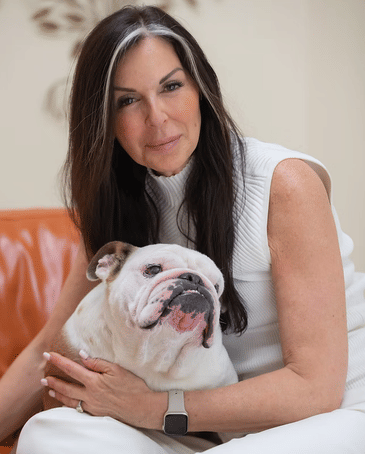
What if anxiety and pain are not problems to eliminate, but signals your body is trying to send you? In part two, G-Rex and Dirty Skittles continue the conversation with Shari B. Kaplan and get real about plant-based healing, nervous system balance, and taking back control of your health.
Sh!t That Goes On In Our Heads is a 2024 People’s Choice Podcast Award Winner (Best Health), 2024 Women in Podcasting Award Winner (Best Mental Health Podcast), 2026 Podcast Tonight Award Winner (Best Mental Health Podcast), and 2026 NYC Podcast Award Audience Choice Winner (Best Hosts), with over 4.5 million downloads and listened to in over 160 countries.
Feedback Link Line
We would love to hear your thoughts. Leave us written or voice feedback here:
https://castfeedback.com/67521f0bde0b101c7b10442a
Mental Health Quote
“You can use the medicine, but you still have to show up and change your life.” — Shari B. Kaplan
Community Spotlight and Sponsor Support
Vote for Us — Women Podcasters Awards
We have been nominated for the 2026 Women Podcasters Awards in the Mindset and Mental Health category.
If this podcast has helped you, we would appreciate your support.
Vote here:
https://www.womenpodcasters.com/awards-voting
Voting is open through April 30th at 6 PM PST
One vote per person. Duplicate votes will not count.
A Quick Word From Our Sponsor — Cozy Earth
Burnout is real, and so is the moment when you finally slow down.
Cozy Earth is built for that moment. Their robes and slippers are designed to help you actually rest, not just crash.
If you are always taking care of everyone else, this is your reminder that you deserve care, too.
Head to https://www.cozyearth.com and use code OURHEADS for 20% off.
Episode Description
In part two, Shari B. Kaplan breaks down one of the most talked-about and misunderstood topics in mental health right now, plant-based healing.
From cannabis to herbal medicine, she explains how these tools can support anxiety, pain, and overall balance in the body when they are used intentionally.
G-Rex and Dirty Skittles bring their own experiences into the conversation, sharing what it is like to live with anxiety and chronic pain, and how they have navigated different approaches to treatment.
What stands out most is the reminder that no tool works on its own. Real healing requires participation. Movement matters. Breathing matters. Awareness matters.
They also talk about humor, how it can interrupt negative thinking, and why learning to shift your internal dialogue can change how you experience your day.
If you are curious about natural approaches to mental health or looking for new ways to manage anxiety and pain, this episode gives you practical insight in a way that feels real and grounded.
Keywords: Shari B. Kaplan, anxiety relief, plant medicine, cannabis for mental health, chronic pain, holistic healing, endocannabinoid system, natural remedies, emotional healing, trauma recovery, nervous system regulation, alternative medicine
Meet Our Guest — Shari B. Kaplan
Shari B. Kaplan, LCSW, is an integrative mental health and trauma specialist and the founder of Cannectd Wellness, where she combines psychotherapy, plant medicine, and holistic approaches to support long-term healing.
Website: https://www.cannectd.com
Meet Shari: https://www.cannectd.com/meet-sharibkaplan
Instagram: https://www.instagram.com/sharibkaplan/
Instagram (Cannectd): https://www.instagram.com/cannectd/
LinkedIn: https://www.linkedin.com/in/shari-b-kaplan-lcsw-180b1682
Key Takeaways
- Anxiety and pain are signals from the body
- Plant medicine works best when combined with daily habits
- Balance in the body supports healing
- Humor can shift your mindset quickly
- You have more control over your healing than you think
Actionable Items
- Start low and go slow if exploring plant-based options where legal
- Move your body daily, even in small ways
- Create a simple “joy trigger” that helps reset your mood
Important Chapters
- 00:00 – Reframing negative self-talk
- 08:00 – Finding joy in small moments
- 18:00 – Plant-based medicine explained
- 28:00 – Anxiety, pain, and cannabis
- 40:00 – Movement and healing
- 50:00 – Final reflections
Closing CTA
Subscribe, Rate, and Review
Remember to subscribe for more inspiring stories. Rate and review us on your favorite podcast platform, or visit our website:
https://goesoninourheads.net/add-your-podcast-reviews
#MentalHealthPodcast #MentalHealthAwareness #Grex #DirtySkittles #Podmatch #AnxietyRelief #PlantMedicine #CannabisEducation #ChronicPainRelief #HolisticHealing #NaturalMentalHealth #HealingJourney #MindBodyConnection #AlternativeMedicine
***************************************************************************
If You Need Support, Reach Out
If you or someone you know is facing mental health challenges, please don’t hesitate to reach out to a crisis hotline in your area. Remember, it’s OK not to be OK—talking to someone can make all the difference.
- United States: Call or Text 988 — 988lifeline.org
- Canada: Call or Text 988 — 988.ca
- Worldwide: Find a Helpline
- Mental Health Resources and Tools: The Help Hub
Stay Connected with G-Rex and Dirty Skittles
- Official Website: goesoninourheads.net
- Facebook: @shltthatgoesoninourheads
- Instagram: @grex_and_dirtyskittles
- LinkedIn: G-Rex and Dirty Skittles
- Join Our Newsletter: (https://grexanddirtyskittles.substack.com/)
- Merch Store: goesoninourheads.shop
Audio Editing by NJz Audio
Hosted by Simplecast, an AdsWizz company. See pcm.adswizz.com for information about our collection and use of personal data for advertising.
[00:00:00] Hi all, this is part two of a two-part episode. Hey there listeners, welcome to Sh!t That Goes On In Our Heads, our podcast where we normalize conversations around mental health. That's right, I'm Dirty Skittles and alongside my amazing co-host G-Rex, we're here to share stories and tips from our incredible guests. Each episode
[00:00:26] we deep dive into struggles and triumphs of mental health, offering practical advice and heartfelt support because no one should feel alone in their journey. Join us as we break the stigma and build a community of understanding and compassion. Tune in and let's start talking about the shit that goes on in our heads. You know, I remember when I was also when I was in
[00:00:49] New York, I had this image that I, and I, and by the way, I don't think we always have to beat ourselves up. I think you can get past that at some point. But the way my journey of getting past that was when somebody said, gosh, you beat yourself up pretty hard. I thought of using a baseball bat and I was beating myself up with a baseball bat and I'm like, what if I just turn that image to a feather duster? Maybe I could just beat myself up with a feather duster. And then I
[00:01:18] started seeing myself doing that whenever I was saying something negative and it would make me laugh. So like neurobiologically, I was already shaking up the neural pathway. And then the third thing that really, or the next thing that really helped me not to beat myself up was I started seeing this feather duster, but then I said to myself, like, don't you hate when people are disrespectful to you?
[00:01:46] Like you hate when people are mean to you and disrespectful. And I'm like, so maybe you need to stop doing that to you. And maybe your experience of the world will start changing. And so then as I would like grab my feather duster, I'd be like, do you really want to keep using that? Or do you want people to be kind and respectful to you in the world?
[00:02:11] And so I found myself having this conversation. And then I started breaking my life down to like me at different ages. And would I ever talk to my five-year-old that way? And would I ever talk to my eight-year-old that way? And yet that's what I was doing. And be, again, being very aware and
[00:02:37] intentional when I would listen to myself talk. And I'd be like, is that really what you want? Like, do you really want to be talking to yourself? Would you talk to a child that way? Because DCF is around the corner, like, you know? And so like, I think I always used my humor as part of my healing because it's, you know, you can get really lost in the intensity of it.
[00:03:04] Mm-hmm. Yeah. I feel like that was the birth of this podcast was us finding humor and like, the stresses that we were going through at the time, right? Like it's, for me, the one thing I'm learning about myself and how I start my mornings is I've now made it a rule to not pick up my phone. Like pick it up to turn off the alarm, but not pick it up to scroll social media. Like I need to get up
[00:03:30] out of bed and do what's going to make me happy. Um, so that I'm starting the day off on the right foot. So it's, you know, I'm a little baby, uh, going through that process now, but like, like this morning I realized like how much of an impact it had to just not doom scroll on my phone and to get up out of bed and start my day and go outside and be with the dogs. And, you know, like I think I spent way too much of my time in my phone. So it's working.
[00:04:00] I feel like I'd betray myself if I let myself spend time on my phone. I, I, I really, I think to me, the only reason to go onto social media is for marketing and advertising. Cause anyone who means anything to me, I can pick up the phone. I don't, I don't need to see their life anywhere else. You know, like talk to me, text me a photo. Uh, I don't want to see what you're doing online.
[00:04:31] I think that's awesome. And I, you know, I, these are like conversations that, that we need to have because, you know, for the last couple of years, world's kind of on fire, you know, and, you know, being able to set your intentions and being able to see the good in yourself and putting your phone down and not watching Fox news and all of those things. I, you know, a lot of what we've talked about this season is, you know, uh, finding joy and being
[00:05:00] intentional about it. And I think that's what people need to really like walk into right now is find your joy because it only was, it takes like five seconds. Listen to a bird, listen to a kid laugh. Um, for me, it's funny, messed up raccoon videos. Okay. Listen, I feel bad for about five minutes after I watched them, but it is about finding those things that make your heart smile because
[00:05:31] not only do employees have their day-to-day stuff that they have to worry about at work, but there's a lot of external noise coming in and being able to like hone in on something that makes you laugh or makes you smile. So I go back to the joy folder, which Dirty Skills told me about, and it's on your phone and it's, these are pictures or videos that bring you, bring you a smile on your face. And like, whenever I'm having a bad day, I go back to that folder on
[00:05:59] my phone and be like, Oh, I remember this day or I'll go watch that video again. And it instantly turns me around. And, you know, like Dirty Skills said, you know, the intention of us starting this podcast was laughter and making some of that hard stuff not feel so hard. And the great thing about laughter is it breaks up that cortisol, right? And gives you some serotonin and some endorphins. And like, I can remember us sitting in meetings and laughing and getting yelled at because we were
[00:06:29] laughing and it was probably something super serious, but like you come back in on that conversation you had first thing in the morning and you start laughing again. And then you just, you feel that joy. So, you know, I want people to start laughing more and finding more joy because it's honestly going to make you feel better. And I think that it's important when you feel that, you ask yourself the question, what does it mean about me that I am experiencing joy right now?
[00:06:59] What does it mean about me? Because everything in life comes back to what does it mean about me? Right? When I can't get this thing done, I'm a failure. I'm defective, right? That's what our brain does. It tries because like when we're children, like that's what we do is we create our identity based on us bouncing ourselves off of people, right? We learn the world is safe. I cry. My mom comes and picks me
[00:07:25] up and I'm safe. My needs are met, right? But if I am trying to figure out if I can touch this hot stove and you slap me and you yell at me, it's like, I don't, I just learned that you're not safe and we're not safe. I don't know, like, and I'm not going to touch that again because I'm going to get hurt. But there's also a safe way of teaching that, you know, and a loving way of teaching that,
[00:07:52] that can make you learn that I can make smart choices. Oh, I'm smart. I can make smart choices, you know? And so when you start experiencing laughter and joy, like so many people, when I say, well, what do you enjoy to do? They go, I don't know. I don't know. And then it's like, okay, well, let me start chunking things down and let's see if I can figure out what it is. We can discover what it is that does bring you joy. But if you catch yourself in that moment of laughter, you have
[00:08:22] neuroplasticity, you know, like let's put something in there. Like I am, I am someone who can enjoy a moment in my day. I am the individual who can find laughter somewhere. I must be able to feel good. I'm someone who can feel good. Do you know what I mean? Even if it's like that split second,
[00:08:50] because of course your brain will go, well, that was a split second, you know? And we sit there and go, well, thank you so much for that input. I'm going to enjoy this moment. I feel like that's exactly what this, this happy photo album did. Like the therapist that I was with at the time, a similar question was brought up. I'm sure not in that exact way, but I just remember
[00:09:14] at that point in my life feeling so not happy, right? Like there was nothing that brought me joy. I wasn't, uh, like I didn't have a hobby that like, I had nothing that I loved or enjoyed. And so she had said, you know, going through your day, if ever there's a moment where you feel happy or something made you laugh, snap a picture of whatever it was. And it sounded so silly at the time. And I
[00:09:39] remember like literally the next morning making my cup of coffee and the way the foam, you know, rose to the top of the cup, I felt genuine happiness and took a picture. And then before I knew it, at the end of the week, I had this photo album of things that it was like a way to check in with myself to see joy and just normal stuff. And then that's exactly what it did. Like I found who I was again and found that there are things that can make me happy or things I do enjoy. It sounds so
[00:10:07] simple, but like I am the person who has the capacity to enjoy. And I think that's really what we're trying to help people correct when, whether they go through trauma or, you know, they go through a depressive episode or it's, it's reestablishing your identity as an individual empowered self, like a person. So one of the things that I know, um, that I spoke with you about
[00:10:34] once was pain management, right? And when, you know, depression and pain kind of go hand in hand because, um, you're, you're the part of your brain, the limbic system, which is where we experience pain is also where we sensory process, right? So our ability to perceive comes through the same lens that we have pain through. So since we're talking about laughing, like that's part of my pain
[00:11:03] reprocessing protocol. Like, I don't know, you, do you actually know this is, is, you know, Bugs Bunny when he was like preparing Elmer J. Fudd to go into the oven as a turkey and you hear Mozart playing in the background and you hear, and he's sitting there like with Tabasco sauce and, um,
[00:11:27] and it always made me laugh. And so whenever I would have pain, I would, I would be like, okay, where don't I have pain? And I'm like the tip of my nose doesn't have pain. My ears don't have pain. And so I would focus on that. And then I'd be like, okay, there's pain in my shoulder. So then I would make like a little movie screen there and I would play the thing that made me laugh right
[00:11:50] there. And then like all of a sudden you're, you're creating all these hormones, like you mentioned before. And now your pain experience has to change because you have different hormones and your limbic system is laughing about something else while your focus is here. So now you have this split focus going on and your pain sensation has to decrease. And when you confuse the brain going back to where it
[00:12:19] doesn't have pain, then you're there, you're making it laugh where it doesn't have pain. And, and then you can use the MDR to kind of solidify that in, and you have a great way of helping people decrease their pain sensation. Wow. I am going to try that. So humor, humor, humor is like a great tool. And if you kind of want more of a, um, a step-by-step dirty, I'd be more than happy to get on a call and just walk you through it.
[00:12:48] Yeah. I mean, I've never thought to do that. And the older I get, the more I wake up with pain and it's, it's, yeah, it's not fun. Yeah. Wait until you're 6,300 years old. Okay. Cause I'm going to tell you, I wake up and I get out of bed and I'm like, I hear snap, crackle, pop. I'm like, shit, I hope I didn't break a hip today. Cause that's going to suck. But you know, it's, it's funny how laughter can help, help us deal with
[00:13:17] some of those really hard things that we have in our life. And that's part of why we add a little levativity into our podcasts is, you know, we make those hard topics easier to digest, but we're still talking about it. We're still being super vulnerable. And I, one of the other places in your, your life that I'm super hyper focused on is what you're doing with plant-based medicine and how it, and it goes back to like the whole pain thing, whether it's mental pain or
[00:13:47] physical pain, but I can, you know, talk about it from my point of view, uh, because I do live in upstate New York and it is legalized here. And just kind of like talk a little bit about that because I know people have a thousand questions and now that more and more states are getting legalized or that some states only allow CBD, like what are some things that we can do based on plant-based
[00:14:10] medicine? Because for people like me, I refuse. I like, I have a really hard time with, uh, taking any kind of pills unless it's an occasional Advil, but I don't want to take any like prescribed medications because, you know, I spent hundreds of years like being sick or having surgeries and all the adverse effects that I had from those pills and really focusing in and honing in on
[00:14:40] plant-based medicine. Is that okay if we kind of like switch to that? Yes. But let me, I want to just say this just so that your, your viewers understand that. Like, I just didn't make this stuff up. Um, I got into plant medicine when my son was four years old. He was born with essential nervous system disorder and I studied neuroanatomy and plant medicine. So I could help
[00:15:03] get his body to what to like, his greatest potential was really my intention. And it turned out that he had a movement disorder, a seizure disorder, and he had some other things going on. And because he is a grown up today, I don't want to, you know, violate his privacy too much. Um, so I started studying like the studies on plant medicine and then my nutrition guru had Dr. Alan Frankel on, like he had
[00:15:32] done a video on him or what have you in an interview. And I went like, I have to talk to this man. Like it works on mental health challenges and it works on seizures. Like I need to understand this. So I call up his office and I'm like, can I pay the doctor for an hour session so I can like ask a million questions about my patients, about my son. And so I scheduled an appointment and three hours later,
[00:15:58] we're still on the phone. And he's like, listen, you clearly know a lot about plants. He goes, why don't you come out to California and work with me at my clinic? And I will teach you what I know about medical cannabis and, you know, I have a farm and blah, blah, blah. So not only did I go out there and spend a week in his clinic, but then he showed me how to grow it, how to manufacture it, like all these different things that there's more than just CBD and THC available. And then I
[00:16:27] was sharing with him how like it makes an incredible formula if you actually put herbal plant medicine and with cannabis medicine. And so that was back in 2013. And I used to fly out there every quarter to be with him, work with him, learn from him. So I'm not sharing this information just from a place of, hey, I decided to try this and it worked. Like I really worked with an incredibly knowledgeable
[00:16:56] physician who had an entire practice out in California. And unfortunately, I want to say two years ago this month, he passed away. But he was definitely an incredible mentor. So I want to start with that just so that you understand where I'm coming from. So when it comes to, did you ask me pain first
[00:17:20] or mental health? To me, it kind of goes hand in hand. Because I, we can use me as an example. I have horrible arthritis, horrible. So when my knee or my hip are really bothering me, it really affects
[00:17:46] my mental health. Right. And so, you know, they go hand in hand. And so, I guess, thankfully, I live in a legalized state. Yes. So I have things at my disposal. But there's people throughout the country that don't have those resources, don't have enough knowledge. And it's such an interesting cross-section of where we're at right now. I will tell you my life is better because of it. Because I
[00:18:14] can move now and I'm not completely depressed. I mean, there are days where I can literally not move. So can I share with you from like the legalized states to the unlegalized states? Or do you want me to go the other way? Whichever way you feel, man. Like I'm easy. Are you easy Skittles? Skittles is easy. So I'm going to start with, okay, if things are legalized by you, here's some really helpful
[00:18:42] ways of putting some formulas together. If you're struggling with anxiety and some depression, right? And you want to just get your body... Like I always think everything is about homeostasis. Like something through you, our body naturally heals. It naturally corrects itself.
[00:19:06] And if it's not, something is getting in the way. And so the first, my first line of attack is how do I get the system modulating? How do I give them enough energy so that they're keeping all the other instruments, meaning your organs and your body, your cells, working together in harmony? And so when I
[00:19:31] think of that, my first line of approach is CBDA and THCA with lavender, peppermint, and citrus in it. So how do you get that? In some more advanced legalized states, they have bottles of CBDA and THCA, which is the raw form of cannabis. So you never heat it up. You're just taking it and it's almost
[00:19:58] like you're grinding the actual flower, the bud of the cannabis plant with avocado oil, but you're doing it for eight hours. So you can buy a machine and the only one I know of, so I apologize, I'm not plugging anyone, but there's a machine called the Magic Butter Machine. And you can take 16 ounces of avocado oil, which is a nice bottle, and you can put a half an ounce of, well, a quarter of an ounce of CBD
[00:20:27] flour and a quarter of an ounce of a THC flour into the machine and put it on 130 degrees and cook it for eight hours. And that's called like not decarboxylating, which means you never get the compounds in the plant to become intoxicating. So you can give this to babies. We give it to a lot of
[00:20:52] children who have neurodivergence. I give it to children who are diagnosed with attention deficit disorders, but they have processing problems. And this helps all around because it's just getting the system to come back to balance. So, um, or homeostasis, if you will, that formula to me, it like everyone on the planet should be on it. It promotes bone cell growth. It promotes brain cell
[00:21:21] growth. Um, and it has anti-convulsive properties, natural ones. That's what makes it modulate the system is it's like a regulator, so to speak. I'm just trying to pick up like layman's terms. So I don't understand what I'm talking about like that. Um, but when I give that to people, even people who don't sleep at night, if they take it every four hours, they're, they're like, wow, I, I got better
[00:21:48] sleep. I'm doing better. And that's like a non-intoxicating formula. I tell people to take that at minimum twice a day because plant medicine doesn't stay in your body that long. So, um, taking something like that to me is foundational because it's super helpful and it's not intoxicating and it decreases anxiety. So then I start layering things in from there. So if I have somebody who has a
[00:22:17] lot of anxiety, I bump up to, um, CBD and THC one-to-one like a formula, that's one-to-one. So, and for right now, I'm not talking about smoking, I'm talking about dosable formulas. So these are tinctures, right? One-to-one you can also use as an edible as long as you know what the dosing is.
[00:22:40] And so 2.5 milligrams. So like, let's say you have a 10 milligram gummy or chocolate. I, I prefer the gummies. You cut it in quarters and you have 2.5 milligrams. That will soften your edges. It will take the anxiety edge off for most people. And if you're really sensitive to THC, like I am,
[00:23:05] I'll definitely feel the intoxicating effects. Not that it will be horrible in terms of like how intoxicated I feel, but I'll know that I took something, right? Where if you've never had any kind of cannabis products before, it really might be mood elevating and you really might notice it. So I always say go as slow as you can. And if you are taking it in tincture form,
[00:23:33] you can start with five drops and then work your way up to a quarter of the dropper. If it's a, you know, um, a 10 milligram dose in one dropper. So you don't, you could cut the quarter into eights if you had a gummy just to start it off. And the whole thing is that I think a lot of people don't know is we make cannabinoids in our body. We have the receptors for it, but we also have enzymes to
[00:24:01] break it down. So when I have people who aren't sleeping at night or have pain, they're like, I'm going to take a half of gummy. I'm going to take a half. And I'm like, wait a second, your body's not producing enough because it's getting depleted in your body because of your pain, because of your anxiety. Your body makes this, you have an endocannabinoid system and your body
[00:24:24] is that system's responsible for keeping all the other systems in harmony together. So it's the modulator for every other system in your body. So if you have an illness and injury, surgery, and you know, anxiety, depression, you are getting depleted of your own natural CBD and THC and other cannabinoids. So you're also not making the enzymes to break them down because you're
[00:24:54] depleted from not manufacturing them or you're not manufacturing enough. So when you start putting cannabis in your body, your body needs to make the enzymes to break them down so you can actually use the medicine. So if you go too fast, you miss your window of helping, which could be at a
[00:25:16] very low dose. So that's why you want to start at the low doses, stay on one dose for like three days before you jump up to the next one. And so I love the CBD THC formula, that one-to-one, because it takes down inflammation. It also acts like a natural anticonvulsant. It also helps you
[00:25:40] sleep. It gets your body more restful at night. So you can take these formulas. I always say less, but more frequently is better than taking larger doses. So if you don't have to take a large dose and you can work your way up, a lot of people will be able to manage their pain at five milligrams
[00:26:02] if they take it like clockwork every four hours. But you really have to be consistent and then you can stay low and you don't have to worry about it getting in the way of work. Obviously, as you're working your way up to a dose, sometimes you need some time to not be intoxicated, but your body will build up the tolerance for the intoxication and still work as the medicine. And you know what? I can
[00:26:32] attest to that. So in November of 2024, the small consulting firm I was working for had been acquired by a very large consulting firm and I started getting really bad panic attacks. Panic attacks so bad I would wake up in the morning crying, having a hard time breathing. And so I went to one of our local
[00:26:56] dispensaries and talked to somebody there about tincture. I got a focused tincture. I started taking 2.5 milligrams three times a day. Within three days, I felt like a new person and I still take it to the to this day. Like on those days that are super heavy for me because being a solopreneur, you know, running my own company, running the podcast, I get busy, I get my own head. And sometimes I find that I get
[00:27:25] really stressed out or having a hard time focusing. And so it has helped me significantly. And before I had even done any of that, I had tried other things. But I knew also that I didn't want to go on prescribed medicine for my anxiety because I have several friends that have been on that. And like what it did to their body. And I wanted to be in control. But there's also options for people
[00:27:53] to live in states where it's not legalized also. And thankfully for me, you know, like I said, I live in upstate New York and I can achieve the goal that I want. But I love what your practice does. So continue on and I'm off my soapbox. No, no, no. I'm so glad that you're sharing it because it's very personal. Like you said, like you're more in charge because not every day your body's in the
[00:28:21] same place. So some days you might need only two doses and some days you might need six doses. And when you have plant medicine, whether it's herbal plant medicine or cannabis medicine, you do get to use it. My whole thing is educate yourself on your body. Educate yourself on the different plants and what they do. So I had a gentleman come into my office the other day who
[00:28:48] was just in a state of anxiety. And I have a lab in my office and I just grabbed a few drops of food grade lavender and put it on his hands and just said, rub your hands and put it in front of your face. And I'm like, just take three breaths with me. And we breathe in through his nose. We let it out through his mouth. We breathe in through his nose. And I could see him just transform as he
[00:29:16] inhaled this. Your olfactory system where you breathe through your nose goes into your brain right by that limbic system where we experience trauma. You know, your amygdala is right there. So I have all these different formulas depending on what type of anxiety someone has. Where's the anxiety coming from? And, but lavender is always like a sure shot. Unless of course I have somebody who has
[00:29:41] breast cancer, I can't let them inhale lavender because apparently that affects breast cancer. So, but I still have orange and I have, you know, Roman chamomile and I have German chamomile and, you know, like so many other plants that I could have somebody inhale and do a combination of so their body releases immediately. So if you're working all day long, you obviously can't just keep going
[00:30:08] all day. But maybe it can. So I think that if you're going to use, if you're in a non-legalized state and you're using CBD, it's very hard for that to work by itself because there's no cannabinoid binding to the cells that open up the cells to allow the CBD into work. So what I often do is,
[00:30:38] I'll ship somebody a formula that has herbal plants in it and I'll tell them to put that into their CBD and that seems to help it work a bit better, a lot better. That's so interesting. Can I ask, for like anxiety, is it just like removing like the physical effects of feeling anxious or like how does it work for anxiety?
[00:31:05] So it depends on why you have anxiety, right? So let's say like I was giving you an idea that my eyes don't coordinate together. There are other people who have auditory processing problems. A lot of people don't know they have an auditory processing problems, but you would know if you were a grownup and people were like, but that isn't what I said. And they're like, oh yes, you did. You're like, no, I didn't. I really did.
[00:31:33] Or if you can't remember what people are saying and they just said it, like that's an indication. I'm being very simplistic. There are ways to test for auditory processing problems. Dr. Vessel van der Kolk did a study many, many years ago. I think I was, it was, I was a new clinician at the time, so it was over 30 years ago, that boys who came from homes where
[00:31:58] there were abusive fathers or domestic violence, that they had a significantly higher amount of auditory processing problems. So if you had a lot of ear infections as a child, if loud noises were really disturbing as a child and or still are, then your auditory system is affected. And it's
[00:32:24] definitely worth getting tested because there are therapeutic listening programs that can actually help you repair it. So if your body is off because of sensory processing, what you're doing is you, there is a disorganization to how information is coming into your brain. I'm sorry, one of my cats is
[00:32:46] deciding to join us. So there's a disorder to how information comes in through your eyes, your ears, your smells, your touch, and your senses. And so what the CBDA and THCA does is modulate the system so that you're getting the timing so that your brain interprets it at the same time.
[00:33:14] And THC and CBD can do that as well, but it can also just take down cortisol, which the CBDA and THCA, I don't, that's not my experience with it. And I don't think we have enough studies on it to show, but like THC and CBD together definitely come, not just the fight or flight, but the hormones that go
[00:33:41] along with it. And I think where CBD and THCA gets your system harmonizing better. So that's why I think it's good to be able to have more than one formula to have available to you. So, and for sleeping at night, when people have anxiety or pain, or you can't sleep because they're ruminating, I always like
[00:34:06] to try CBD and THC together because I feel that your system needs to stay in balance. If you go too heavy on THC and you don't have any of the other 141 cannabinoids that we have identified, like there's no balance in your endocannabinoid system. So sometimes the THC to sleep won't work for people.
[00:34:31] Sometimes it can make them worse, especially if all they're taking is THC all day long. That can also, if you have neurodivergence, if you have any predisposition for a bipolar disorder, or you have a predisposition for schizophrenia, having an imbalance of THC and certainly taking it in high concentrated doses can cause your brain to misfire. And if it misfires into your
[00:34:59] temporal lobe, that's going to give you some hallucinations, auditory or visual. And it can also give you seizures as well. So I like to try to keep as much CBM, CBD, like these are a CBG. These are other cannabinoids found in cannabis plants and can do different things. Like we can stay here and I can talk all day long about like what plants we put together,
[00:35:27] what, you know, cannabinoids we should be using for different illnesses based on what's been working in practice and what studies are saying. So I don't think we have all that time. But I hope like, so to go to sleep at night, some people can use an Intica THC, which Intica is something that relaxes the body. And, you know, if you go to a dispensary, a lot of people will say Intica is
[00:35:52] like in the couch. So you know that it makes you tired. I think one of the things that a lot of people are more aware and it makes you focus and gives you a lot of ideas. It like, it works on the receptors
[00:36:15] in your brain and your central nervous system. So although it can be good for exercise and focus and feeling good and feeling more balanced, it also makes you more aware of your pain. So when people take sativa and they think, oh, I took THC, it's going to make my pain better. It actually makes you more aware of your pain. So that's why the CBD and the THC, if you're having
[00:36:45] a problem feeling too tired with an Intica, which most dispensaries will recommend you use Intica for pain. I would prefer you to do a one-to-one CBD THC and see if that can get you to sleep at night at a half a gummy and, or a half a, like five milligrams, I should say. And if you can do a one-to-one
[00:37:09] and sleep on that, I just think that could be more productive in the body than just taking straight THC Intica. But if you need to, then that's the right thing for your body. Take the Intica. So smoking to me is for fun. Smoking gets rid of nausea right away. And smoking is like a great way to shut down the pain right in the moment. So the only reason, I think because I work in health
[00:37:36] and wellness and mental health is I don't say inhale something first because there is that small part, which, you know, we don't know the damage on your lungs and you, you're, you're, you have a heated product. Now there's a thing called a volcano. I don't know if you've ever seen it anywhere. Um, I know they were using it in some countries where they were studying the medicine
[00:38:02] and they were using, it was a study with cancer where this machine blows a balloon. So it actually, it's like the balloon inhales the medicine. So the heating element is the volcano and you take the balloon and you inhale the cannabis from the balloon. That is fine on your lungs. That is not damaging to your tissue in your lungs. It's actually the heating element and inhaling something
[00:38:29] hot directly into your, and the carcinogens, right? Is more of the dangerous part. So to me, inhaling is like, I, I have an emergency. Like I need to take, I need the nausea to go right away. I need the pain to go right away or I want to have a little fun and I want it to have it now. It's good. It's, you'll find this funny, but you know, every time we go to the dispensary up here,
[00:38:56] it's people that are like my age, right? And you know why? Because we're all tired of being in pain and we live in college towns, right? There's not a whole lot of college kids going to the dispensaries. It's people in their fifties, sixties, seventies, eighties that, you know, for years have been struggling with pain and are really trying to get away from the prescribed medication and, you know, take more control over their own body. And I think that, you know, conversations like this are super
[00:39:25] important so that we can, can get people, you're like, kind of thinking about how they can take better care of themselves, how they can take better care of their bodies. You know, think about what you're putting inside you because that all affects not only just your physical health, but it affects your mental health because if you're feeling good physically, mentally, you should be feeling okay to be. And I just know for myself, like if I am in a lot of pain,
[00:39:52] my mental health is like, screw you. I'm going back to bed. I'm done. Um, but now let me go find some cream and a gummy and call it a day. And, um, I, you know, I'm a huge proponent for it. I've had tons of surgeries my entire life. I've, you know, been in really horrible accidents. And when I actually got to take control of what I was putting into my body, it made me feel better. So I love what you're doing for not just your patients,
[00:40:21] but for the community and really getting out there and educating people, because I think it's super important. Thank you. And it's so important that you move your body. I don't care how much pain you're in. I don't care if you start off doing this, but our body is in movement internally. And when we have pain or depression, we tend to not move because it feels like it hurts too much to
[00:40:47] move. And quite honestly, just doing something, any kind of movement that gets oxygen and blood flow and stagnation, like we become stagnant internally. And then our own endocannabinoid system can't produce, we can't produce our own opiates. And we do, we produce opiates and our own, um,
[00:41:11] oh, what's the other one I was thinking of like heroin. Like we, we make our body has the ability to, it's a whole pharmacy of thousands and thousands of chemicals and compounds to help ourselves, but you have to be moving. You have to be breathing and you have to be moving. And like I said, I, I've worked with people who have cerebral palsy and are in wheelchairs and
[00:41:37] I can still get them moving. Like you have to be able to move something or have somebody help you move something. And it really does decrease the pain. So, um, I say that, you know, cannabis is a life-changing medicine, but only you can change your life. I feel that way about herbal plant medicine as well. Like we can use these tools from nature, but we also have to use ourselves and our minds to help
[00:42:06] use that medicine properly and master our body's response and what have you. I think it goes hand in hand. I love that. This has been an amazing conversation. I have two questions for you.
[00:42:33] If you can go back in time to a younger version of yourself, uh, to give that younger version some advice, what would you tell yourself and how old are you? I would say it would be my eight-year-old or my 10-year-old. And I would tell them that you're not crazy. You're really wise.
[00:43:04] And not everybody knows what you know. Trust your intuition. Trust yourself. Stay curious, but you're not wrong. You're not. You have to trust your intuition because only you know what's best for you. You can use everyone as guides, as healers, but don't make yourself wrong because somebody else figured out what was
[00:43:32] right for them. Like really use your intuition. We have guidance all around us, but we have to trust what comes up for us. And I would want my younger self to know that just because other people don't think the way that you do doesn't mean that you're wrong. We're different. I love that. Um, and what would you say the hardest lesson you've learned so far in your life has been?
[00:44:08] My children were horrifically assaulted when they were two and four. And I was a trauma specialist at the time. And I learned that our system does not work. And I learned that it is so horrific that most people won't believe you because they can't imagine the story.
[00:44:39] And that we victimize victims because their stories are so horrible. And we don't know how to overcome them. So we don't know how to help them. So if we make them wrong or they're lying, that makes it easier on the person who is supposed to be helping.
[00:45:02] I learned the subtle nuances of trauma, helping my children move past theirs and mine. And my hardest lessons came from learning how cruel people could be and never stop being a loving
[00:45:27] person who wants to help them. And I am, I think that like, this is a journey here on planet Earth. And you're either a loving being and you choose to connect with that and overcome the bad stuff, or you choose to succumb to it and go to the dark side.
[00:45:52] And I choose life. And I choose, I came to this planet to have a hell of a lot of fun and make it a better place. And I refuse to give my power away to those who don't see it that way. So I'm going to keep going on my journey and doing that. Love that. Thank you. Love those. So now I have two questions. If your anxiety had a theme song, what is it and why?
[00:46:24] It would probably be the Chariots of Fire. I love that. I love that. I learned by training for the New York City Marathon, I learned most things in my life on this planet are a marathon and not a sprint. And I'm so grateful. You know, I trained for the New York City
[00:46:48] Marathon because I wanted to prove that there is a God and nobody is it other than yourself. And everyone is it at the same time. And so I had two knee surgeries. I have no cartilage in my right knee and I tore my ACL. And I actually even injured myself during training and I had exercise induced asthma. And I was told I wouldn't be able to run the marathon. So like, that's a sure shot
[00:47:14] way of making me try. So I did. And I actually did my healing during that run. That's when I overcame any OCD that I had. That's when I did a lot of my healing on what I had been through throughout my life. I was like, I think it was 28 when I ran. No, maybe I was a little older than that 30
[00:47:40] when I ran the marathon. But I really learned that there's never one thing. There's many things, many layers of things that help us heal and overcome. And I just learned that if I just keep putting one foot in front of the other and I just keep waking up the next day, no matter how tired I am,
[00:48:05] and I just keep putting my foot one foot in front of the other, I can do things that I've been told I'd never be able to do that took heroic efforts. And you can do it. It's just one foot in front of the other. That's all it is, is one foot in front of the other. And that's why Chariots of Fire would be my theme song. That is so awesome. That's amazing. All right. I have one more question and then I'm
[00:48:30] going to have you tell our listeners how they can find you. What's your spirit animal? Horse. Free and loving and graceful and all the fun things. Yeah. And strong. Strong. That's what I was thinking. Black animal. I realized we're, you know, we're in tribes.
[00:48:56] We're definitely in tribes and you got to find your tribe. And then you have to play nice with all the other tribes. God, do we have to? All right. All right. How can our listeners find you and find out more about you? We have a website and it's called Connected, C-A-N-N-E-C. And then it's T as in Thomas,
[00:49:22] D as in dog. So there's no E. So it's named Connected because cannabis and the endocannabinoid system like pulls everything together and keeps it all in harmony and balance. So it's connected.com. And we have a center in Boca Raton, Florida called Connected Wellness. And you could look us up that way or just look up my name and it will take you there. Thank you.
[00:49:48] This was such a great interview. Thank you. Thank you. Thank you, Sherry. I learned so much. Oh, I do. I love talking to the two of you. And I have to tell you that the more education we can get out there for mental health and how mental health is your health and vice versa. So I love that you're doing this. And I love that you interview so many different people. And it took me almost a
[00:50:15] year to get on your podcast. And I am so glad that we did it and we waited. And I'm really appreciative to both of you for wanting to interview us and have me here. Thank you. Thank you. Hi, all. Thank you so much for listening to this episode. I'm G-Rex. And I'm Dirty Skittles. Don't forget to subscribe, rate, and review this podcast. We'd love to listen to your feedback.
[00:50:42] We can't do this without you guys. It's okay to be not okay. Just make sure you're talking to someone.