
Trigger Notice + Crisis Support
This episode includes discussion of sudden cardiac arrest, near-death experiences, suicidal ideation, and mental health crises. Listener discretion is advised.
If you or someone you love is struggling or in crisis, help is available.
Call or text 988 (U.S.) — Suicide & Crisis Lifeline
Or visit https://findahelpline.com for global resources.
What happens to your mind when your heart stops and you come back? In this powerful conversation, G-Rex and Dirty Skittles sit down with Jeff Luther, a father and athlete who survived sudden cardiac arrest, to talk about fear, trauma, resilience, and how rebuilding life sometimes starts in 30-second increments.
Sh!t That Goes On In Our Heads — a 2024 People’s Choice Podcast Award Winner (Best Health) and 2024 Women in Podcasting Award Winner (Best Mental Health Podcast) with over 2 million downloads and counting — continues its mission to normalize unfiltered conversations about mental health, trauma, and emotional survival.
We’d love to hear your thoughts. Leave us written or voice feedback here:
https://castfeedback.com/67521f0bde0b101c7b10442a
Mental Health Quote
“You still choose. Even when everything is taken away, you still get to choose.” — Jeff Luther
Episode Description
Jeff Luther was fit and competitive, training alongside his teenage son, when his heart suddenly stopped. No pulse. No breath. Two shocks from an AED brought him back — but life as he knew it was over.
In this raw and deeply human episode, Jeff joins G-Rex and Dirty Skittles to talk about surviving sudden cardiac arrest, living with trauma, and the mental health fallout no one prepares you for. From the fear of his own body betraying him again, to the shame of pretending to be strong instead of being honest, Jeff opens up about what it really means to rebuild a life after death.
This conversation goes beyond survival. Jeff shares what it felt like to truly believe he was dying, why gratitude felt impossible at first, and how resilience didn’t come from pushing harder — but from choosing again and again to stay. Sometimes for a year. Sometimes for a day. Sometimes for just 30 seconds.
They also explore how trauma reshapes identity, how children carry invisible fear, and why connection — not toughness — is the real currency of healing. Jeff’s story is a reminder that mental health struggles don’t always come from weakness. Sometimes they come from surviving something that should have ended you.
If you’ve ever faced a life-altering event, lived with anxiety after trauma, or wondered how to keep going when fear takes over, this episode will meet you exactly where you are.
SEO Keywords: Jeff Luther, sudden cardiac arrest survivor, near-death experience, trauma recovery, mental health podcast, resilience, anxiety after trauma, cardiac arrest recovery, mindset healing, overcoming fear, post-traumatic growth, emotional resilience
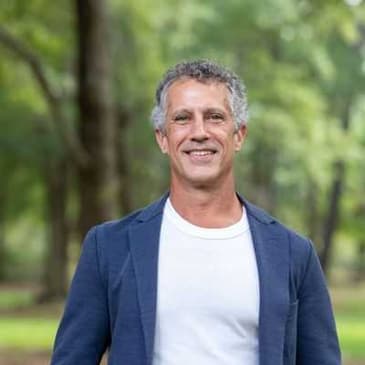
Meet Our Guest — Jeff Luther
Jeff Luther is a speaker, mindset coach, and sudden cardiac arrest survivor who helps people question the stories they tell themselves and rebuild their lives after trauma. After collapsing in front of his teenage son and being clinically dead for eight minutes, Jeff began a journey of resilience, belief work, and intentional living — 30 seconds at a time.
Connect with Jeff:
Website: https://www.jeffluther.com
Podcast: https://podcasts.apple.com/us/podcast/the-inspector-alliance/id1658627241
Instagram: https://www.instagram.com/jdluther2.0/
Facebook: https://www.facebook.com/jdluther2.0
LinkedIn: https://www.linkedin.com/in/jeff-luther/
Key Takeaways
- Surviving trauma doesn’t automatically bring gratitude — it brings reality.
- Fear often shows up after the crisis, not during it.
- You don’t have to rebuild your life all at once; sometimes 30 seconds is enough.
- Strength without connection can turn into silent suffering.
- Children notice more than we think, even when we try to protect them.
- Healing begins when we question the stories we tell ourselves.
Actionable Items
- When overwhelmed, ask: “What can I handle for the next 30 seconds?”
- Challenge catastrophic thoughts by asking: “Is that actually true?”
- Check in with loved ones using open-ended questions and listen without fixing.
References Mentioned
988 Suicide & Crisis Lifeline — https://988lifeline.org
Global Crisis Resources — https://findahelpline.com
Important Chapters
- 00:03:00 – Jeff’s daily rituals and the guilt of slowing down
- 00:10:30 – Collapsing at the gym and surviving sudden cardiac arrest
- 00:18:45 – Fear, bitterness, and losing trust in his own body
- 00:29:00 – Emotional rock bottom and wanting to quit
- 00:32:30 – The 30-second decision that changed everything
- 00:38:00 – Trauma, parenting, and the cost of pretending you’re okay
- 00:47:00 – Being shocked back to life and facing fear again
- 00:53:00 – Advice to his younger self and the danger of comparison
Closing CTA
Subscribe, Rate, and Review.
Remember to subscribe for more inspiring stories. Rate and review us on your favorite podcast platform, or visit our website:
https://goesoninourheads.net/add-your-podcast-reviews
#MentalHealthPodcast #MentalHealthAwareness #Grex #DirtySkittles #Podmatch
#SuddenCardiacArrest #TraumaRecovery #NearDeathExperience #ResilienceJourney
#AnxietyAfterTrauma #PostTraumaticGrowth #MindsetHealing #SurvivorStories
#EmotionalWellness #988Lifeline #YouAreNotAlone
***************************************************************************
If You Need Support, Reach Out
If you or someone you know is facing mental health challenges, please don’t hesitate to reach out to a crisis hotline in your area. Remember, it’s OK not to be OK—talking to someone can make all the difference.
- United States: Call or Text 988 — 988lifeline.org
- Canada: Call or Text 988 — 988.ca
- Worldwide: Find a Helpline
- Mental Health Resources and Tools: The Help Hub
Stay Connected with G-Rex and Dirty Skittles
- Official Website: goesoninourheads.net
- Facebook: @shltthatgoesoninourheads
- Instagram: @grex_and_dirtyskittles
- LinkedIn: G-Rex and Dirty Skittles
- Join Our Newsletter: Sign Up Here
- Merch Store: goesoninourheads.shop
Audio Editing by NJz Audio
Hosted by Simplecast, an AdsWizz company. See pcm.adswizz.com for information about our collection and use of personal data for advertising.
[00:00:06] Hey there, listeners. Welcome to Shit That Goes On In Our Heads, the podcast where we normalize conversations around mental health. That's right. I'm Dirty Skittles, and alongside my amazing co-host, G-Rex, we are here to share stories and tips from our incredible guests. Each episode, we deep dive into struggles and triumphs of mental health, offering practical advice and heartfelt support. Because no one should feel alone in their journey. Join us as we break the stigma and build a community of understanding and compassion.
[00:00:35] So tune in, and let's start talking about the shit that goes on in our heads. Three, two, one. Welcome back to another episode of Shit That Goes On In Our Heads. I have my awesome co-host here, Dirty Skittles, and today we have the amazing Jeff. Jeff Luther, welcome to the podcast. Thank you so much. Glad to be here. I like that you said the amazing Jeff. It sounded like a magician. I know. You said a high bar. I'm going to have to do tricks.
[00:01:05] Yeah. What you guys can't see is he just pulled a rabbit out of his hat. Yeah. Perfect. Where did those flowers come from? I am so excited to get to hear more about your story, Jeff. I always try to like softball our way into it, but tell us a little bit about like what you do with your day. Oh man, with my day. A non-negotiable that I have as I'm getting on in years. Lift weights, which is funny because if you saw me, like I do not have a lifter's build.
[00:01:34] That's part of my day. I've got three boys, 20, 18, and 16. The highlight of my day is getting my 16-year-old off to school. I love that. I get to see my 20-year-old every morning. And then, you know, my day, I walk my dog. My dog is the absolute love of my life. Sarge, she's a Brittany. He's getting on in years too. So our timing is perfect. And then, you know, it's like a wash, rinse, repeat. I work through the day.
[00:01:59] I try to wrap up my day like around four o'clock. One of my favorite things is I like to cook. I hate to clean, but I love to eat dinner with my kids. So I like to cook during the week so that I can eat dinner with them. The juice is definitely worth the squeeze. And that's kind of my day. Today's Saturday. So Saturday, I try to be intentional about, I call it be easy. That's what I write in my journal, intentions in the morning on Saturdays, be easy. What does be easy mean?
[00:02:28] Yeah, that's a good question, right? Like just be easy. Let things come as they come. I tend, I'm one of those people that I get out in front of myself. Like I think about the future, what I'm going to do next, what I need to do. And I'm practicing, I'm right where I'm supposed to be. So that's hard for me. And like, I'm not bragging about that either. Like I'm not proud of it. But Saturday, being easy is not having this long list of stuff that I have to get done
[00:02:54] just for the sake of getting it done. So letting the day just show up to me. And having it be intentional and having it be like finding your joy and being grateful that you get to be in that space. Right. Do you ever feel guilty for like letting the day just show up as it is and not have that long list of things that you want to do? My gosh. Oh yeah, I feel guilty. But I'll go further than that. I feel guilty. I feel weak.
[00:03:20] I feel shame. Like I am that person. And I've been working on this. I discovered this probably five years ago. I have been working on, I'll make a list. Okay. Like, like stuff that I have to do. If I get it all done, I'm a worthless piece of shit because my list wasn't big enough. If I don't get it done, I'm a worthless piece of shit because I didn't try hard on that. So either way, I can't win. And yeah, that's a great question. Yeah. I feel a lot of guilt.
[00:03:50] And I'm working on that. Okay. All right. When you accomplish that list and it's, and you've gotten everything done and there's still time in your day, do you add more stuff to it or do you just like end it there? I add something to it. What else can I get done? It's like this need. It's like, it's like don't squander it. Don't waste it. But, and I say that like I'm speaking about a past person almost. Like I have worked so hard on those, on that aspect of my life,
[00:04:19] but it sounds like you can identify with what I'm saying. Literally, I was asking because this was like, I call her the one therapist, right? But like this one therapist who like completely rocked my world. I remember telling her like early on, I will oftentimes do something similar, right? Like it may not be a physical list, but I know I have to do X, Y, Z. Like I'd go through the things and it would get to a point where I would knock everything out and like record time. And I would keep going until I was
[00:04:49] physically unable to continue moving, right? Like I needed to feel so drained at the end of the day. And I remember her being like, that's a trauma response. And I'm like, what? Like my whole life, I just, I'm like, yeah, I have trauma, but like never would I ever associate this to that, right? Like it just, it didn't make sense. But I think I needed to prove that I could have it all, right? Like I can do all of the things and there's nothing wrong inside. Like I'm doing everything and
[00:05:17] more, right? Like that was, that was me. So I have, sorry, I have one question about that. You may not know the answer and I don't know the answer for me, but is part of that you need to prove that you're good enough? You know, I've wondered that because typically for me, I associate any of like my emotions or like weird things that I do with not being good enough when I feel like I am going
[00:05:45] to fail at it, right? So like normally if like, let's say I want to take up sewing. I'm just using that as an example. I don't fucking want to sew. But like, let's say I'm like, I want to take up sewing. It would become like, I'm not only going to like stitch a hole in the pants, I'm going to make an entire quilt. Like that to me is like, I, that's a response to like, I may not be able to actually do the line and then everybody's going to see the sewed line and it's going to be crooked and now they'll know I'm a failure. But when it comes to like cleaning or it's usually around
[00:06:13] cleaning, it's like, is the house clean? Is the laundry done? Is the car clean? Have I vacuumed the inside? It's like this huge, crazy glove box. Yeah. Like it's like shit nobody's ever going to see, but it's on my list and I need to get it done. It's not necessarily to prove I'm good enough. I think it's just to prove that I'm a mom and my house is immaculate. I think it's like the image of a clean house, clean car, and she's a wife and a working mother. And look at, she's completely all
[00:06:43] put together. It's like that, if that makes sense. It's funny that you guys both bring this up because like I see myself in that realm, just running my own business, right? Like getting this app created and getting it done. Like I kept adding things to my list of things I wanted to have in this app and things I wanted to do for my business and, but doing it with intention. But then I would get pissed at myself because like I was getting tired and I'd have to walk away and I was like, God, I'm never going
[00:07:10] to get this done and like I'm worthless and everything. But then I got the app done and I got such great reception from people that like I brushed off all the negative stuff I said to myself and turn that into pride. Because for the first time in my entire life, I actually followed through something and had amazing output. Okay. Okay. I'm going to call you out on that. The first time in your entire
[00:07:35] life you followed through with something. Is that true? Yeah, it's about 99% true. Like That's bullshit. I'm so willing to ask. We're both calling you out on your shit. You didn't follow all the way through on this shit. Please call me out on my bullshit. But like, like something that doesn't just affect me, like what I put out into the world, it helps other people. So maybe if I put a different spin on it, like I wanted to change people's lives. What I did,
[00:08:04] it does change people's lives. And so I got to put a piece of me out into the world. And so I did, I made like all these lists and everything, but I also have ADHD and like, fuck, shiny new thing. I would like dip away from it all the time, but it just kept pulling me back. And what I learned through this whole process is that I am good enough. You know what? And I am grateful for the things that I have. And it may not be perfect for everybody, but for the target audience that I'm
[00:08:34] hitting, it's perfect for them. And so for me, I'm eternally grateful for that. Yeah. And 90% of the world wants to be where you are. Maybe more. Took a fucking lot of time. It took three years of really intense therapy to get here. Yeah. But I'm happy. I'm happy as fuck, man. And I'm grateful for everything. And true or false? Yeah. It took a lot of work, took a lot of therapy to get there.
[00:09:00] But most importantly, it took a decision. Is that true or false? True. It took a decision. I had to make that decision of what I wanted to put out into this world. Because for people that are listening outside of the US, the economy here in the United States is shit. So I had to take a pivot with my business in late November, decide what my intention was going to be and what I was going to put out into the world that would not only make me happy,
[00:09:28] but would help somebody else. And that's exactly what I did. So in eight weeks, I built an amazing app that is a beginner's AI app that is free for anybody that ever wants to use it. And it helps my small, my rural upstate New York community, right? Because technology forgets about us. But people come to me and say that they're grateful that they have this. And so that kind gets me going. But like, I know your story. Dirty Skittles doesn't know your story and
[00:09:59] why we're like two peas in a pod and why we are so grateful for what we have in our life. Yeah. You mean cliff notes? No, you get to give us the whole nine yards. All right. All right, Skittles, I'll start off with something that's totally irrelevant, but it builds my ego. And I'm still not over that. Okay. I lock it in the basement most of the time, but when I tell my story, so June the 5th, 2021,
[00:10:24] I ran, I'm a reformed ultra runner. I ran an ultra. It was my first overnight ultra. It was a 50K. And it was through a national force. Like it's totally desolate. It was so amazing. But I tell you that to tell you like, I am a fit dude. I came in second place. I showed up to that race to win. I came in second place. That was June the 5th. During the 12th, a week later, I was at a CrossFit gym. I was doing a partner of workouts with my oldest son. It was a class. It's
[00:10:50] like 20, 30 people. And my heart stopped. I went into atrial fibrillation and ventricular fibrillation. Yeah. And my heart rate was like, later we found out it was 380 beats a minute. So it just quivered and it just stopped. I was shocked with an AED three times. I went for eight minutes with no pulse, no breath. And this was all in front of my 16-year-old son. I was just thinking that.
[00:11:18] Yeah. Fast forward, I was diagnosed a week later with ARVC. It's a rhythmogenic right ventricular cardiomyopathy. And it is a degenerative heart disease that is worsened by exercise. So I was told I could no longer exercise. If I wanted to live normal, healthy life, that I would give up exercise to the form of maybe yoga or golf. And that was all I could do.
[00:11:45] And when I tell my story, I think Gretchen and I had a longer conversation in a previous call. But when I tell my story, it's longer. And people are like, oh my God. Oh, wow. I bet you're so grateful. Oh my God, you look at life differently. Oh my gosh. God has a plan for you. And I'm like, no, I'm not grateful. I'm bitter and I'm angry. Where was God? Saturday morning at nine o'clock, there's oatmeal boil over and he'd lost his attention. Like what happened? You know,
[00:12:12] what's this all about? And then it, so that was June the 12th. I got a defibrillator installed. So I had surgery. So I have an internal cardio defibrillator. And then on July the 21st, I had to go 30 days without lifting anything up because I had surgery for July 21st. I did what any smart male athlete would do. I went back to the gym and worked up and it happened again.
[00:12:39] But when it happened the second time, I knew that I was dying. Like I knew like literally not like, wow, I knew those chocolate chip cookies were going to be good because they smelled so good. Like I knew in the moment, I knew that's what was happening. My life was coming to an end. I had the same feeling, the same taste in my mouth, all of it. And my body ended up coming out of the bad rhythm, but that sent me to the darkest place I've ever been. I've interviewed people. I've talked to people about the dark night of the soul. People call it all these different things,
[00:13:08] but that in that moment, people say life is short. I don't know about that. Life got pretty fucking long for me. I had no gratitude. I was bitter and I was also terrified. I was scared of my own body. I was scared to take a shower because I knew somebody was going to find me dead in the bathroom. I was scared to drive. I was scared to go up steps because it would get my heart rate up. And I started to quit. I just kind of started to slowly resolve to quitting. And another thing I
[00:13:38] learned, life is not short, but I also learned that people don't care what happens to you. They care how you respond. So I had to choose what am I going to do? And I started with gratitude. Like, I mean, literally, I'm so grateful that I have this mouse because it makes it easier to work on my computer. And it felt so stupid. But that was where I had to start. And then I realized, okay, well, gratitude can't share the same real estate in my head as all this bitterness and all
[00:14:06] this anger. So which one do I want? And it was just a slow, arduous process where I started being grateful, finding gratitude and choosing that over the victim mentality and the anger. Yeah. When you were talking about how this happened to you, I did not go there first with like, oh my gosh, you must be so thankful. I immediately was like, oh, that must really suck. Because how long had you trained to be the athlete you were before this happened? My whole life. That's what I'm like.
[00:14:35] I was a competitive cyclist at 12. I'm like, can you imagine your whole life you're doing this thing? And I would imagine that's not easy. You know what I mean? Like the training and the upkeep and the dedication to living this way. I can't even run without wanting to quit. So like if you're living your whole life like that, you had, I mean, did you ever want to quit before this happened? Like, did you ever have that mentality? Like, this is too hard. I got to stop.
[00:15:03] Oh, gosh. Like maybe like the last two miles of a race. You know, that's always, it's always a fuck this. Oh God, no way. Yeah. But I never, oh, never. I did have a friend when I told a good friend that I had competed with, I told him what happened and we were walking through the whole thing. This was probably, I don't know, three or four months into this. He said, is there a piece of this that's liberating? And at the time I couldn't see it. I was like,
[00:15:29] no, man, this is awful. Like this is horrible. I get it. I get it too. My story's different, but like it took me a while to be grateful for all that shit that I went through. But I'm actually very grateful that it did happen because I turned my life around and I made better decisions. I mean, it took me a while to make those better decisions. Dirty Skittles, those stories all too well.
[00:15:53] But like, I stopped drinking as much and I stopped people pleasing as much and I stopped worrying about shit that other people said. You know what? Now I just live my own fucking life. And if you don't like me, I don't fucking care. I'm 62. So I've been there, done that. Don't need an article. We're good. Right. And Skittles, you say, you know, it's hard, like, you know, it's hard to build to that level of competition. It's hard to do all those things. You know, I heard
[00:16:22] you say the same thing, like being a mom, being a wife, doing a podcast, keeping a clean house, keeping it all in order, having all your shit together all the time. It's hard. And Gretchen, you talked about pleasing people and doing, you know, worrying about what people think. That's hard too. And I wonder for me, and I don't, and I, you know, you guys can answer this on your own, obviously. How much of that is a distraction? How much of that are we using as a distraction to
[00:16:50] sit with ourselves? For sure. I mean, I get what your friend was saying that like I did when you said that I was like, I can see, and this might, this is going to sound so fucking harsh, but like having a reason to not, right? Like having a reason to give up is easier than just admitting,
[00:17:17] I don't want to do it anymore. Right. Like if I have a reason why I can't do the thing, then that's okay. It's almost acceptable to give up on yourself. So I get the question of it. And I do think for me, you know, my long list of shit until I was physically exhausted for sure was a distraction because somewhere along my life, I associated worth or being capable with that picturesque, like you can do all these things, but it was definitely a distraction because if I was
[00:17:45] sitting still and in that moment with myself and not doing all of this shit, I don't want to be doing that. I don't want to be sitting still thinking about who I am at the core or who I'm afraid to be, right? Like I didn't want to do all that. Yeah. Or who I'm supposed to be or any of that. Or what does anybody think of me, right? Like it's like, I don't want to, I didn't want to be in those thoughts. So when this happened to you the second time, you said it was like a very,
[00:18:12] life got long. And in those dark moments, what were some of the thoughts? Like, did you also wrap your worth in that athlete that you were? Yeah. Yes, I did. And I will tell you one of the thoughts was, so, so for that first 30 days, you know, like I ran a little bit here and there. I was like, you know, I can't really do anything because of my surgery. I don't want to rip this thing out of my chest and that would suck and all
[00:18:39] this stuff. And then when the time was up for me to be able to actually move, I was like, okay, well, here I am. You know, this is my identity. So I've got to prove, I've got to prove to the world that this is not going to beat me. That's what it was about. So that's ego. And what I was going to do, what my plan was, again, I'm not proud of this, but I was going to put my running shoes on and I was
[00:19:05] going to run until I couldn't. Either the disease would win or I would win. And that was the plan. I was so mad and I had so much to prove. That's what I was going to do. I'm not to do that. Where does that come from? Do you think? Like if I could use one word, I would say like fucked up-edness. I like that word, fucked up-edness. I don't know where that comes from, but it comes from, you know, I would have, if I'm being honest,
[00:19:34] let me get down in my soul. And it probably comes from ego. It comes from how I value my worth. It comes from maybe some comparison, maybe comparing myself to others, beating others, being better than others. And some of that was a blessing and a curse for me. Well, let me tell you, like the second half of this story. Well, sorry, does that answer your question or did you have an adder to that? It sounds like maybe...
[00:20:03] No, no. That's good. That's good. Go for it. Okay. So then I knew that I had to choose. Like my kids were watching, you know, at the time, this was four years ago. So my kids were like, they wanted to know what I was going to do. You know, are you going to roll over? And I had every reason to. Just like you said, I had every reason to. So as my gratitude started to build and I had a real problem with gratitude. I didn't know that. I was always like, oh, gratitude. That's for people that could... You know, that's for people that win the lottery. They're grateful they won the lottery.
[00:20:31] Gratitude is for people with rich parents. They're grateful that they have money now. They don't have to work for it. So I was really confused about gratitude. I thought it was this big, huge thing. And as I started to learn more about gratitude and started to embrace the small things, I was more and more grateful. And I was finding more and more things to be grateful about. So I was walking on the beach one day and I was like, all right, Jeff, you've got to... You have to continue this gratitude. This is working for you. You have to continue it.
[00:20:58] And there was a point there when I wasn't grateful and I was bitter and angry about all this. I told myself one day, I said, Jeff, you're probably the worst person that you know. Think about it. You're probably the worst person that you know. You've been given now two chances at life and you can't be grateful. You're a piece of shit. And that was my talk. That was how I spoke to myself out loud and in my head. And as I was finding gratitude, I was walking on the beach one day.
[00:21:28] I was like, all right, Jeff, you got to keep this up. So let's go big. What's great about this diagnosis? What's great about it? And I was like, fuck, nothing. Like nothing. Not shit is great about it. And then I said, okay, well, if something was great, what could it be? If something was great? And the first thing that popped into my head was I don't have a shellfish allergy.
[00:21:54] Okay. I don't have a shellfish allergy. Here I am grateful that I can eat shrimp, but I have a bad heart. Right. So I'm like, all right, I don't have a shellfish allergy. And so that led me to, hey, why do some people have a shellfish allergy and some people don't? Well, people's bodies are different. They respond differently. Holy shit. Maybe my body is going to respond differently to this disease. Just maybe exercise is not going to kill me. So then I did what any smart male athlete
[00:22:23] would do. I went back to the gym. My third time. I'm going big. I'm going home. Third time is a charm, right? So I did. I started doing some research. I was researching the disease. I was researching what other athletes had done. And I found some things that I could do. The lifting, lifting was something that was in the realm of possibility for me. So I found a coach and it was the coach that was actually with me at the event, at the gym, the day that it happened initially.
[00:22:52] And I said, hey man, I found some stuff that I can do. Here's what I need. I need you to research and see if you agree. If you do, then I need a coach because I'm going to lift heavy, which I don't do. So I want to have good form. I need a gym. I need a place to do it. I need it to be completely quiet. No people, no music. You can't cheer me on and encourage me. And I need you to make sure that I don't die. Can you do that? And he said, hell yeah. So yeah. Like what an idiot, right?
[00:23:21] He's like, sign me up. Sign me up. But I don't want to die. Yeah. Yeah. He's like, let me go take my EMT training. But why no people and why no sound? Because the things that you get from exercise, all the chemicals, all the endorphins, the adrenaline, everything, all of that, the ketocelamines that process through your heart, those are all bad for me. So I have to keep those to a minimum, which is so hard to do.
[00:23:49] Yeah. I can't even imagine how to do that. Yeah. So you think about running and you're like, okay, I've got a mile left. Let me see if I can get my mile down to X number of minutes, right? So that's adrenaline. And if you meet that goal, that's endorphins and it makes you feel good. And all those chemicals make you feel so good. I have to try my best to avoid those. Yeah. God, that's gotta be super hard. Yeah. Yeah. Yeah.
[00:24:16] Super hard. But how grateful are your kids that you're still here and you're still breathing and still in their lives, right? Yeah. Yeah. They're so grateful. And my kids are amazing. Like I totally hit the lottery with my kids. Like they're awesome. I'm sure they gave you shit too, right? Constantly. Constantly. Constantly. Yeah. Yeah. They're like, listen, old man, should you be doing that? Probably not. Why don't you go back to sitting down?
[00:24:43] Yeah. This is funny. So in our house, I'm a single dad with three kids. So it's a frat house. So my dog's even a boy. But I teach my kids offense is taken. It's not given. If you want to be offended, that's up to you. You can take it from someone, but don't treat them like they've given you something offensive. So I prefaced that by saying this. One of my kids one day said, so then you really don't
[00:25:10] need to work out. I mean, Hey, at least you have a three pack. I was like, what are you talking about? He said, yeah, your two titties and your fat stomach. Yeah. Yeah. So that's the respect that I get from my kids. That's too funny. Dude, I'm still hung up on the things that I feel like, like running, for example, right? Like I have set a goal for myself this year. I thought I was going to run. I don't run. I do at all. I fucking hate running. I don't understand why people do it,
[00:25:39] except for whatever reason I had started with just moving. So we have a treadmill. I started walking every morning. Then the walking kind of was like little sprints here and there. And then all this stuff. Here I am setting a goal this year that I was going, that I'm going to run my first half marathon in October. Right. But in my mind, the reason why I want to do it is for all the reasons that it would possibly kill you. Right. Like I'm like, why, why else would I run if not for that?
[00:26:08] Or why else would I? So like, I wonder like, why do the thing working out if not for the endorphins and the rush? Like what drives you to still do that? So it's mental. I don't want to be beaten. That's part of it. It keeps me sane. It keeps me sane. It makes me, it keeps my head clear and it's worth the risk. Like it helps me connect with my kids. It's worth the risk to me. And I know that
[00:26:35] sounds ridiculous, but I will say now, like now I understand the diabetic that still eats sweets. Now I understand the smoker that was diagnosed with emphysema and still smokes. Now I understand. It just becomes part of who you are. Yeah. That's a great question. Yeah. It's like an addiction. Yeah. And are you mad that you found out now or five years ago when that happened and maybe
[00:27:04] hadn't found out earlier in your life that you had that condition? I don't know. That's a good question. No, I think the timing was ideal for me. I'd rather find out as late as possible because like, you know, competition, I did a CrossFit competition with the same kid that was with me when it happened for my 50th birthday. And the goal was finish the workouts and don't die. And don't come in last. Finish the workouts, don't die and don't come in last. So we did all of those. Yeah.
[00:27:33] Yeah. And get this. So, so when it happened originally, it was a partnered workout, me and him and we were doing wall balls, right? So the workout, the very first workout of this competition that had wall balls in it, I was like, you know what? This is bullshit. I like, I'm just, I'm done. Who's writing this fucking story? Like who's up here? Who's the author of this shit show? Yep. Who's the smart ass? Right, right. That poetic son of a bitch. Yeah.
[00:28:04] Like one thing in life you love? Not anymore. Right. Right. That's brutal. So when I went back to the gym, I went back, it was on my birthday. It was on my, let's see, it would have been my 40th birthday, August, August the 20th. I go back to the gym with this coach and I remember, like, I remember how the air felt when I walked into the gym. I remember everything. And our class was leaving and people were like, oh, you know, so good to
[00:28:32] see you here, all this stuff. Yeah, we'll see. So all the people were leaving, walked in, no lights, no music, just an empty gym, which was kind of somber anyway. Right. It's like, shit, you know, maybe I'm walking into my funeral. Like what? Yeah. Yeah. So we started, it was starting warming up and I could feel it. Like I feel something was about to happen and nothing would happen. And then started the workout and it was kettlebell presses. You,
[00:28:59] you clean the kettlebell and then you press it up overhead. And it was heavy, you know, it was really heavy, especially for me. You know, I'd never done lifting, but the idea was to stay under load and then have a little bit of a break and you just move slow. So I started out, I was doing them. I probably worked, I don't know, maybe 15 or 20 seconds. And I sat him down and I said, I, I said, I need to go on. What do you mean? What are you talking about? You quit? Like, are they too heavy? You want different kettlebells? No, I quit. And then he's looking at me. He's like,
[00:29:28] well, what is it? Does it hurt? Does that defibrillator hurt? Is it pulling? We can do something different. And understand at this point, I'm crying, like bawling, crying. Like I'm wiping snot off of my face. I'm bawling, crying. And I said, no, I quit. I quit. I'm done. I'm not supposed to be here. I'm not supposed to do this. This is, this sucks. I quit. And I, in that moment,
[00:29:52] and Gretchen, I don't know if you can identify with this. In that moment, I quit. Like I quit on life. Like I quit, quit. And Gretchen, if that resonates with you, I am so sorry. Yeah. 100%. That's exactly how I felt that Christmas day. I had just quit. And thank God for 988. I am alive and well today. And you know, for anybody else that's out there that is
[00:30:19] at that point, pick up the fucking phone and call somebody. You were wanted, needed, and loved in this world. Yeah. And now you made me emotional. Thanks. Mission accomplished. Mission accomplished. Been super good all day today too. Two things right there. Gretchen, I'm sorry. And for the listeners out there, anyone that's ever felt that, I'm so sorry. It's like the pit of the lowest one of
[00:30:46] your life. And the second thing is 988. Those people go to work every day expecting someone to call that's at that point. So if you think you're bothering someone, what you're doing is taking away an opportunity for a 988 operator. So rethink that. Those people are there to serve you. And that's my 988 plug, my 988 commercial. I love your 988 commercial. It's as good as mine is. So when you
[00:31:15] got to that point of like where you told him you were just done, what was his reaction? And like, how did he bring you back to center? He, so he said, okay, okay. I get it. You want to quit. You can quit. Let's just do 30 seconds of work. Just 30 seconds. Just give me 30 seconds. So we end on a win. And I'm going, I don't think you heard me, friend. I'm done. I quit. So that went on for a little bit, like a lot of cussing,
[00:31:41] a lot of yelling. And finally, I said, okay, I'll give you 30 seconds of work. And this is so gross to say, but it's so true in the, in my mind. I was like, all right, I'll give him 30 seconds. I hope my fucking heart explodes right here and he has to deal with it. I hoped something bad happened. That's so rotten. That's so rotten, but that's the truth. So I, I gave 30 seconds. It was slow. Like I, you know, I just picked up the kettlebells. I think I picked them up maybe twice,
[00:32:10] but I gave 30 seconds of work and I sat him down and he said, dude, that's amazing. That's amazing. That's a win. We're done. I said, all right. You know what? I could probably do another he said, all right, if you want to do it. So I did another 30 seconds because when I sat him down, I intentionally did the work and nothing happened. I was like, okay, well maybe I'm telling myself a story. So I did another 30 seconds. He said, that's, I couldn't ask for more than that. I'm so proud of you. We're done, dude. That's amazing.
[00:32:35] You did it. I was like, I could probably do another 30 seconds. He said, okay, let's do this. If you want to do another 30 seconds, do it. Do 30 seconds and then rest for 30 and see how you feel. So I did 30 and I was resting. He said, all right, I'm timing you. Let's just go 30 seconds on, 30 seconds off. Stop when you want to stop. And I did that whole workout. I did the whole workout, 30 seconds on and 30 seconds off, but I finished it. And that's where
[00:33:01] I got my life back. I remember in my head telling myself, Jeff, holy shit, dude, you choose. You still choose. Gretchen, we talked about decisions twice. I think already in the show, I made the decision. I was like, dude, you still choose. You don't have to burn it down. I didn't have to burn it down. I didn't have to go balls out in the workout. I did 30 seconds on, 30 seconds off. I finished it and I got my life back. Same with me. So like in that conversation
[00:33:26] with that 988 operator, right? Yeah. Like I told her I was done and like she was the most compassionate person I've ever spoken to. Right. And for the first time in that whole experience, I actually found my voice, but she helped me to get to that next place. Right. And that next place for me was talking to my wife and setting that therapy appointment and opening up to people around
[00:33:51] me to let them know what the fuck was going on. Because at the time, not a single soul knew how depressed I was. Nobody. Only I did. And so opening myself up to that and letting the light shine in, I felt better. Yeah. Shame lives in darkness. It does. Every day. Yeah. So what did your, when your, so the first time that it happened and your son was with you, how did you help him through
[00:34:16] this? Because it had to have been terrifying for him. Another one of my very proud moments here, Gretchen. I didn't. I didn't. Here's what happened. Hey dude, you good? Yep. You need to go talk to anybody? Nope. Cool. Hey dude, you good? Yep. You want to go talk to anybody? Nope. Cool. That went on. And then when it happened the second time, you know, that went on for a lot, like during the first
[00:34:40] few months. So when it happened the second time, I pretended like it did it. He was right behind me at the gym and he was standing right behind me. And I pretended like nothing happened because he stopped and he looked at me, he saw me look, I was constantly looking at my watch from a heart rate. So he stopped and he was looking at me and he said, are you okay? I was like, oh yeah, man, I'm fine. Because that's what we do, right? That's what we do as high performers. When shit hits the fan, we pretend like we always have it together. And all I wanted to do, all I wanted to do,
[00:35:08] I wanted to connect with a human in those, it was 46 seconds. I think I wanted to connect with a human. I wanted to turn and hug my son. I wanted to touch. There was a, the girl standing next to me was the coach for the class. I just wanted to touch her. And I wanted somebody to look at me and say, hey dude, you're okay. That's all I wanted. But I denied myself all of that. Shameful, right? The last few seconds of my life, I denied myself everything. And I realized that connection,
[00:35:35] that's the ultimate currency, connection. So it went on with my son for a few more months. Hey dude, you okay? Yep. You want to talk to anybody? Nope. Cool. And at a, we were at a wrestling match and he, him and another dude were wrestling. And this was just a freak accident, but the kid that he was wrestling, they got tangled up and the kid's arm got behind him or something. And they both fell, they rolled over and it broke the kid's arm. And it was, what do you call it?
[00:36:02] When a joint bends the upper, hyper extension break. So it was disgusting. It was so gross. And when my son saw it, he lost his shit, like lost his shit. He was screaming. He was banging his head on the mat. He gave himself a concussion actually, hit his head on the mat. So I came out of the stands to grab him and I turned him around. I was like, Cash, I'm here, dude. I'm here. And he's just, he's just gone. Like he's looking at me, but looking right through me. And finally,
[00:36:29] I was like, Cash, did Cash, do you trust me? Do you trust me? Cash, he's going to be okay. And he said, no, dad, I can't hear the sirens. I was like, we have a problem. Yeah. Yeah. Wow. So that's when I was like, you know, I've been asking my kid these shitty fucking questions
[00:36:50] for months because I'm terrified of him telling me that he's broken. I'm terrified of me telling him I can't fix him. I'm terrified of knowing there's work to do for him when I'm not even doing work on myself. And I had to start asking the hard questions. That's up. I can only fucking imagine shit because you're the parent. So that's that natural role of like protect and help.
[00:37:21] Fuck. Yeah. But the only person I was protecting was me. Yeah. Because it wasn't intentional. It wasn't, what's that? I was going to say it's easier not to look in the mirror sometimes. Yeah. Oh God. Yeah. But it wasn't like I, it wasn't like orchestrated. You know, I just realized it in hindsight. And then that night after that match that night, I just kind of was like, dude, you know, that match was crazy, man. And you know, you heard from the kid
[00:37:48] and he heard from the kid and the kid was fine. He was in the hospital. And I was like, man, you know, you know, people in the stands, like you should have heard them. And he's like, yeah, you know, it was bad. So did it remind you of that day at the CrossFit gym? Like that's weird. Cause you know, I was unconscious, man. I don't remember it. Tell me more about it. So then I got him talking about it and he finally, he was like, dad, you know, I haven't been able to tell anybody this, but every time I hear sirens, I wonder if they're coming
[00:38:17] for you. I can't tell my friends when I'm in, when I'm with my friends and hear sirens, I don't know what to do. And I try to block it out. But when I know they're about to come, I didn't know what to do. Damn, dude. I was like, you just block that shit out and be tough. Just be a man. Block it off. Block it off. Change that relationship with you and your son, right? Yeah. It was already super, like super strong, but by default, like it was strong because
[00:38:46] I was worried about him. It was strong because he was worried about me, but that was what we had on. That was internal for both of us. He was worried about my health, but internal, you know, cause he would always fuck with me about it. He was like, you know, yeah, I'll beat you cause your heart will stop and you'll fall down and you have to wait to get consciousness. But that, but it was real, you know, it was like,
[00:39:15] We all laughed through that pain. We all got a lot through that pain. But that's, so that's when I got him like help therapy and it didn't take a lot. And sometimes, you know, things still come up. Like he'll watch, you have, we have a gym at home now cause I can't work out with people. So he'll watch and like, if he sees me looking at my watch a lot, he'll say something. He's
[00:39:40] like, everything good? Yeah. And I just got shocked for the first time in four years last month. So that was... That's going to be a weird fucking feeling. Wait, what does that mean? I would need to play by play. Wait, what'd you say? What does that mean? You just got shocked again for the first time? So I have a, I have an internal defibrillator. So when my heart gets out of rhythm, when that whole thing happens, it shocks me. It shocks my heart back into rhythm. Right? What does that feel like?
[00:40:08] Oh my God. It feels like, well, I'll tell you how it feels. Let me walk you through it. Cause it's really close. Like it's really close in my recent past and it's so fascinating. It is so fascinating. All right. So I had done a workout and now remember I'm four years removed from this. I've got the belief that I don't have this disease. I've gotten my heart re-imaged where it's shown improvement. So in my mind, I'm thinking, yeah, these doctors, shit, these doctors, what do
[00:40:34] they know? I slept at a Holiday Inn last night. So I do a workout. I come in, I'm getting ready to take a shower and I reach up to close the blinds in my bathroom. And when I do, I get lightheaded. Like I was standing on my feet the whole time and I get lightheaded. And my immediate thought was, wow, that's weird. Normally you get lightheaded from like standing up from the floor, but I stood up to extend and I got lightheaded. Huh? And I had my phone in my other hand and I
[00:41:02] heard my phone hit the floor. And when I heard my phone hit the floor, I said, damn, I dropped my phone, but I didn't even feel it go out of my hand. And I looked down to get my phone. And then I felt it in my neck and I was getting faint. And I was, I remember, holy shit. That's my fucking heart. You've got to be fucking kidding me. No way. This is not happening to me. And I, I held my, I pulled my wrist up to look at my watch. And about the time I, my watch came up,
[00:41:31] I was going to the floor and I knew that it was happening. And then it shocked me. I thought it knocked my teeth out of my mouth. That's how hard it shocks you. Like, you know, when you have these things, these freak things that happen, like time just stops. So in this fraction of time, I thought it knocked my teeth out. I thought that my son played a trick on me
[00:41:56] and came running into my bathroom from the hallway and drop kicked me in the back. So when I came to, the first thing I did was lick my teeth. I was like, oh my God, my teeth are still there. And then I had to pull myself up at the counter because I wanted to look in the mirror and I wanted to tell myself that I was okay. That was the first thing I did. I looked in the mirror. I said, you're okay. You're okay. And then I had to get my shit together. Holy shit, man. Goddamn.
[00:42:23] That sucked. I sat, I sat for an hour just sitting still because I was scared to move. I didn't, the shock, like the shock sucks. Like don't get me wrong. I mean, and it fucking hurts. Like I was bruised on my chest where the wire was. The shock sucks, but what it represents is just heart wrenching. It's just, it steals your soul. Yeah. Yeah. That's what sucked. And I didn't want to get shocked again because of the representation. That's what I wanted to avoid.
[00:42:52] I, it feels like a final destination. Remember that movie? Does anybody remember that movie? No? Okay. Yeah. Yeah. Yeah. Yeah. Yeah. Final destination. Like they die over and over, right? Yeah. Yeah. They're cheating death over and over again. Yeah. Yeah. There's something to that. That's like, I can, I, that's what I'm imagining. Like that dark moment, like you get to live. Yes. And here's something, go ahead, Gretchen, you have a question? Well, I was just going to ask you, like when you were sitting there,
[00:43:20] like trying not to move and everything, were you like doing self-reflection too, as to like what caused this to happen? And like, what could I have done different? And like, we all get this, like, why the fuck me? And like, I'm fucking over this shit. And like, I just kind of wanted to know what was going on in your head when you're sitting there thinking about shit. I just got the shit kicked out of me by this thing in my chest. It's supposed to be keeping me alive.
[00:43:45] Yeah. Yeah. There was a lot of things going on in my head. I will tell you the question I asked myself probably a hundred times was Jeff, what are you going to do? What are you going to do? What are you going to do? But all those things went through my head. I was grateful my kids like, so I thought literally, okay, I just avoided my kids finding me in my bathroom floor dead. I just avoided that. Okay. That's a positive. I'm going to look at that as a positive.
[00:44:10] And the rest of it was like, okay, now I know this thing works. Okay. So that's a positive. Now I know what it feels like. That's a positive. And then I started working backwards. Like, what did I do different? What happened? What are the doctors going to tell me? All that stuff. But the big question for me, I knew, because I knew where I was going to go. I knew where I was going to go. I was going back to fear. I was going back to not want to do anything. And I just kept asking myself, okay, Jeff, what are you going to do? What are you going to do?
[00:44:39] What are you going to do? You've got decisions coming up. What are you going to do? But right now, just give yourself some peace. Right now, don't move and just don't get shocked again. This is like a plane crash. You know, everybody, people that have a fear of flying, they're scared of dying in a plane crash, which is not true. A plane crash is instantaneous. You're not scared of dying in a plane crash. You're scared of the 90 seconds it takes to get from 30,000 feet to zero feet with everybody screaming and pissing their pants. That's what I'm scared of. I'm scared
[00:45:05] of getting shot over and over and over in my heart, not getting back on rhythm reliably and dying. That's what I'm scared of. Yeah. Yeah. That's what I was wondering. I'm like, I wonder what would have happened had it not gotten you back. Would it just keep going? It just keeps going. Yeah. And you know, the chance of that is so unlikely. So two things, for those of you that are scared of flying and scared of that fall from 30,000 feet to zero feet, you don't have to take the oxygen mask, right? So then it'll be quick. You just pass out like in
[00:45:35] a few seconds for now. The silver lining. I'm scared to fly. So that's how I've kind of justified that in my mind or how I've come to terms with it. And then with the heart thing, ultimately, you'll just go unconscious. And there's been, you know, like you read, I'm in some Facebook groups where people have these things, but ultimately you just go unconscious. It's not that big of a deal. The reality is, but I, you know, if I'm going to play make-believe, I'm playing make-believe in the worst possible way. I make up the horrible stories, not the good ones. Oh my God. Typical man. Right?
[00:46:05] Okay. I'm going to go out with a bang, literally. Yeah. I mean, yeah. And there was something, what was your last question, Gresham? There was something I was going to say before. I don't remember. You know what? I'm old. God, yeah. I mean, 30 seconds goes by and I'm already on to the next song. What am I doing? What is it?
[00:46:31] Where am I? What's my name? But like, the one thing that I think you've taught me today is resilience, right? Being grateful for the shit. And you may not see that at the time that you're going through the shit, but it's, you know, hindsight is 2020 and we can go back and be like, you know what? I'm a better fucking person now than I was when that shit went down.
[00:46:56] God, yeah. There is. So I'm in EO, an entrepreneur's group, and we have forum. And you know, forum, you're always at like, it's, you know, you're trying to go to the 5%, the 5% of the shit in your head that you would share with nobody. Right? We all have it like, you know, like search history. We don't want anybody to know our fucking search history, right? Definitely not. So we were at dinner one night and I had a question for everybody. I was like, what's one memory you hope you never forget? And one memory that I hope I never forget,
[00:47:24] that when I was going through all this, like my diagnosis. So in June, my event happened. In July, it happened again. And that wrecked me. August, my wife of 23 years gave me divorce papers. So I was in it. And there was a time where the best two seconds of my day was when I woke up in the morning because I forgot for those two seconds, I forgot what my reality was. And then reality would hit me
[00:47:50] so hard and it was so painful. And I hope I never, ever forget how that feels because that lets me know how good my life is. So Gretchen, to your point, yeah, all of those things that happened for us, however you want to look at it, remember that pain. And if you're in it now, try to embrace it, journal it, write about it because you will get out of it. The clouds always part. Remember that
[00:48:17] shit because it'll make you feel good on a day that's just mediocre. Yeah. Or the day that you're still like rocking in the back and forth in the corner being like, why the fuck is this happening? And I can't deal with this. And I love what you've done with your life though. I love how you embraced it and how you check in on yourself and how you check in on your kids and how you make sure that your mental health is still good, right? You may have a physical ailment, but you realized all these
[00:48:44] things. And the shitty part is like, this all happens later in life, right? Like, God, I wish... Yes! Like the other... Because shit that happened 20 years ago, we forgot about, right? Yep. Well, with me, like 30 seconds later, I'll forget. Just a word otherwise, right? Once you hit 60, like you forget shit all the time. But it makes me realize like how much growth I've done
[00:49:07] in the last 20 years, right? And how we're better equipped now to face the hardship and face those hard realities and to look at light through a different lens, to look at life through different lens, right? Because you were out like being a badass, like runner and exerciser. And now you still exercise and you're still badass, but you're showing up in a different way. And I'm so thankful that
[00:49:32] you're still here because people need to hear your message and they need to know that they're okay. Because sometimes shit happens that we don't have any fucking control over. Yeah, for sure. Yeah. Thank you. And same for you. Life is wild. And you know, I'm extremely thankful to Dirty Skittles, right? At the time, she was my manager. I use that term super fucking loosely because like I retired a couple months later, right? And you know, we've been work friends for seven years. And now we just do this
[00:50:02] podcast and we're like, we're hitting three years here pretty soon. And in those three years, we've seen so much growth between the two of us. And like, she's the one person I can be completely vulnerable with. And her and my wife, like I can be completely vulnerable with them and I can be vulnerable on the podcast. But the world needs to hear these stories and realize that they're not alone and they're not like dealing with the shit, you know, by themselves. Like we've all
[00:50:30] gone through crap. It's all in how we reframe it after it happens. Yeah. Yeah. I think you're not alone is, I think that's very powerful for people to hear. Yeah. You're not alone. Listen, Jeff and I have been through some shit. At least I didn't die. But like internally, like I felt I was dead. Yeah, that's a good way to put it. And for like anybody that knows me, I'm a complete extrovert.
[00:50:54] Like I can talk to anybody. And like, nobody knew. Nobody. I like completely put that mask on like I was fine. And like, you can't do that, right? Let the people in your life help you out. Whether you like their advice or not, at least let them in. Yeah. And you let your kids in, right? As much shit as they gave you, you let them in. Yeah. Yeah, for sure. I mean, that's, I mean, like that's their, that's their initial. That's tattooed on my palm. There was a time there where
[00:51:21] that's, I would write it on my hand in the mornings. That's what got me out of bed. And now that's what I look at as the driver. That's cool. I mean, your story is fascinating. I wish we had a whole nother hour to ask more questions. Like, I mean, it's just such a fascinating story. And selfishly, I will absorb and learn from both of you and your experiences. And man, we have to like get you back or something. I am telling you, once you hit rock bottom,
[00:51:46] your whole perspective on life changes. And you can either go out and make yourself better, or you can sit in it. And I didn't want to sit in it because I got tired of sitting in the shit. I decided that I wanted to do something better with my life. And three years later, look what the fuck I have. I have my own business. I wrote an app that will help people. I have this amazing podcast and I wrote a fucking book. Like who does that? People that don't want to sit in
[00:52:13] their shit anymore. Yeah. You do the work. Yeah. The scenery coming up from the bottom is not the same as the scenery going down to the bottom, is it? No. It's like you have the darkness and then you have that light. And like, I always walk towards that light, even on the bad days, you know, let's walk towards the light because, you know, we don't want to work. I don't want to walk backwards because you know what? I'm going to fall down. It's going to hurt. I'm old and I don't have insurance. I need my hands and legs because, you know, we will swabble. And yes, we do fall down.
[00:52:43] Okay. Whether they said they did or not, but they do fall down. Okay, Jeff, I have my two final questions for you. Let's do it. If you can go back in life to a younger version of yourself and give that younger version some advice, what would you say? And how old are you? Probably 10 or 11. And I would say you decide who you are. Do not let that motherfucker define you. You decide who you are. And up until today, what has been the biggest challenge for you?
[00:53:11] Wow. Comparison. Comparison is a challenge for me. It limits my growth. Comparing myself to my old self, comparing myself to others, comparing myself to my future self. Comparison is hard. Thank you. I love those. And then I have my questions. So if your anxiety had a theme song, what is it and why? What's that drowning pool song? It starts out, let the bodies hit the floor. The body that...
[00:53:37] Yeah, that would be it. Because when it hits, I go straight into it. Now, I have gotten to where I can recognize it and I walk towards it. Because anxiety, the difference between fear and excitement is a breath, right? So anxiety for me is always the fear of what's coming, the unknown or the unpredictable. And I turn that, I tend to catastrophize it like the worst thing's coming. And I forget, like I forget my expectations or I drop them and I just walk towards it.
[00:54:07] And whatever happens. I love that. And then these are my last two questions. And then you get to tell everybody how they can find you. So my first, my first, second question is, what's your favorite word? Commit. That's my favorite word right now. Commit. I like that. And what's your least favorite word? Let's see. It would be literally. That is my least favorite word. I like that. Literally. I literally like that. Just kidding. And then tell us, tell our listeners how they can find you.
[00:54:36] Let's see. So I'm on Instagram. I have all can, no can't. And then like my personal page is jdluther 2.0. You can find me on LinkedIn, Jeff Luther. You can find me at jeffluther.com. And for the next three months, I think I am doing a challenge where I want to have 50 conversations. One hour conversations. I want to have 50 conversations with 50 different people.
[00:55:03] So you can find me and you can sign up on my calendar at jeffluther.com just to just have a chat. I love to connect with people. Yay. That's cool. This has been such a great conversation. Thank you for getting me out teary-eyed again. I love that. And, you know, I'm just super proud of you. I'm proud of what you've done and how you've shown up for yourself and keep showing up. So keep doing it. That's such a kind thing to say. And people love to hear that. So thank you. Thank you for saying that. Hi, all. Thank you so much for listening to this episode. I'm G-Rex.
[00:55:33] And I'm Dirty Skittles. Don't forget to subscribe, rate, and review this podcast. We'd love to listen to your feedback. We can't do this without you guys. It's okay to be not okay. Just make sure you're talking to someone.
[00:56:25] If you like the show, please take a moment to rate, review, and subscribe. It really does help the show to grow. Thank you for listening.