

Welcome back to another episode of Sh!t That Goes On In Our Heads! We’re not just any podcast—we’re the 2024 People's Choice Podcast Award Winner for Health and the 2024 Women in Podcasting Best Mental Health Podcast 🏆💥 With over 1 million downloads, we’re here to normalize honest conversations about mental health, healing, and hope.
In this episode, we sit down with writer, mom, and sobriety advocate Hadley Sorensen to discuss what happens when you step away from “mommy wine culture” and start listening to your mental health. We’re talking about gray area drinking, anxiety, antidepressants, and the internal shift that happens when you stop numbing out and start showing up. Hadley’s story is for anyone who thought, “I’m not that bad... so I must be fine,” while silently struggling.
💬 Got thoughts or feedback on this episode? Leave us a voice message or written note here: https://castfeedback.com/67521f0bde0b101c7b10442a
💬 Quote of the Episode: "If it’s worsening your life, you don’t need to keep doing it. You don’t need a rock bottom to make a change." — Hadley Sorensen
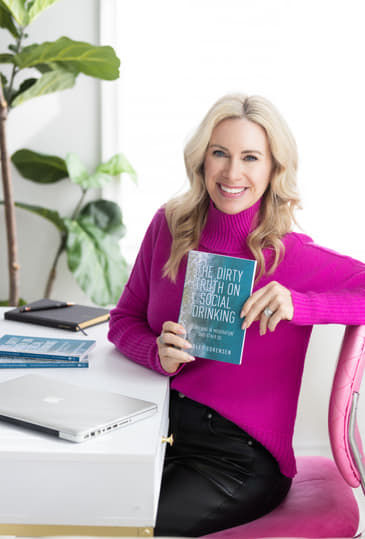
💁♀️ Meet Our Guest – Hadley Sorensen Hadley is a mom of three boys, a passionate distance runner, and the author of The Dirty Truth on Social Drinking: “Everything in Moderation” and Other BS, which was released in 2024 and is available now.
After years of participating in social drinking culture—and silently questioning her relationship with alcohol—Hadley decided to stop ignoring her intuition. Now three and a half years sober, she’s helping others realize that sobriety isn’t just for rock bottoms—it’s for anyone who wants to feel better.
Find Hadley online: Website: http://www.hadleysorensen.com Instagram: https://www.instagram.com/hadley_sorensen/ LinkedIn: https://www.linkedin.com/in/hadley-sorensen-3bbb979/ Facebook: https://www.facebook.com/HadleySorensenWellnessHypeGirl
🔑 Key Takeaways
- You don’t have to look like you have a drinking problem for it to be impacting your mental health.
- Alcohol can dull the effectiveness of antidepressants like Lexapro or Zoloft.
- Self-care starts with self-honesty—when you stop pretending everything’s fine, healing can begin.
✅ Actionable Tips
- Start a “feel log” – note how you feel physically/emotionally after drinking vs. when you don’t.
- Swap your 5PM drink for a fun, alcohol-free ritual like kombucha, tea, or mocktails.
- Be honest with your support circle—what would change if you told them the truth?
⏱️ Chapter Timestamps
00:02:10 – Hadley’s wake-up moment: “I’m doing this to myself” 00:10:21 – The mental health-medication-alcohol triangle 00:16:21 – Writing The Dirty Truth for gray area drinkers 00:19:47 – Breaking up with wine culture and reclaiming her peace 00:28:37 – Talking to teens about drinking in an honest, shame-free way 00:39:13 – Hadley’s real self-care toolkit (spoiler: no bubble baths)
🎧 Podcast Shout Out! We LOVE supporting other creators, and Caitlin & Jenny of How to Be a Grownup are the real deal 🙌 They’re hilarious, honest, and relatable—helping moms laugh and learn through the chaos of adulting.
🎙️ Listen here: Apple Podcasts: https://podcasts.apple.com/us/podcast/how-to-be-a-grownup-a-humorous-guide-for-moms-with-ck-gk/id1600435714 Spotify: https://open.spotify.com/show/18bYm4GWnS5JKiKcTqRQsT Website: https://www.ckandgkpodcast.com/episodes
💥 Subscribe, Rate, and Review! Do you love what you’re hearing? Be sure to subscribe so you never miss an episode of Sh!t That Goes On In Our Heads. Rate and review us on your favorite podcast platform, or leave your review here: https://goesoninourheads.net/add-your-podcast-reviews
📣 Keep the Conversation Going
Listener Feedback: https://castfeedback.com/67521f0bde0b101c7b10442a Podcast Website: https://goesoninourheads.net Hadley's Book: The Dirty Truth on Social Drinking – Available now on Amazon and major booksellers
#MentalHealthPodcast #MentalHealthAwareness #SobrietyJourney #SoberCurious #MentalHealthMatters#GrayAreaDrinking #AlcoholFreeLiving #SoberLife #PostpartumMentalHealth #WomenAndSobriety#MomLifeBalance #MentalHealthSupport #NoMoreShame #SelfCareOverSpirits #TherapyWorks #AnxietyRecovery #LexaproLife #BreakTheStigma#NormalizeSobriety #HealingJourney #EmotionalWellbeing #FindYourJoy #Grex #DirtySkittles#HadleySorensen #WellnessWarrior #EndTheStigma #DepressionSupport
***************************************************************************
🌟 Help California Wildfire Victims 🌟
- American Red Cross – Wildfire Relief: https://www.redcross.org/about-us/our-work/disaster-relief/wildfire-relief.html
- California Community Foundation – Wildfire Recovery: https://www.calfund.org/funds/wildfire-recovery-fund/
- California Fire Foundation – Wildfire & Disaster Relief: https://www.cafirefoundation.org/what-we-do/for-communities/disaster-relief/
- GoFundMe – California Wildfire Relief: https://www.gofundme.com/c/act/wildfire-relief/california
- Los Angeles Fire Department Foundation: https://supportlafd.org/
Your support, big or small, can help relieve those in need. Thank you for making a difference! 💛
***************************************************************************
If You Need Support, Reach Out
If you or someone you know is facing mental health challenges, please don’t hesitate to reach out to a crisis hotline in your area. Remember, it’s OK not to be OK—talking to someone can make all the difference.
- United States: Call or Text 988 — 988lifeline.org
- Canada: Call or Text 988 — 988.ca
- Worldwide: Find a Helpline
- Mental Health Resources and Tools: The Help Hub
Stay Connected with G-Rex and Dirty Skittles
- Official Website: goesoninourheads.net
- Facebook: @shltthatgoesoninourheads
- Instagram: @grex_and_dirtyskittles
- LinkedIn: G-Rex and Dirty Skittles
- Join Our Newsletter: Sign Up Here
- Merch Store: goesoninourheads.shop
Audio Editing by NJz Audio
[00:00:06] Hey there listeners, welcome to Sht That Goes On In Our Heads, the podcast where we normalize conversations around mental health. That's right, I'm Dirty Skittles and alongside my amazing co-host G-Rex, we are here to share stories and tips from our incredible guests. Each episode we deep dive into struggles and triumphs of mental health, offering practical advice and heartfelt support. Because no one should feel alone in their journey. Join us as we break the stigma and build a community
[00:00:33] of understanding and compassion. Tune in and let's start talking about the shit that goes on in our heads. Three, two, one. Welcome back to another episode of Shit That Goes On Our Heads. I have my fantastic and amazing co-host, Dirty Skittles, and we have our awesome, amazing guest, Hadley. Hadley, thank you so much for coming onto the show. Thank you, thank you.
[00:01:02] Thank you for having me. I'm so excited to do this. Yay! I'm excited too. So you said you're outside of DC-ish area? Yeah, I'm in Virginia in the suburbs of DC. Very cool. Very cool. We went, my husband, myself and my son, no, lie, not my son. We want to take him, but my husband and I, we went to DC and it was one of our favorite trips ever. It was wonderful. It is a really fun city. In fact,
[00:01:30] I need to do more of the, you know, being a tourist in my own town. You kind of take it for granted when you're right there, but I think I'll stay away for the next week or so, but I keep saying I'm going to take the kids down and do, you know, do the touristy stuff because there's so much, there's so much there. There really is. The Smithsonian, all the things, but you're right. I would stay away for at least maybe two weeks. Maybe three years. I forgot that craziness was happening in the world.
[00:02:00] Maybe four years. I don't know. Four years. Oh my God. So Hadley, what makes you? Well, what makes me? So my story kind of has two distinct parts, right? As it relates to sort of what we're here to talk about. There's the story of my relationship with alcohol.
[00:02:27] Which has led to this huge kind of revolution in my life that changed everything. But then there's also the story of my mental health. And then of course, kind of the messy way that the two intersected as often happens. So if you want me to just kind of dive in, I'll try and weave them together and be as succinct as I can. You know, like we said, I live outside of DC. I am a mom.
[00:02:56] I have three sons, a 13-year-old, a 15-year-old, and then a 26-year-old stepson. And you know, I'm a marathon runner and a fitness nut. And I am also an author as of last year. And it is crazy because if you had gone back to the Hadley from five years ago and told her that she would be an author, you know, talking about sobriety and all of that. I mean, I never would
[00:03:23] have believed you. So going back to... I grew up in this area too. I've lived here for most of my life. And when I was 14, when I was a teenager, like so many of us, I was really... I struggled to fit in. I felt really socially awkward. I was very shy and introverted. I just always sort of felt like a square peg in a round hole. I just... I felt like I was on the fringe of every social circle I was a
[00:03:52] part of. I kind of felt disposable. I just... I struggled. And now looking back, I know that I was very much an introvert living in an extroverted world, but I didn't have the tools or the knowledge to know how to navigate that. So I just turned myself into a chameleon, always trying to change my shape and color to fit whatever situation I was in with whatever people. And so when I was 14,
[00:04:16] I got drunk for the first time. And while it blew up spectacularly and, you know, we ended up getting caught and I got brought home by the police and it was, you know, just really stupid 14-year-old stuff, I thought, ooh, this is it. This is how I fit in. This drinking thing, it like smooths out all my rough edges. It, you know, releases my inhibitions. I can be funny. I can be popular. I can be the life
[00:04:45] of the party. I can be all these things that I thought I was supposed to be. And drinking kind of allowed me to do that. And so from then on, I drank like teenagers do, not all the time, but when someone could get it, we had a party in a field or, you know, that kind of thing. But I knew very early on that something about my relationship with alcohol felt off. It didn't feel
[00:05:12] good. I didn't like how I felt after drinking. I discovered very quickly that I was a blackout drinker. I never puked. I never threw up like my friends would. It was like, I would drink too much and my brain would just shut down and I would black out and I'd wake up the next day, not remembering anything, going through those checks. Like we didn't have phones back then, but it was like, who's mad at me? What did I do? Did I get in trouble? What did I say? And just so much shame.
[00:05:37] I never liked it, but I just sort of felt like it was normal. Everybody else kind of laughed about it. So I moved into college very much. I went to a big football school. The college binge drinking scene was crazy. Again, my drinking seemed very normal. I was drinking the same way everyone around me was drinking. You know, I now believe firmly that we should change our definition of normal,
[00:06:06] especially in that context and setting, but no red flags were raised, right? I was drinking just like everyone else. More blacking out, more shame, more regret, more just, it really felt like it kind of muddied my soul. I just never felt good about it. And then I graduated from college and I
[00:06:29] became a step-mom really quickly and then went on to have kids. And so I moved kind of seamlessly into what we refer to as the mommy wine culture. You know, this idea that being a mom is so hard and it's so stressful. We need wine to get through it, right? And it's sort of peddled to moms as self-care.
[00:06:52] And I was the poster child for mommy wine culture. In fact, I share a lot of cringy things on my Instagram, like my memories that pop up. Instead of deleting them, I try to use it to teach people, right? All of the awful wine memes I would share and trying to make a big joke out of it. And I was making a joke out of something that I really felt icky about on the inside. But you know, when you're joking about it, it can't be a problem. And I still, my drinking followed normal social conventions.
[00:07:22] I didn't look like someone with a problem. I didn't drink every day. I didn't even drink every week. I wasn't hiding vodka bottles in my closet. I wasn't, you know, we can come up with all of these ways to rationalize and to convince ourselves that it can't possibly be a problem because I don't check these boxes. And we've sort of been conditioned as a society to think that there's only two categories of people, right? Either you're an alcoholic or you're normal and you fall into one of those two
[00:07:52] buckets. So if you're not an alcoholic and I didn't, you know, I didn't check those boxes that I must be normal. So I just have to do it better. Like I just have to figure it out. And I was a type A overachiever. Like I could figure anything out, but why couldn't I figure this out? You know, I promise I wasn't going to black out. I promise I wasn't going to drink too much. And then, oops, it would happen again. And the shame and the stakes just felt higher once I was a mom and I was
[00:08:19] trying to set a good example. And I just, I hated how I felt. And it just, I would take breaks. I would manage to rein it in for a little while and I would think this is it. Now I'm a good little drinker, right? But then I would always find my way back into the same cycle. So to overlay kind of the mental health piece on top of that, I was never someone who even thought about my mental health.
[00:08:46] Like it was never even something that occurred to me until after my youngest son was born. And I started to experience some postpartum depression. And I was so oblivious that I didn't even realize what that was. Now I had been a psychology major. I had wanted to be a social worker or a therapist. Like I knew a lot about mental health. I just had never applied
[00:09:13] it to myself. I just never thought there was an issue. And in this postpartum haze, I was just really struggling with depression and anxiety. And it was this like sense of rage all the time. And I couldn't enjoy life. I was just sort of miserable. And I went for a checkup with my OB and she asked how I was doing. And she asked it in a way that got through to me. And I, like my lips started quivering and I started crying. And I just,
[00:09:43] I don't remember exactly what I said, but she got it. You know, thank goodness. This OB got what I was saying. And she was like, okay, what you're experiencing is very normal. And we talked through some options and she put me on medication. And let me just tell you, that was what I needed at that moment. I always joke if she had told me to go find a therapist and do yoga in the woods,
[00:10:08] I would have lost my shit because, you know, I had two kids under two, right? Not that there's an easy button, but I needed Zoloft was just what I needed at that moment. And it like, it changed everything. It kind of lifted that fog. It silenced the rage. It made me feel human again. Like I could enjoy life. I can enjoy being a mom. It was beautiful. And I just, you know, it's like, there's so many ways to address mental health, but medication is one of those tools. And it was really,
[00:10:37] it really had a profound impact on me. And I'm so grateful for that. So time went on and I was feeling really good. And I would tell everybody, I was very open about the medication because, you know, I wanted to, you know, let's end the stigma around mental health. Like it's okay to not be okay. All the things that you say, but it was so interesting because I was talking this big game, but I was also still drinking. I acted like my Zoloft. And then ultimately I
[00:11:04] switched to Lexapro and that was like magic spot. Right. And I'm still on it today, but I was still drinking on top of the medication, which you're not supposed to do. I just thought that was a suggestion. You know, it was like Zoloft or Lexapro was one tool in my mental health toolkit. And then wine was another. And I thought that it was important,
[00:11:28] but then I started to feel worse and it was around COVID. Like so many people, things kind of escalated in COVID in 2020. My husband was diagnosed with cancer and then he was laid off and then my grandfather's eyed. And then my in-laws were hit by this financial scam. It was like one thing after another. And I was, you know, trying not to spiral. And then by 2021,
[00:11:56] things were starting to look up a little bit, but I found myself in this pattern where we have a lake house that's about two hours from our home and we would go on the weekends. And since we were sort of out of the COVID fog and my husband's immune system was like back online after treatment, friends could come visit again. So we would drink really heavily at the lake all weekend with friends because they were on vacation. So it was like vacation drinking. And then I would end the
[00:12:26] weekend and fall into this crazy depressive episode. So depressed. And I could finally, I was seeing the connection between that depression I was feeling and the drinking. It's like I had always been sort of oblivious to that link. I don't think I wanted to see it, but I was finally really tuned into it. And so I would be so depressed and anxious and miserable. And I would just be like in this fog. And then by Wednesday, Thursday, it would start to clear again.
[00:12:57] And we would go back to the lake and repeat the whole cycle. And it was just chipping away at me. I was miserable. And I kept thinking, why isn't my medication working? I was blaming it on the Lexapro, you know, she's why isn't my Lexapro working anymore? Which is so silly now in hindsight.
[00:13:17] And so I had this epiphany one morning, I woke up at the lake at like 3am. And I had, you know, the chills and the like spins and the hot sweats. I was so hungover. I'd had like my friend and I had drink. I think we had two bottles of rosé between the two of us and fell asleep by eight
[00:13:41] o'clock, like day drinking. And I was sitting there in bed and I was supposed to have a long run that morning. I was training for a big race and I knew I wasn't going to be able to run. I was miserable. And I just had this moment where I thought I'm doing this to myself and I'm acting like I'm powerless. Like I'm acting like it's being done to me, but I'm in control here. And I decided I was
[00:14:05] sick and tired of feeling sick and tired. And I had taken breaks. I had tried all of this stuff to fix my drinking. And in that moment, it became really clear that what my intuition had been telling me was that the only thing that was going to work for me was no alcohol. And I had to do something different if this time, if I wanted to see a different result. And I did want to see a different result.
[00:14:29] I didn't want to feel like that anymore. And so that was my last hangover. And I decided I was going to figure it out from there. And I did. I leaned into self-care and I found kind of a support system and I educated myself a ton about alcohol, which made it hard to want to go back. And I just kind of poured myself into this new version of me without alcohol and figuring out what she was going
[00:14:58] to look like because it had been so long. And along the way, I decided because I was reading all of these quitlet books, these amazing kind of memoirs about people who had quit drinking. And none of them felt like my story. They were amazing and they helped me so much, but they were all very much rock bottom stories. And I decided that I wanted to tell the story for people like me
[00:15:24] who never hit any kind of stereotypical rock bottom. You know, I didn't, again, I didn't look like somebody who had a problem. No one in my life, not even my husband knew that I struggled with this. I kept it so private and hidden. And so I wanted to tell my story as someone who lived in what we refer to as that, you know, as a gray area drinker, kind of in the middle ground on the alcohol use
[00:15:49] disorder spectrum. I decided I was going to start writing. I'd always been a writer when I was journaling through the whole process. And I thought, I'm going to, I'm going to do this. I don't know how I'm going to turn it into a book. And it took a couple of years and a lot of, you know, figuring it out as I went and so much, you know, disappointment and ups and downs and all of
[00:16:17] that. But then it's here, it's out in the world. So now I get to share my story with my book and I act as a sobriety advocate on social media and just kind of, you know, help share my experience for other people who thought like I did, well, I'm not that bad. So I can't, I don't, I, you know, sobriety is not for me because you have to be really bad in order to quit drinking totally.
[00:16:43] And that's just not the case. You can quit drinking anytime for any reason. If it doesn't fit you anymore, if you've outgrown it, if you know, if you think it's holding you back and so it's been really beautiful to learn that and kind of share the experience. Did you have any side effects, whether it was mental, physical, or in relationships, like when you stopped drinking? When I stopped drinking, so I didn't have any physical, I was fortunate in that I didn't have
[00:17:10] to worry about like physical withdrawal because I wasn't physically dependent. I, so, you know, it was some stuff like headaches and just, it was a lot of it was just mental kind of figuring out how do I navigate this world where I relied on alcohol for so many things and how do I socialize and how do I do all of those things? And that definitely took work, but that was, you know, that's, that's a whole nother piece of it.
[00:17:40] Yeah. Did you, I don't know, struggle to figure out what life, I don't know, would you have triggers of when you would kind of take to the alcohol versus not? I'm just curious in my mindset, I'm like, if we stop doing something, like I get fear sometimes if I'm going to go out and have dinner with friends or something, and I know everybody's going to be drinking. What does that look like for me now? Yeah, that's a good question. And that's probably the question I get most from people online. It is
[00:18:07] scary. It's scary because alcohol is something that is so embedded in our lives. That's how we've been sort of trained to do everything, to celebrate, to grieve, to handle stress, to have fun, to connect, like all of those things. So you have to kind of pick out all the little tentacles that are stuck in every part of our lives. So yeah, I was definitely scared about the social act and it took a little while, right? It was like, what do I do when I go out with friends? And for me, it was, I decided
[00:18:36] to be really open and to tell them what I was doing. And I quickly found like my drink. So we would go out and I would get a club soda with a splash of cranberry or something. So many places have, so many places have mocktails and non-alcoholic beers. My big kind of trigger you mentioned was like at five o'clock in the afternoon, that was when I would start making dinner. I would pour a glass of wine. I would kind of decompress from the day with the kids. And so I would find myself
[00:19:05] getting kind of twitchy at five o'clock. Like it's, again, you're, it's, you've kind of, your brain has built these connections and it's, well, this is what I do at five o'clock. This is what I do when I go out with friends and you have to kind of retrain yourself. So I started, I found a kombucha that I really loved and I would have kombucha at five o'clock and I would go sit in the sunroom and read my book for 10 minutes before I started dinner. And that's now something that I still do.
[00:19:34] And it's like one of my favorite parts of the day. You know, I had to learn also, part of the journey for me was kind of learning to embrace and appreciate myself as an introvert. And so I went out to bars and did things like that with friends, but I really disliked it and I had to be drunk to do it. So now there's things that I say no to. I always joke. I'm like, my life might
[00:20:00] look boring, but it's not because I'm sober. It's because now that I'm sober, I know I really like a boring life. So I'd much rather I've made these trade-offs where I'll go for a walk with my closest friends. We make walk dates and we go on walks together and we get a coffee or we go out to lunch or I still go to dinners and all of that, but I have no interest in going to a bar anymore. And it's not because I'm worried I'm going to be triggered. It's because that's just not how I want
[00:20:30] to spend my time. But I feel like I've derailed from your question. I don't know. With friends, the social aspect is hard. One of the things I learned is that people care a lot less than you think they're going to. I was worried that it was going to be a much bigger deal than it is. And when people get drunk and annoying, I just get to drive myself home.
[00:20:59] So did you find that when you stopped drinking, the Lexapro started working a little better? Yes. Yes. Isn't it crazy how that works? Yeah. And I always am quick to give the disclaimer, you know, eliminating alcohol isn't going to magically solve all of your mental health problems. It's not all sunshine and roses. But for me in the beginning, it almost felt that way because I was
[00:21:26] really shooting myself in the foot. You know, alcohol is known to exacerbate depression and anxiety, causes it. And so I was making it worse while also negating the effects of my medication. So when I stopped drinking and gave myself like a week, I started to feel that fog lifting.
[00:21:51] And I started to feel like a totally different person, totally different. I mean, you know, life is not all sunshine and roses, but I'm so much better equipped to handle the ups and downs. Now that alcohol isn't like pulling the levers on my mental health with no rhyme or reason. I mean, I was just, I was really making it so much harder for myself without even realizing it. So yes,
[00:22:18] I did feel like my medication was like, thank you. Let me do my work as soon as the alcohol was out of there. And was your husband super supportive of your decision? He was incredibly supportive. He was a little surprised at first and he was kind of hurt understand, understandably because he didn't know that I struggled with this. He knew that sometimes when we drank too much, I blacked out and he got
[00:22:47] annoyed or I did something stupid or it was always never as bad as I thought it was. But I was not fun to be around now that I'm sober and I'm around people who are, you know, it's just, you're really not as cute or as funny as you think you are. But it was not like a huge deal in our marriage. And I never talked about it because I was so ashamed. I mean, I held on to so much shame.
[00:23:13] It just eats at you, you know, and it thrives in the dark. So the less, the more you go on without talking about it, just the grindier and ickier it feels. So once I kind of released it all and talked about it, he was incredibly supportive. And he, everybody asks, my husband still drinks. He's a very moderate drinker. He's one of those unicorns, you know, people like in the sobriety space talk
[00:23:39] about the moderation unicorns, the people who can take it or leave it. And that's him. So it's really not, it's really not much of an issue for us. And he's, but he not only supports my decision to be sober, he also supports my decision to share it so openly, which is huge. That's really awesome. And I can attest to the shame. So, you know, when I had my mental breakdown,
[00:24:02] nobody knew, absolutely nobody knew how depressed I was. My wife didn't know, my coworkers, my friends. And when I finally opened up, I mean, they were mad and terrified. But like at the time, I didn't know how to talk about it. Yeah. So, you know, patience and grace. Listen, like we tell the story when it's time to tell the story. Yeah. And it's so liberating and empowering
[00:24:30] when you finally release it and stop holding on to it. And I still, you know, I'll tell these crazy blackout stories that I have so much shame over and I'll put them out there. And I'm like, sorry, mom, you know, but then I'm like, Oh man, I felt so good. I'd been holding that one in,
[00:24:52] but yeah, it feels really, it's very liberating to release it. And then to give those people who love you a chance to support you instead of hiding it from them. Yeah. They can show up and be a part of your journey. Go ahead. I was just thinking, do you remember we had KK and she had, I'm bringing this up because at that time, that was the first time I heard of anybody
[00:25:19] express how like some alcohol companies market to women and mothers. And that was the first time I had heard that. And I guess I never really thought about it, but now hearing you communicate the mommy, the wind down time for moms. I was thinking how recently I'm sure somebody got it as a stocking stuffer for me, it was a mommy sippy cup. And it was, it looked like a kid's sippy cup, but inside it was a wine glass. And I thought, now I'm like, why is that a thing? Like why,
[00:25:49] when did that become a thing that we did? The more you start noticing it, the more you'll notice it. You know what I mean? It's like when you get a new quote, like you'll start to see it in advertising, in TV shows, in social media. It's huge. And I think it started with marketing, but now moms are, we're doing the marketing for them. We've picked it up and run with it. Right.
[00:26:15] And it's a really, it's a really unfortunate message for women too. It kind of keeps us small, right? This, you need, oh, in order to deal with this, you're going to need to be comfortably buzzed. You know, parenting is tough to handle those little monsters. You need a big old glass of wine. Yeah. And then there's also the message it sends to our kids, because I tell you, they notice a lot more than we think they do. A lot more.
[00:26:44] Yeah. There's this person I follow on social media who, all she does is make dinner for her family. She's not doing anything scandalous, but literally every video starts with her pouring herself a glass of wine and then she makes dinner for her family. And so like you just said, the more you notice it, the more you'll notice it. I'm like, dang, it's crazy to me. It's one of my favorite parts of this whole experience has been sharing it with my now teenage
[00:27:11] boys, because, you know, when I stopped drinking in 2021, they were at an age where, I mean, they knew that I had a glass of wine in the evenings. Sometimes I was never drunk around them. I was never, it was always like, you know, all the friends would put the kids to bed and then we would get rowdy or whatever. I was, you know, I had these rules that I followed.
[00:27:36] So they never witnessed a problem, but, but they did notice all of the, you know, I had the wine aerobics, the apron and all of that stuff. And they notice it. So now as I've gone, as they've been getting older and I've been going through this process and writing the book and all of that, really having these open and honest conversations with them about alcohol and about why I chose to
[00:28:04] quit and why I, you know, feel the way I do about it. And I, in no way suggest that I think that my kids are never going to drink, but when they do, they're going to be a lot more educated than I was at 14. They're going to go into it with eyes wide open and they'll get to make their own choices. And they know that I'll be there for them no matter what. And one of my favorite parts now is knowing that, you know, if they're at a party and something goes sideways, I can always jump in
[00:28:30] the car to pick them up because I won't be two or three glasses of wine deep on a Friday or Saturday night when they're in trouble. And that just feels really good as a mom. Yeah. How do you approach that topic with your kids? Cause my son is seven and I do, we're not heavy drinkers. Like I think we'll have the occasional drink here and there, but I'm curious, like how do, how does one introduce that to their kids if they're not seeing it, you know, at home? I'm trying to remember the evolution
[00:28:59] of, so when I first stopped drinking, we just, I was very, I'm really open with my kids. Anyways, we have the bluntest like sex ed conversations, like all that stuff, like the stuff that, I mean, with a house full of boys, like you just, it's kind of crazy over here. So like nothing is off the table for a conversation. Oh my gosh. I mean, I kind of love it. I have the sense of humor of a
[00:29:25] 14 year old boy now. I mean, it's not pretty, nothing offends me. So, but I said, you know, that I quit drinking and I, when they asked why, I think I just gradually kept kind of sharing more and more. And it was just a, you know, I think I remember one of them saying, well, were you an alcoholic? Cause they, that's the only frame of reference they have. They have that. They know that word. I said, no, I don't identify with that label. Some people do. It's great. I don't,
[00:29:53] you know, I just didn't like the way it was making me feel. It made me feel not good about myself. It made me a version of myself that I didn't like. And then I started sharing the science with them as I started learning that, you know, that it's, we used to be told that it was good for your heart and there's, you know, antioxidants and all of this and a glass of, well, now we know that's
[00:30:18] not really true. The prevailing science says that no amount is safe for healthy and it causes seven kinds of cancer and all of this. And I don't demonize it again. My husband drinks. They know that like we just, I share both sides of it. Like these are the facts that I wish I had known when I started guzzling it at 14 and didn't look back.
[00:30:48] So yeah, I think the older they get, it just sort of happens naturally. You just start sharing more and they start learning more from the world around them. So they start asking, asking more questions. Yeah. That makes sense. That makes sense. Cause as a mom, I worry. I'm like, Oh, what's going to happen? I need to worry about. And you stole my question and I'm not even a mom. So, you know, it's all good. Cut kittens, kitty cats. You're a cat mom.
[00:31:16] Listen, they don't give a crap. Okay. And that the fact that they're quiet today is a miracle, a miracle. I probably just cursed myself just saying that, but you know, I really admire what you've done. And, you know, even for me, you know, I'm 61 and a half and I've really backed down on a lot of my drinking. A lot of it, you know, started, man, like last year,
[00:31:42] like right around February, I stopped drinking pretty much everything and I feel better. And I'm glad I did that because November, I got really depressed again. But this time, we didn't keep it silent. Everybody knew what was going on. I was pretty, pretty loud about what was going on in my head. And I just felt better. I didn't feel like I needed a drink to get through it. Or I had hope. I had hope that everything was going to be okay. And, you know, for me, you know,
[00:32:11] you know, my, my dad was an alcoholic and I never really picked up on any of that. And yeah, I drank a lot when I was in high school, a lot, like a lot, like the fact that we made it to 61 is a miracle in itself. Isn't it amazing to think that we're still alive after some of the stuff we did? Literally, was it last, the last recording we did, somebody was like, what would your younger self be proud of from you today? And I was like, the fact that I'm still
[00:32:37] alive, you know, I, going back to something you mentioned earlier, Hadley was like the mental health and alcohol for me kind of were best friends. You know, I think in my twenties, I for sure kept some bars and business in Boston and definitely used it to cope with what I was struggling with mentally. So I don't, I wouldn't have associated myself as an alcoholic either. I think I probably
[00:33:03] am in that gray area where it was a choice to use that to cope. And then one day realizing, I don't like the way I feel. I always get horrible hangovers. It's never fun. The older you get, they last longer. It's what are we doing? Well, yeah. And we've been taught that it's a coping tool, right? Where that message has been shoved on us from all directions. And I think, you know, you raised a good point. So many women,
[00:33:31] as we approach middle age, you know, like I know my body, I could get away with a lot more when I was in my thirties and then I got to my forties and my body was like, Whoa, girlfriend, I don't know how for all of that shit you did earlier. I don't know how you think this is this next decade is going to go, but that ain't it. And I, but I feel, you know, the more we're learning about perimenopause,
[00:33:56] which can be like 10 years long and all that we didn't know about before. And it's like, alcohol is the last thing you need when you're going through that. And your hormones are in upheaval for years at a time. And I think women are starting to kind of notice that as, I just really don't like to drink as much anymore because I feel awful. But there's something more to it, some science and stuff. Yeah. And for sure now there's like wine for women and yeah, this is going to become a thing now. I'm going to notice it everywhere I go.
[00:34:26] Oh yeah. But I'm really proud of you for doing what you did, Hadley, because I know it wasn't easy and you've probably dug really deep, but you've seen happier, more at ease, and more at peace with your life. And it takes a lot. You got to dig deep. And is this really making my life better? Probably fucking not. But, you know, you made a difference and you wrote a
[00:34:55] book about that. And, you know, that takes a lot of power. And I'm so proud of you for doing that and sharing your story with us and sharing it with the world because people need to hear this, right? You don't need to drink wine or bourbon or anything to make yourself feel better. It's kind of up to you to find your inner joy. Yeah. You're like shedding. You're either not an alcoholic or you are. And that, I mean, now,
[00:35:24] you know, talking about it through this conversation, it makes sense that there are other areas where, you know, probably have an issue or you need to address it or whatever. It doesn't have to be like the gruesome stories or movies that we see about alcoholics, right? Yeah. I think that knowing that there's information out there that you've created and you're sharing is huge. So what is the name of your book?
[00:35:48] The name of my book is The Dirty Truth on Social Drinking, Everything in Moderation and Other BS. I wanted to sort of lower the barrier to entry so people weren't, you know, a lot of these books you look at and you can tell it's like this deep, dark, rock bottom sort of existential crisis story. And it's no, I was a social drinker. I was a social drinker. And you know what? It turns out
[00:36:13] that it wasn't as social as I thought and it didn't work for me. And, you know, the question isn't, we have to ask ourselves, isn't, am I an alcoholic? It's like you said, is this making my life better or is it making my life worse? Because if it's making my life worse, it doesn't matter if I'm an alcoholic. I just don't have to do it anymore. Right. And this makes me think of Johnny when we recorded with him. So one of our guests,
[00:36:43] his episode will be coming on pretty soon. He stopped drinking and he was a social drinker. And now he manages a winery with his family, but he said his life is so much better since he stopped drinking. He found his joy. And like, that's my buzzword for 2025 is find your joy. Yeah. Okay. Question 10. Girl, go get a coffee, please.
[00:37:13] Okay. If you can go back to a younger version of yourself to give yourself a bit of advice, what would you say? And how old are you when you go back in time? Oh, that's such a good one. I mean, I feel like I would love to stop myself like every decade along the way. And I feel like the first thing I would do is go back to that 14 year old who was about to get, you know, drunk for the first time and say, stop trying to be what you think that everyone else
[00:37:38] wants you to be. Learn to live in your own skin and be comfortable with that before you go down this other path. Like you, you don't have to try so hard to fit in. Eventually you're going to find the right people and it won't feel like work. And yeah. And then I guess at that same age, I would say the other
[00:38:01] big lesson is I wish I had known to listen to my intuition sooner. My intuition tried to send me these messages about my drinking for so long and I kept ignoring them. And now I feel so much more, I trust myself more. I feel so much more confident. Like if my intuition speaks up, I'm going to listen because she knows what she's talking about. Yeah. Would you say that's the hardest lesson you've had to learn so far? Trust your intuition?
[00:38:31] Yeah, I think so. Because, you know, well, I wouldn't, I don't want to say I would go back and change everything because that old version of Hadley got me to this version of Hadley. And I, so I love and appreciate her for that, but I experienced a lot of unnecessary pain. And if I just could have trusted myself earlier, I could have found this joy and this peace and this
[00:39:00] clarity a lot sooner. Yeah. I love that. All right. So now my questions. What is your favorite word? Right now, the first thing that comes to mind is peace. I found so much peace and I had no idea
[00:39:23] how much that was lacking before I quit drinking. Just waking up on a Saturday morning without a hangover and drinking my coffee and feeling good about the person I see in the mirror, that peace just cannot be beat. I love that. And what's your least favorite word? Well, I'm trying to think of a meaningful one. My, my, I mean, my least favorite word, my kids would be like, well, you have to say is the word supper. Like when somebody says
[00:39:52] supper instead of dinner, I lose my mind. So my kids will be like, oh, is supper ready? And I'm like, um, but a more meaningful word I would say is, is shame. Just, I don't want to be associated with it anymore. I feel like I, you know, I felt so much of it for so long and that chapter is over. I refuse to feel that way anymore.
[00:40:20] Love that. Okay. So my last questions, what does Hadley do now for self-love and self-care? Oh, that is a great one because it's such an important part of our mental health journey. And also kind of, it's a huge tool when you're trying to eliminate alcohol. Self-care is so
[00:40:45] important. So for me, it was learning that self-care is not like bubble baths and mani-pedis. I mean, that could be part of it, but for me, it was learning what I really need. And for me as an introvert, I require a lot of alone time. I love being with friends. I like doing social things, but then I really need a lot of alone time to kind of recharge myself. And so making sure I get enough of that can be hard. I exercise is really important for me. I'm a runner.
[00:41:14] I go for lots of walks outside. I like being out in nature, especially since eliminating alcohol that's become for some reason, even more important to me. I crave just the fresh air and being in nature. And so finding ways to do that is a huge part of my self-care routine. Getting enough sleep is really important. Those are probably my main sort of kind of my self-care toolkit.
[00:41:44] I love all this so, so much. Thank you so much for sharing your story with us, your journey. How can our listeners find you? So Instagram is where I hang out the most, and I'm always happy to answer questions in my DMs. I try to share a lot about my journey to help other people see that an alcohol-free life is really
[00:42:08] vibrant and fulfilling and fun. And I'm just at Hadley. My book, The Dirty Truth on Social Drinking, is available on Amazon. And my website is hadleysorensen.com. Thank you. Oh my God, I love you so much. Thank you for having me. I'm so honored to be on with you both. Oh, yay. That's sweet. Yay. I love what you're doing here. It's just such an important message, beating the stigma around
[00:42:34] mental health and drinking. I mean, those are two areas where the stigma is real. So talking about it really makes a difference. It does. Thank you. Thank you. Hi, all. Thank you so much for listening to this episode. I'm G-Rex. And I'm Dirty Skittles. Don't forget to subscribe, rate, and review this podcast. We'd love to listen to your feedback. We can't do this without you guys. It's okay to be not okay. Just make sure you're talking to someone.