
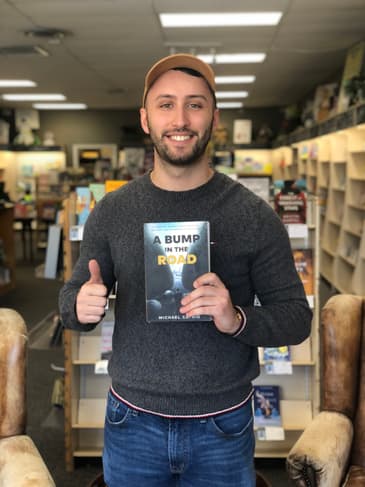
At 18 years old, Michael Caprio was handed a diagnosis that changed everything: Familial Adenomatous Polyposis, a rare genetic condition tied to colorectal cancer risk. In this powerful Part 1 conversation, G-Rex and Dirty Skittles talk with Michael about fear, surgery, anxiety, family history, and what it really takes to keep going when life smacks you sideways.
Awards & Downloads Line
Sh!t That Goes On In Our Heads is a 2024 People’s Choice Podcast Award Winner (Best Health), 2024 Women in Podcasting Award Winner (Best Mental Health Podcast), 2026 Podcast Tonight Award Winner (Best Mental Health Podcast), and 2026 NYC Podcast Award Audience Choice Winner (Best Hosts), with over 4.5 million downloads and listened to in over 160 countries.
Feedback Link Line
We’d love to hear your thoughts! Leave us written or voice feedback here: https://castfeedback.com/67521f0bde0b101c7b10442a
Mental Health Quote
“Sometimes the bump in the road becomes the bridge that gets you back to yourself.” — Inspired by Michael Caprio
Trigger Notice + 988 Crisis Reminder
This episode includes discussion of serious illness, surgery, medical trauma, anxiety, depression, and moments of feeling like life was no longer worth living. Please listen with care.
If you or someone you love is in crisis or thinking about self-harm, call or text 988 in the United States to connect with the Suicide & Crisis Lifeline. You are not a burden. You are not alone. Help is available right now.
Episode Description
At 18, Michael Caprio should have been worrying about senior year, friends, and what came next after high school. Instead, he was facing a rare genetic diagnosis called Familial Adenomatous Polyposis, or FAP, a condition that causes precancerous polyps to grow in the large intestine and dramatically raises colorectal cancer risk. What followed was fear, bloodwork, colonoscopies, life-changing surgery, an ostomy, and the emotional punch of realizing his body would never be the same.
In Part 1 of this two-part conversation, Michael joins G-Rex and Dirty Skittles to talk honestly about what it felt like to be diagnosed so young, how his family history shaped his understanding of FAP, and why Googling symptoms can send your brain straight into a horror movie. He opens up about having his large intestine removed, living with an ostomy during recovery, and struggling with the mental health side of healing.
This episode gets real about medical trauma, anxiety, identity, and the moments when Michael felt like a burden to the people who loved him most. But it also shows the power of support, honesty, perspective, and choosing to stay in the fight one painful day at a time.
Keywords: Michael Caprio, FAP, Familial Adenomatous Polyposis, colorectal cancer awareness, rare disease, medical trauma, anxiety, ostomy recovery, colectomy, J pouch surgery, mental health, chronic illness, hereditary cancer, surgery recovery, emotional wellness
Meet Our Guest — Michael Caprio
Michael Caprio is an Author, advocate, and rare disease warrior who was diagnosed with Familial Adenomatous Polyposis at just 18 years old. He is the Author of A Bump in the Road: My Medical Journey over Potholes, Detours and the Bridge to Gratitude, a memoir about surviving serious illness, navigating medical trauma, and finding gratitude after life-changing surgery.
Website: https://www.mikecaprioauthor.com/ Instagram: https://www.instagram.com/mikecaprio_author/ Facebook: https://www.facebook.com/people/A-Bump-in-the-Road/100076302759044/ LinkedIn: https://www.linkedin.com/in/michael-caprio/
Key Takeaways
- A rare diagnosis can change your body, your future, and your mental health all at once.
- Medical trauma is not just physical; it can shake your identity, independence, and sense of safety.
- Support systems matter, especially when your brain tells you that you are a burden.
- Friends may show you who they really are during hard seasons, and that truth can hurt.
- Gratitude does not erase pain, but it can help you rebuild after it.
- Healing takes honesty, patience, and the courage to keep showing up.
Actionable Items
- If you are facing a scary diagnosis, write down your questions before appointments so fear does not steal your voice in the room.
- Build a support circle that includes medical professionals, loved ones, and people who understand your condition.
- When your thoughts get dark, tell someone. You do not have to carry the heavy stuff alone.
Important Chapters
- 00:00:00 – Welcome to Part 1 G-Rex opens the episode and lets listeners know this is the first half of Michael’s two-part story.
- 00:01:33 – Michael introduces his book Michael shares the title of his memoir, A Bump in the Road, and explains how his medical journey became the foundation of his writing.
- 00:01:48 – Understanding FAP Michael explains Familial Adenomatous Polyposis, a rare genetic condition that causes precancerous polyps to grow in the large intestine.
- 00:03:00 – Family history and “the club” Michael talks about his mom, aunt, and grandmother living with FAP, and how he slowly began to understand the family connection.
- 00:05:19 – The diagnosis conversation Michael remembers being told he had FAP and how the seriousness of the diagnosis slowly started to sink in.
- 00:06:39 – The danger of Googling symptoms After searching online, Michael found terrifying stories that made his fear and anger spike.
- 00:08:30 – Being 18 and trying to process everything G-Rex and Michael talk about the emotional weight of facing a life-changing diagnosis while still figuring out who you are.
- 00:10:05 – Surgery, colectomy, ostomy, and J pouch recovery Michael explains the surgery to remove his large intestine, the temporary ostomy, and the J pouch procedure that helped him regain quality of life.
- 00:13:43 – The emotional toll of recovery Michael shares how difficult recovery became, including bathroom challenges, pain, frustration, and regret over how he treated people trying to help him.
- 00:14:56 – Friends, support, and painful distance Michael reflects on friends who disappeared and others who showed up in ways he never expected.
- 00:18:11 – A perspective shift after illness Michael describes how losing everyday freedoms made him more grateful for small things like coffee, exercise, and time with friends.
- 00:22:29 – Rock bottom and the fight to keep going Michael opens up about feeling like a burden and the painful family conversation that helped snap him out of a dangerous mental spiral.
- 00:26:10 – Closing reminder G-Rex and Dirty Skittles close with a reminder that it is okay to be not okay, as long as you are talking to someone.
Closing CTA
Subscribe, Rate, and Review! Remember to subscribe for more inspiring stories. Rate and review us on your favorite podcast platform, or visit our Website: https://goesoninourheads.net/add-your-podcast-reviews
#MentalHealthPodcast #MentalHealthAwareness #Grex #DirtySkittles #Podmatch #MichaelCaprio #FAPAwareness #FamilialAdenomatousPolyposis #ColorectalCancerAwareness #RareDiseaseAwareness #MedicalTrauma #AnxietyRecovery #OstomyAwareness #ChronicIllnessSupport #SurgeryRecovery #MentalHealthMatters #HereditaryCancer #HealingJourney #Jpouch #BumpInTheRoad***************************************************************************
If You Need Support, Reach Out
If you or someone you know is facing mental health challenges, please don’t hesitate to reach out to a crisis hotline in your area. Remember, it’s OK not to be OK—talking to someone can make all the difference.
- United States: Call or Text 988 — 988lifeline.org
- Canada: Call or Text 988 — 988.ca
- Worldwide: Find a Helpline
- Mental Health Resources and Tools: The Help Hub
Stay Connected with G-Rex and Dirty Skittles
- Official Website: goesoninourheads.net
- Facebook: @shltthatgoesoninourheads
- Instagram: @grex_and_dirtyskittles
- LinkedIn: G-Rex and Dirty Skittles
- Join Our Newsletter: (https://grexanddirtyskittles.substack.com/)
- Merch Store: goesoninourheads.shop
Audio Editing by NJz Audio
Hosted by Simplecast, an AdsWizz company. See pcm.adswizz.com for information about our collection and use of personal data for advertising.
[00:00:00] Hey y'all, this is part one of a two-part episode. Hey there, listeners. Welcome to Sh!t That Goes On In Our Heads, our podcast where we normalize conversations around mental health. That's right. I'm Dirty Skittles and alongside my amazing co-host, G-Rex, we're here to share stories and tips from our incredible guests.
[00:00:23] Each episode, we deep dive into struggles and triumphs of mental health, offering practical advice and heartfelt support because no one should feel alone in their journey. Join us as we break the stigma and build a community of understanding and compassion. Tune in and let's start talking about the shit that goes on in our heads. Three, two, one. Welcome back to another episode of Sht That Goes On In Our Heads.
[00:00:52] I'm here with the awesome Dirty Skittles and today we have an amazing guest, Mike. Welcome to the podcast. Welcome, welcome. Hey guys, happy to be here. Hello. Where are you based out of? I'm based out of Hapakon, New Jersey. Ah, New Jersey. I don't know. Everybody's always like, oh, New Jersey. I grew up in New England, so I feel like I think we're meant to be rivals, but... A little bit. If you're going based on football rivalries and baseball and whatnot.
[00:01:22] My father's gonna be so proud if I talk about the Patriots or the Red Sox. Anyhow, that's not what this episode's about. So, Mike, tell us you have a book. You're an author. Yes, that's correct. I have a book called The Bump in the Road, My Medical Journey Over Potholes, Detours, and The Bridge to Gratitude. Very fancy. I love the title. For people who haven't read the book, what is it based off of?
[00:01:48] Yeah, so when I was a senior in high school, I was diagnosed with a rare genetic condition that runs in my family called familial adenomatous polyposis, or FAP for short. And what that big scary name means is my body has a defect in one of my genes that doesn't stop the growth of polyps in my large intestine. They instead grow out of control. So, for those of your viewers who don't know, polyps are small pre-cancerous bumps that, if not removed, eventually turn to cancer down the line.
[00:02:16] So, with my condition, it isn't really a matter of if I'll get cancer, but when I'll get it. Oh, wow. Yeah, so I had to get a blood test in high school to confirm I had the gene. And then I also had to get a colonoscopy to confirm the blood test was accurate. And the way I wrote it in my book, the results of it, is it looked like, at 18 years old, it looked like my large intestine was lined with bubble wrap. Wow. Yeah. Holy moly. Yes. And you said this runs in your family.
[00:02:45] So, were you... I'm imagining you kind of knew that there would be the chance that you would also have this. Right. But my question, I guess, is more so, what had you seen of family members who did have it before you found out you had it? Yeah. So, when I was... So, the family members who had it or had it in the past are my mom, my aunt, and then my grandma had it, her mom had it, and her sister had it. So, that's the lineage history that we have.
[00:03:13] And when I was younger, I didn't really, like I said, I didn't know until my senior year of high school. But I, as, after I got diagnosed and I found out, I kind of was able to piece things through the years that were always a little, I guess, different. My mom always had a really big scar on her stomach, but I thought it was from C-section. So, I never really thought of that as anything much. But that was actually related to her surgery. And then, you know, little things like my grandma never wore a two piece to the beach. It was always, you know, one, just to cover her scars as well.
[00:03:43] So, little things like that, I kind of noticed. And when we would go on family vacations, and then when I got older and diagnosed, I was let into the club. But we called ourselves the club, again, that we have it. And so, before I was diagnosed, they would always have little meetings on vacation. You know, like if we were going to the beach, for example, my grandma, my aunt, and my mom would have a little powwow, kind of separate from the rest of us.
[00:04:08] And they would be discussing like how they're going to go about their day, how they're feeling, you know, what they're going to eat later, like just stuff like that, you know, checking in with each other on how they're doing. And I never really knew what that was about, per se. I honestly just thought it was adult talk. I figured maybe, you know, since they're all girls, it was something that I wasn't allowed to know as a man. So, you know, I didn't know if it was a girl talk or whatever. I didn't really overthink it too much. But then obviously, when I got diagnosed, I started to look back through the years and notice things.
[00:04:37] But it was never something that was like super outward or like super noticeable, I guess, to the untrained eye. Because my family and the philosophy we all like to live by is, you know, it happens and you got to deal with it. And we all live, you know, or try to live normal lives as best as possible. So, you know, we don't really wallow on things or hang on things too much. And there was never really anything like that made me notice anything off, per se. Okay, that's really interesting.
[00:05:06] So, then you're in high school, you get the blood work, you get the rest of the tests to confirm that you do have it. What sort of like, I guess, talks did you get after that, like with your family members? Yeah, so after I got diagnosed, so like when I went to get the blood test, I was such a, you know, preoccupied teenager with other stupid things as I wrote in my book. Like, I didn't even think anything of the fact that I went to Mount Sinai in New York City to get a blood test.
[00:05:35] Like, looking back on it, that was probably a very strange thing for an 18 year old. But I didn't really think much of it. Like I said, I was thinking about other stupid things. And so that, I guess they were prepared, my parents, if I had any questions, but I just truthfully didn't at that time. Because I asked them, I was like, you know, what am I getting tested for? Like, oh, you know, your brother got tested for it. He was fine. He didn't come back. Like they were kind of like being a little bait on the information because they didn't want me to panic too much, especially if the results came back negative. Right.
[00:06:04] And when they came back positive, that was a different conversation. That was the first time we really had to, you know, like get everything broken down to me. So I remember that talk was a little more serious. I remember my parents kind of woke me up on like a Saturday morning and they brought me into the living room. And I remember they just kind of had nervous expressions on their face. And then they told me, you know, I remember at the time I didn't really have too many questions again because, you know, they're telling me like my mom's telling me that you're diagnosed with this. And yes, it sounds scary.
[00:06:32] But I asked her, I was like, oh, you have it. Right. You know, and aunt has it and my grandma has it. And they were like, yes, they all have it. So in my head, I was like, oh, it can't be that serious then because I've never noticed anything my whole life. And they're all fine. So I still didn't really have too many questions. My questions were pretty surface level. And I was just saying, you know, basically, I wasn't prodding too much. But then after that talk, I kind of realized it was serious. And it kind of lingered on my mind for a bit.
[00:07:00] So I did the worst thing that you could possibly do. And I went to Google and research in my condition. And I was reading horror stories after horror stories. So then I felt a little, in a way, I felt a little kind of blindsided, maybe even betrayed. So I was a little angry after that, I remember. So after that, I kind of had a more stern talk with my parents. I was like, you know, you guys are telling me that I'll be okay and all this stuff. But, you know, they had a preparation and plan with my surgeons and everything. So, you know, all my questions would get answered in due time.
[00:07:30] But I just remember, like, after I did that, I kind of had my, like, you know, what the hell moment. And I kind of confronted them. And then they were just like, listen, you're going to meet your surgeon. You can ask all the questions to him. You know, they described this great guy, my surgeon, Dr. Gorfine, who was amazing. And when I had my first meeting with him, it was like the first time the talks kind of like, that was like, I guess, the third talk I had regarding the condition in like a serious manner.
[00:07:57] And this first time with a medical professional, the guy who would be going on to operate on me. And I remember he calmed a lot of my fears. And I remember that over the years, like we kept in touch in email and he always would answer my questions. Honestly, if things were difficult, he wouldn't sugarcoat it. And if things were going to be easy, he would let me know. So anytime I had a really tough question, I would go to him and he would give it to me straight. And then after that, you know, I kind of, I was still nervous, obviously,
[00:08:25] but I started to accept things a little more, a little bit at a time after that. Yeah. That had to have been hard. Just because of like what your age was and like you're trying to be a man, right? Yeah. And I'm just trying to figure it all out. So, you know, at 18, it was not easy. I definitely wasn't like the most mature minded to figure everything out. You know, like I was struggling with stupid stuff.
[00:08:53] Like as I wrote in my book, like high school stuff, like friends and friend drama and clips and whatever. And, you know, who did what at this party? You know, who didn't get invited to this event? Like it was really juvenile stuff that was on my mind. And then, you know, I was trying to think about what my life would be in the future. And I wasn't necessarily able to do that after I got diagnosed because it was like, what will my life be in the future? And I was already unsure what I wanted to do.
[00:09:19] So, like, as I wrote in my book, I just was conflicted with a bunch of different emotions coming from all different angles. So at the time, I'm sure I probably wasn't the most pleasant person to be around. And I'm sure, you know, my parents and Dr. Gorfine, there was times where, you know, I wasn't the most happy and I would give them kind of sassy answers, which looking back on it, I'm not particularly proud of. But, you know, it is what it is. I was going through a lot at that time.
[00:09:44] And once I was able to get on the other side of it, I was able to realize what, you know, what I needed to change in the past so that I could be better equipped for my life going forward. Yeah. So you had basically to, you mentioned that you had prep for surgery. Mm-hmm. What was the surgery for? Like, what was that for? Yeah. So with my condition, because of the defect and the polyps growing in my large intestine, that's what would shorten my life or lead to difficulties. Mm-hmm.
[00:10:14] So the large intestine is the organ in question that needs to be removed. So I had to have a total colectomy. I don't have a large intestine. And then after that, that's pretty common for FAP or any really colon-related diseases. Even like Crohn's disease or ulcerative colitis, they're kind of similar in some regards. Mm-hmm. And after that is when things, you know, kind of reach a crossroad of what surgical path you'll take. I mean, the most common one is, again, an ostomy, but that's not always the most popular. And then there's what I have.
[00:10:43] I had a J pouch, which is where they take the end of your small intestine, your ilium, and they create a J-shaped pouch. And basically, you know, reconfigure your intestines to do the job of the large without needing an ostomy bag. So that one is like, I'm very fortunate for the surgical group I had because they performed thousands of them and they really perfected it. And my life, you know, knock on wood is very normal now. I live a very normal life for the most part. And I'm very thankful for that.
[00:11:09] But over the years, like being in certain nonprofit groups and working with other people across the country and even the world in some aspects, not everybody is fortunate enough to receive that treatment. And it is a very difficult surgery to perfect. So it's risky in some regards, like for people who can't really find a surgeon that's really good at it. It runs a lot of risks. And I, you know, we have had family friends who have had issues with theirs. So not everyone's experience is the same.
[00:11:38] And in a lot of regards, I do realize that I'm very lucky. So that's, that was my surgical path. You know, I went with the J pouch route. I did live with an ostomy for three months though. So I still kind of have perspective on that. Because between my first surgery and my second surgery, my first one being nine and a half hours under the knife and in the hospital for 11 days. And then home recovering for three months. It was pretty, it was standard or that I had to have the ostomy just to let my intestines heal.
[00:12:06] So that was another battle on its own because I was told that I wasn't going to get it. Looking back on it, it's just funny how things worked out because that was a blessing in disguise. Because as I wrote in my book, my first surgery and my second surgery were two very different recoveries. My first one was like a total, like shock to my system. Like I had an organ removed and I was under the knife for nine hours and I, my body's adjusting to this whole crazy thing. And I wasn't eating or anything. And I lost like 40 pounds.
[00:12:33] So that was like a real, that one was very difficult. But the second one was difficult too in a different way. The second one as I wrote in my book is, it was like being potty trained all over again. Because I had my, you know, intestines reconnected back from an ostomy to a J pouch. And then it was the first time my body was digesting food and handling food with this new system. And that took like three months on its, three months to a year.
[00:12:58] After three months, I was able to start going out and doing things gradually with a more degree of confidence. But I'd say after a year is when I really started to like hit the quality of life I've maintained for like the last decade or so. But I remember it's just, if I, the way I wrote about it is if I had to combine those two recoveries, I probably wouldn't have the same quality of life today.
[00:13:36] It truly was two really difficult things. And like, if I had to deal with the, this could be TMI. I don't really know. It's probably not TMI. But as I wrote in my book. That seems TMI on here. Okay, good. As I wrote in my book, like, during the height of my second recovery, I was going to the bathroom like 20 to 25 times a day. So if I had to do that when I was, you know, after my first surgery with staples in my stomach and all these tubes coming out and not being able to walk on my own. It just would have been impossible.
[00:14:06] So I remember being so mad about that in the moment. But looking back on it, and this is something I kind of wrote about with regret in my book is, I was very mean to like the ostomy nurses and all the people who were helping me try to learn the ostomy. Because I was really unhappy that I even had it. I was told that I wouldn't have it or it would be unlikely that I did. And here I am with it. And I was just refusing to accept it and deal with it. But like I said, looking back on it, it definitely saved me a lot of pain and gave me better quality of life.
[00:14:36] And as I wrote in my book, I wish I could go back and, you know, let that ostomy nurse, her name was Claire, I believe. But, you know, I wish I could go back in time and let her know that she was doing a really nice thing and I was just not in the place mentally for it. But I'm sure she knows that as my parents made it pretty clear to her. Man, that's tough. That's really tough. And like, how did your friends react? Were they supportive? Did they, were they helpful?
[00:15:05] Did they like walk away? Didn't want to be bothered with this? Yeah. So that's actually something I wrote about too, where I got all those different reactions. So I did have some friends that, you know, after it happened, I haven't really heard from them ever since. They did kind of walk away. And that was definitely a hard pill to swallow when you're going through like the diagnosis phase and you're slowly letting people who were, you know, in your life in on it.
[00:15:33] And then they say that they'll be there for you and they'll be supportive. But then when you're, you know, alone on a hospital bed and you've lost all your independence and all of a sudden they can't be bothered, that's definitely a harsh lesson to learn. I've learned that that's kind of just part of life after high school. People do walk away for whatever reason. I've had people walk out of my life after long after my health issues, unrelated to, you know, to my health issues just for other reasons, whatever they may be. So people just kind of do that.
[00:16:03] I've learned to accept that over the years. And it also kind of says a lot more about them than it does about me. You know, if they weren't willing to stick around with me through my worst moments, then they probably weren't a good friend. And it was good to, you know, at least have that revealed to me.
[00:16:46] I mean, where there were some people who, you know, for whatever reason, I mean, maybe they couldn't be bothered. You know, the way I wrote about it over the years in my book is some people just truly can't handle certain medical things. And I was going through something pretty dramatic. Mm-hmm. So maybe them seeing it, you know, something that they had to deal with internally. And I'm not even saying that means they're a bad person. I'm just saying maybe they see someone that they were friends with and they care about and they see them have like a brush with death and an illness. Yeah.
[00:17:14] And it kind of really puts things into perspective and they're like, oh God, like, this is scary. This is real. Especially at 18, like, you don't really know too many people when you're 18 that go through something like that. So I've learned to forgive over the years because, you know, that could be a reason. And then maybe at this point, they're just ashamed to admit it. I mean, who really knows? But I just view it as, you know, the people who have left my life.
[00:17:37] I don't wish any ill towards them, but it's also made room for a lot of great people who have come into my life afterwards who do love me for me. And I don't have to hide myself around them and I can be totally open with them. So I'm thankful for it in a way because it's made room for a lot of great people in my life that I'm very thankful for. Yeah. How has your life changed after this, like after getting the diagnosis and like you led with saying like it's not if, it's when you'll get cancer.
[00:18:05] So like, how does that change just like your outlook on life, especially at 18? Like, yeah. So honestly, I look at it as more of a positive thing. Because as I write in my book, when I was in high school and when I was a senior, I wasn't the most secure person in who I was. I didn't really know what I wanted to do with my life. So there were a lot of questions and I wasn't sure how to proceed. You know, normal 18 year old stuff. But I wasn't confident. I wasn't secure in who I am.
[00:18:32] And it's funny, like after all these years and after I went through my perspective shift, which it took me some time to get there. I had to go through a rock bottom moment and all that. I'm not saying it flipped overnight. Not at all. It took a while to get there. It took a year or two to get there. But once I finally got on the opposite side of that mentally, it made me much more appreciative of just the little things. I mean, even right here as I'm drinking coffee, I couldn't do this for the longest time. So that's nice. And I went to the gym before, couldn't exercise for the longest time.
[00:19:02] And tomorrow I play flag football with my friends. So couldn't do that for the longest time. So like all these things that I couldn't do, which there was an infinite list of, I mean, there was barely any things I could do. Once I started to slowly get those things back, it was like a perspective shift began to happen in my life. Like for the first time, I was really appreciative of the little things. And prior to my surgery, I was unappreciative of everything and appreciate any of the little things in my life. I thought all these negative things.
[00:19:29] I was very kind of an negative person for the most part, especially during my senior year. And then after the fact, like going through all this and going through something really dramatic and then coming out on the other side of it and then having people like, you know, when I would tell them my story, they would react and be like, oh my God, like, you know, I can't believe you're doing better now. And then when I started to like go to the gym, but wait on and like, you know, take care of myself a bit better. People would always like no one ever knows what happened to me until I tell them. And then when I tell them they're always shocked.
[00:19:59] And a lot of, you know, when I've gotten those responses over the years that just kind of makes, it's kind of instilled some confidence, I guess, in me. Just to know that I've been through something really dramatic and I came out on the other side of it and I come out on the other side with grace or at least I tried to. But it's kind of flipped my whole perspective on life. And I never really had that perspective before. So when I was 18, I was really unappreciative and I wasn't confident in myself. But then after going through all this and making a full recovery, it's done the opposite. It's made me much more appreciative.
[00:20:29] It's made me, you know, confident in day to day life. It even gave me a chance, you know, because I always wanted to help people in a vague way. Like I know any team when they tell you what you want to do with your life and you say you want to help people, it's extremely vague. But that's what I wanted to do. And I didn't really know how else to do that.
[00:20:46] And now with being able to write my story, I've been able to connect with people all over the world and all over the country and get all these different emails and letters from people where they basically say that I've been looking up, I've been diagnosed with FAP and I've been freaking out. And, you know, there's nothing online, but I came across your story. And it's nice to be like that outlet for people who are who were once, you know, like in my shoes and years ago when I got diagnosed.
[00:21:15] And instead of seeing like all the scary horror stories, it would be nice if like I saw someone telling a story like mine. So it's been really nice to be able to have that experience and kind of take something that was bad and use it for good. And I wouldn't have been able to go down this path if none of that happened to me. So in a way, I have to be thankful for it, which sounds strange.
[00:21:38] Sometimes when I tell it to people, they don't necessarily understand that that's fine because it's 18 year old me prior to all this probably wouldn't have understood it either. It's kind of something you only really get when you go through something super dramatic. Yeah. Yeah. I'm I think it's amazing, right?
[00:21:54] Like, I mean, anytime we get to the opportunity to speak to someone who was able to take their pain or like this really horrible thing that they went through and share it with the world for the hopes that it will help someone else. I just find that like incredibly amazing and beautiful. I am and I always kind of fall back on this question of like, how did you not? Or I guess what what kept you going?
[00:22:23] Like, how did you not just like that's it? You know, life's done. Like, how did you not give up? Yeah. So it's twofold. I as I wrote about my rock bottom moment was kind of the moment that snapped me out of like the negative spiral I was in. So it's a painful moment to reflect on, but it's a necessary moment in my life because it's what changed the series of thinking that that was leading me down a bad path. So for me, for the longest time after my first surgery, I wasn't really taking care of myself. I was kind of refusing.
[00:22:53] I was withdrawn from friends and family like they would try to talk to me and I wasn't really responding back. And at the time, like I wrote in my book, I thought and this is like, you know, I kind of chalked this up to mental on being mentally unwell. Like being physically unwell is one thing. We could be mentally unwell too. So at the time, I really felt like I was such a burden that like it'd be better off if I wasn't here. And that was something I really believed for the longest time.
[00:23:18] So when I was withdrawn from people, it wasn't like an act of like malice towards them, although I'm sure they received it that way, where it just kind of seems like I'm giving up and I'm withdrawing and you know, whatever. But from my perspective, it's like, oh, I'm such a burden. They have to do all this stuff to help me like they'd be better off without me. Obviously, looking back all these years, that was insanely ridiculous. But the only thing that snapped me out of that thought process was when I hurt my family really bad.
[00:23:45] So for me, after a while where I was withdrawn from people and, you know, not giving them an inch, you know, they would ask what's going on. I wouldn't really talk. I wasn't engaging in like the little things I would enjoy like TV and whatnot. After reached a point where my mom had asked me, like, just be brutally honest with me. Tell me what's going on in your head. And then I kind of took a moment and I was like, do you really want to know what's going on in my head? And then she's like, yeah, like, you know, tell me.
[00:24:11] And the moment that kind of snapped myself out of this is I very sheepishly said, if I knew this would happen to me, I wish I was never born. And then after I said that, I kind of, you know, I watched the words kind of hurt. I watched it hurt my mom and then it hurt my dad too. And then after that, and it wasn't my intention, like extremely foolish because looking back on it, yeah, that would hurt anybody.
[00:24:35] Especially, you know, when I wasn't even considering the fact that there's a lot of guilt that was being fought with in my family because it is genetic. That is an unfortunate part of hereditary diseases is it does create a sense of guilt within a family. And these are all things that I had never even considered because I was so selfish in my own, you know, pity and woe is me and, you know, all this bad thing that I wasn't even considering who I was affecting on the outside.
[00:25:01] But what that moment did is it made me realize, oh, like everybody else around me is dealing with this too. Like it's not just me dealing with this. And then like I kind of realized if I kept going down this path, like for the first time in a long time, that moment made me like start thinking about the potential ramifications of anything like that and going down that path. And the way I wrote it and how I thought about it was if I keep going on this path, I could, you know, destroy my family, I could destroy my own life, I could destroy a lot around me.
[00:25:29] And that kind of scared me and that that snapped me out of it. And then from there on out, it was, you know, like I still had tough days and there was still pain and whatever. But I kind of had to fake it till I made it for the people around me. Because again, my actions weren't because, oh, I hate my family and all this stuff and blah, blah, blah. Like I was just in that really unhealthy mental loop where I had convinced myself of things that just weren't true. And now I was like, oh, those things were untrue. People around me are struggling too.
[00:25:57] Like my family is going through it with me and I need to like things might not be great right now, but I have to hope things are going to get better for their sake. And just kind of put on a tough face to try and shield them from the hurt. Hi, all. Thank you so much for listening to this episode. I'm G-Rex. And I'm Dirty Skittles. Don't forget to subscribe, rate and review this podcast. We'd love to listen to your feedback. We can't do this without you guys.
[00:26:33] It's okay to be not okay. Just make sure you're talking to someone. Bye.